
Human Reproduction
Male and Female Reproductive Systems
● Human beings reproduce sexually and are viviparous.
● In humans, the reproductive phase starts after puberty.
● It involves:
○ Gametogenesis
○ Insemination
○ Fertilisation
○ Implantation
○ Gestation
○ Parturition
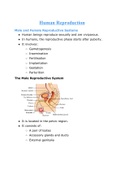
The Male Reproductive System
● It is located in the pelvic region.
● It consists of:
○ A pair of testes
○ Accessory glands and ducts
○ External genitalia
, Testes
● Situated within the
scrotum
, which protects the testes and
also helps in maintaining the temperature.
● Each testis is 4 to 5 cm in length, and 2 to 3 cm in width,
and has about 250 compartments called t
esticular lobules
.
● Testicular lobules have
seminiferous tubules
which are the
sites of sperm formation.
● Seminiferous tubules are lined by two types of cells:
○ Male germ cells
− They undergo meiosis to form
sperms.
○ Sertoli cells
− They provide nourishment to the germ
cells.
● Region outside the seminiferous tubules is called the
interstitial space, which contains
Leydig cells
(interstitial
cells). The Leydig cells produce androgens.
Accessory Ducts and Glands
● Accessory ducts include:
○ Rete testis
○ Vasa efferentia
○ Epididymis
○ Vas deferens
● The seminiferous tubules open into the vasa efferentia
through the
rete testis
.
● The vasa efferentia open into the
epididymis
, which leads
to the
vas deferens
. The vas deferens opens into the
urethra along with a duct from the seminal vesicle called the
ejaculatory duct
.
Male and Female Reproductive Systems
● Human beings reproduce sexually and are viviparous.
● In humans, the reproductive phase starts after puberty.
● It involves:
○ Gametogenesis
○ Insemination
○ Fertilisation
○ Implantation
○ Gestation
○ Parturition
The Male Reproductive System
● It is located in the pelvic region.
● It consists of:
○ A pair of testes
○ Accessory glands and ducts
○ External genitalia
, Testes
● Situated within the
scrotum
, which protects the testes and
also helps in maintaining the temperature.
● Each testis is 4 to 5 cm in length, and 2 to 3 cm in width,
and has about 250 compartments called t
esticular lobules
.
● Testicular lobules have
seminiferous tubules
which are the
sites of sperm formation.
● Seminiferous tubules are lined by two types of cells:
○ Male germ cells
− They undergo meiosis to form
sperms.
○ Sertoli cells
− They provide nourishment to the germ
cells.
● Region outside the seminiferous tubules is called the
interstitial space, which contains
Leydig cells
(interstitial
cells). The Leydig cells produce androgens.
Accessory Ducts and Glands
● Accessory ducts include:
○ Rete testis
○ Vasa efferentia
○ Epididymis
○ Vas deferens
● The seminiferous tubules open into the vasa efferentia
through the
rete testis
.
● The vasa efferentia open into the
epididymis
, which leads
to the
vas deferens
. The vas deferens opens into the
urethra along with a duct from the seminal vesicle called the
ejaculatory duct
.


