TEST BANK FOR WONG’S ESSENTIALS OF PEDIATRIC NURSING 10TH EDITION HOCKENBERRY
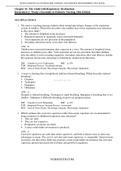
MULTIPLE CHOICE 1. The nurse is teaching nursing students about normal physiologic changes in the respiratory system of toddlers. Which best describes why toddlers have fewer respiratory tract infections as they grow older? a. The amount of lymphoid tissue decreases. b. Repeated exposure to organisms causes increased immunity. c. Viral organisms are less prevalent in the population. d. Secondary infections rarely occur after viral illnesses. ANS: B Children have increased immunity after exposure to a virus. The amount of lymphoid tissue increases as children grow older. Viral organisms are not less prevalent, but older children have the ability to resist invading organisms. Secondary infections after viral illnesses include Mycoplasma pneumoniae and group A -hemolytic streptococcal infections. DIF: Cognitive Level: Understand REF: p. 636 TOP: Integrated Process: Teaching/Learning MSC: Area of Client Needs: Physiologic Integrity: Physiologic Adaptation 2. A nurse is charting that a hospitalized child has labored breathing. Which describes labored breathing? a. Dyspnea b. Tachypnea c. Hypopnea d. Orthopnea ANS: A Dyspnea is labored breathing. Tachypnea is rapid breathing. Hypopnea is breathing that is too shallow. Orthopnea is difficulty breathing except in an upright position. DIF: Cognitive Level: Remember REF: p. 639 TOP: Integrated Process: Nursing Process: Assessment MSC: Area of Client Needs: Physiologic Integrity: Physiologic Adaptation 3. Which explains why cool-mist vaporizers rather than steam vaporizers are recommended in home treatment of childhood respiratory tract infections? a. They are safer. b. They are less expensive. c. Respiratory secretions are dried. d. A more comfortable environment is produced. ANS: A Cool-mist vaporizers are safer than steam vaporizers, and little evidence exists to show any advantages to steam. The cost of cool-mist and steam vaporizers is comparable. Steam loosens secretions, not dries them. Both may promote a more comfortable environment, but cool-mist vaporizers present decreased risk for burns and growth of organisms. NURSINGTB.COM WONGS ESSENTIALS OF PEDIATRIC NURSING 10TH EDITION HOCKENBERRY TEST BANK NURSINGTB.COM DIF: Cognitive Level: Understand REF: p. 639 TOP: Integrated Process: Nursing Process: Implementation MSC: Area of Client Needs: Physiologic Integrity: Reduction of Risk Potential 4. Decongestant nose drops are recommended for a 10-month-old infant with an upper respiratory tract infection. Instructions for nose drops should include which action? a. Avoid using for more than 3 days. b. Keep drops to use again for nasal congestion. c. Administer drops until nasal congestion subsides. d. Administer drops after feedings and at bedtime. ANS: A Vasoconstrictive nose drops such as phenylephrine (Neo-Synephrine) should not be used for more than 3 days to avoid rebound congestion. Drops should be discarded after one illness because they may become contaminated with bacteria. Vasoconstrictive nose drops can have a rebound effect after 3 days of use. Drops administered before feedings are more helpful. DIF: Cognitive Level: Apply REF: p. 639 TOP: Integrated Process: Nursing Process: Implementation MSC: Area of Client Needs: Physiologic Integrity: Pharmacologic and Parenteral Therapies 5. Which is an appropriate nursing intervention when caring for an infant with an upper respiratory tract infection and elevated temperature? a. Give tepid water baths to reduce fever. b. Encourage food intake to maintain caloric needs. c. Have child wear heavy clothing to prevent chilling. d. Give small amounts of favorite fluids frequently to prevent dehydration. ANS: D Preventing dehydration by small frequent feedings is an important intervention in the febrile child. Tepid water baths may induce shivering, which raises temperature. Food should not be forced; it may result in the child vomiting. The febrile child should be dressed in light, loose clothing. DIF: Cognitive Level: Apply REF: p. 640 TOP: Integrated Process: Nursing Process: Implementation MSC: Area of Client Needs: Physiologic Integrity: Physiologic Adaptation 6. The parent of an infant with nasopharyngitis should be instructed to notify the health professional if the infant displays which clinical manifestation? a. Fussiness b. Coughing c. A fever over 99° F d. Signs of an earache ANS: D If an infant with nasopharyngitis shows signs of an earache, it may mean a secondary bacterial infection is present and the infant should be referred to a practitioner for evaluation. Irritability is common in an infant with a viral illness. Cough can be a sign of nasopharyngitis. Fever is common in viral illnesses. NURSINGTB.COM WONGS ESSENTIALS OF PEDIATRIC NURSING 10TH EDITION HOCKENBERRY TEST BANK NURSINGTB.COM DIF: Cognitive Level: Apply REF: p. 640 TOP: Integrated Process: Teaching/Learning MSC: Area of Client Needs: Physiologic Integrity: Reduction of Risk Potential 7. When is it generally recommended that a child with acute streptococcal pharyngitis may return to school? a. When sore throat is better. b. If no complications develop. c. After taking antibiotics for 24 hours. d. After taking antibiotics for 3 days. ANS: C After children have taken antibiotics for 24 hours, they are no longer contagious to other children. Sore throat may persist longer than 24 hours after beginning antibiotic therapy, but the child is no longer considered contagious. Complications may take days to weeks to develop. DIF: Cognitive Level: Understand REF: p. 641 TOP: Integrated Process: Nursing Process: Assessment MSC: Area of Client Needs: Physiologic Integrity: Pharmacologic and Parenteral Therapies 8. A child is diagnosed with influenza. Management includes which recommendation? a. Clear liquid diet for hydration b. Aspirin to control fever c. Oseltamivie (Tamiflu) d. Antibiotics to prevent bacterial infection ANS: C Oseltamivie (Tamiflu) may reduce symptoms related to influenza A if administered within 24 to 48 hours of onset. A clear liquid diet is not necessary for influenza, but maintaining hydration is important. Aspirin is not recommended in children because of increased risk of Reye syndrome. Acetaminophen or ibuprofen is a better choice. Preventive antibiotics are not indicated for influenza unless there is evidence of a secondary bacterial infection. DIF: Cognitive Level: Apply REF: p. 644 TOP: Integrated Process: Nursing Process: Implementation MSC: Area of Client Needs: Physiologic Integrity: Pharmacologic and Parenteral Therapies 9. How is chronic otitis media with effusion (OME) differentiated from acute otitis media (AOM)? a. A fever as high as 40° C (104° F) b. Severe pain in the ear c. Nausea and vomiting d. A feeling of fullness in the ear ANS: D OME is characterized by feeling of fullness in the ear or other nonspecific complaints. Fever is a sign of AOM. OME does not cause severe pain. This may be a sign of AOM. Nausea and vomiting are associated with otitis media. DIF: Cognitive Level: Understand REF: p. 645 TOP: Integrated Process: Nursing Process: Assessment NURSINGTB.COM WONGS
École, étude et sujet
Infos sur le Document
- Publié le
- 8 juillet 2021
- Nombre de pages
- 18
- Écrit en
- 2020/2021
- Type
- Examen
- Contient
- Questions et réponses
Sujets
- edition hockenberry
-
test bank for wong’s essentials of pediatric nursing 10th

Document également disponible en groupe