

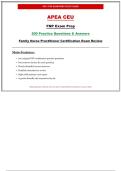
PDF • FNP EXAM PREP STUDY GUIDE
APEA CEU
FNP Exam Prep
200 Practice Questions & Answers
Family Nurse Practitioner Certification Exam Review
Main Features:
200 original FNP certification practice questions
Four answer choices for each question
Clearly identified correct answers
Detailed rationales for review
High-yield primary-care topics
A4 print-friendly and responsive layout
Original practice material. Not an actual or leaked APEA examination or answer bank.
, Table of Contents
Antibiotics Questions 1–10
Pulmonary Disorders Questions 11–20
Hematology Questions 21–30
Neurologic Disorders Questions 31–40
Mental Health in Primary Care Questions 41–50
Gastrointestinal Disorders Questions 51–60
Urology & STIs Questions 61–70
Cardiovascular & Peripheral Vascular Disorders Questions 71–80
Endocrine Disorders Questions 81–90
Women's Health Questions 91–100
Men's Health Questions 101–110
Orthopedic Disorders Questions 111–120
Dermatology Questions 121–130
Eye, Ear, Nose & Throat Questions 131–140
Pregnancy & Primary Care Questions 141–150
Pediatrics Questions 151–160
Aging Adult Questions 161–170
Preventive Care Questions 171–180
Pharmacology Questions 181–190
Comprehensive Review Questions 191–200
APEA CEU FNP Exam Prep • 2026/2027 Study Guide
, FNP Certification Review Questions
Question 1 ANTIBIOTICS
Which antibiotic class is commonly associated with tendon injury risk?
A. Fluoroquinolones
B. A finding unrelated to the condition described
C. A finding that points primarily to a different disorder
D. A finding that does not meet the clinical feature described
Correct Answer: A. Fluoroquinolones
Rationale: Fluoroquinolones carry an important warning for tendinitis and tendon rupture.
Question 2 PULMONARY
Which finding is most characteristic of asthma?
A. A finding unrelated to the condition described
B. Variable airflow obstruction with episodic wheezing
C. A finding that points primarily to a different disorder
D. A finding that does not meet the clinical feature described
Correct Answer: B. Variable airflow obstruction with episodic wheezing
Rationale: Asthma commonly produces variable respiratory symptoms and airflow obstruction.
Question 3 HEMATOLOGY
Which laboratory pattern is typical of iron-deficiency anemia?
A. A finding unrelated to the condition described
B. A finding that points primarily to a different disorder
C. Microcytosis with low iron stores
D. A finding that does not meet the clinical feature described
Correct Answer: C. Microcytosis with low iron stores
Rationale: Iron deficiency commonly produces a microcytic, hypochromic anemia with depleted iron stores.
Question 4 NEUROLOGY
Which presentation is most concerning for an acute ischemic stroke?
A. A finding unrelated to the condition described
B. A finding that points primarily to a different disorder
C. A finding that does not meet the clinical feature described
D. Sudden focal neurologic deficit
Correct Answer: D. Sudden focal neurologic deficit
Rationale: Sudden focal neurologic deficits require urgent stroke evaluation.
, Question 5 MENTAL HEALTH
Which symptom is characteristic of a major depressive episode?
A. Persistent depressed mood or loss of interest
B. A finding unrelated to the condition described
C. A finding that points primarily to a different disorder
D. A finding that does not meet the clinical feature described
Correct Answer: A. Persistent depressed mood or loss of interest
Rationale: Depressed mood or markedly diminished interest is a core feature of a major depressive episode.
Question 6 GASTROINTESTINAL
Which symptom is commonly associated with gastroesophageal reflux disease?
A. A finding unrelated to the condition described
B. Heartburn and regurgitation
C. A finding that points primarily to a different disorder
D. A finding that does not meet the clinical feature described
Correct Answer: B. Heartburn and regurgitation
Rationale: Heartburn and regurgitation are common manifestations of GERD.
Question 7 UROLOGY/STI
Which symptom is commonly associated with uncomplicated cystitis?
A. A finding unrelated to the condition described
B. A finding that points primarily to a different disorder
C. Dysuria and urinary frequency
D. A finding that does not meet the clinical feature described
Correct Answer: C. Dysuria and urinary frequency
Rationale: Dysuria, frequency, and urgency are typical lower urinary tract symptoms.
Question 8 CARDIOVASCULAR
Which symptom is most concerning for myocardial ischemia?
A. A finding unrelated to the condition described
B. A finding that points primarily to a different disorder
C. A finding that does not meet the clinical feature described
D. Pressure-like chest discomfort with exertion
Correct Answer: D. Pressure-like chest discomfort with exertion
Rationale: Exertional pressure-like chest discomfort can represent myocardial ischemia.
APEA CEU
FNP Exam Prep
200 Practice Questions & Answers
Family Nurse Practitioner Certification Exam Review
Main Features:
200 original FNP certification practice questions
Four answer choices for each question
Clearly identified correct answers
Detailed rationales for review
High-yield primary-care topics
A4 print-friendly and responsive layout
Original practice material. Not an actual or leaked APEA examination or answer bank.
, Table of Contents
Antibiotics Questions 1–10
Pulmonary Disorders Questions 11–20
Hematology Questions 21–30
Neurologic Disorders Questions 31–40
Mental Health in Primary Care Questions 41–50
Gastrointestinal Disorders Questions 51–60
Urology & STIs Questions 61–70
Cardiovascular & Peripheral Vascular Disorders Questions 71–80
Endocrine Disorders Questions 81–90
Women's Health Questions 91–100
Men's Health Questions 101–110
Orthopedic Disorders Questions 111–120
Dermatology Questions 121–130
Eye, Ear, Nose & Throat Questions 131–140
Pregnancy & Primary Care Questions 141–150
Pediatrics Questions 151–160
Aging Adult Questions 161–170
Preventive Care Questions 171–180
Pharmacology Questions 181–190
Comprehensive Review Questions 191–200
APEA CEU FNP Exam Prep • 2026/2027 Study Guide
, FNP Certification Review Questions
Question 1 ANTIBIOTICS
Which antibiotic class is commonly associated with tendon injury risk?
A. Fluoroquinolones
B. A finding unrelated to the condition described
C. A finding that points primarily to a different disorder
D. A finding that does not meet the clinical feature described
Correct Answer: A. Fluoroquinolones
Rationale: Fluoroquinolones carry an important warning for tendinitis and tendon rupture.
Question 2 PULMONARY
Which finding is most characteristic of asthma?
A. A finding unrelated to the condition described
B. Variable airflow obstruction with episodic wheezing
C. A finding that points primarily to a different disorder
D. A finding that does not meet the clinical feature described
Correct Answer: B. Variable airflow obstruction with episodic wheezing
Rationale: Asthma commonly produces variable respiratory symptoms and airflow obstruction.
Question 3 HEMATOLOGY
Which laboratory pattern is typical of iron-deficiency anemia?
A. A finding unrelated to the condition described
B. A finding that points primarily to a different disorder
C. Microcytosis with low iron stores
D. A finding that does not meet the clinical feature described
Correct Answer: C. Microcytosis with low iron stores
Rationale: Iron deficiency commonly produces a microcytic, hypochromic anemia with depleted iron stores.
Question 4 NEUROLOGY
Which presentation is most concerning for an acute ischemic stroke?
A. A finding unrelated to the condition described
B. A finding that points primarily to a different disorder
C. A finding that does not meet the clinical feature described
D. Sudden focal neurologic deficit
Correct Answer: D. Sudden focal neurologic deficit
Rationale: Sudden focal neurologic deficits require urgent stroke evaluation.
, Question 5 MENTAL HEALTH
Which symptom is characteristic of a major depressive episode?
A. Persistent depressed mood or loss of interest
B. A finding unrelated to the condition described
C. A finding that points primarily to a different disorder
D. A finding that does not meet the clinical feature described
Correct Answer: A. Persistent depressed mood or loss of interest
Rationale: Depressed mood or markedly diminished interest is a core feature of a major depressive episode.
Question 6 GASTROINTESTINAL
Which symptom is commonly associated with gastroesophageal reflux disease?
A. A finding unrelated to the condition described
B. Heartburn and regurgitation
C. A finding that points primarily to a different disorder
D. A finding that does not meet the clinical feature described
Correct Answer: B. Heartburn and regurgitation
Rationale: Heartburn and regurgitation are common manifestations of GERD.
Question 7 UROLOGY/STI
Which symptom is commonly associated with uncomplicated cystitis?
A. A finding unrelated to the condition described
B. A finding that points primarily to a different disorder
C. Dysuria and urinary frequency
D. A finding that does not meet the clinical feature described
Correct Answer: C. Dysuria and urinary frequency
Rationale: Dysuria, frequency, and urgency are typical lower urinary tract symptoms.
Question 8 CARDIOVASCULAR
Which symptom is most concerning for myocardial ischemia?
A. A finding unrelated to the condition described
B. A finding that points primarily to a different disorder
C. A finding that does not meet the clinical feature described
D. Pressure-like chest discomfort with exertion
Correct Answer: D. Pressure-like chest discomfort with exertion
Rationale: Exertional pressure-like chest discomfort can represent myocardial ischemia.


