

Page 1 of 177
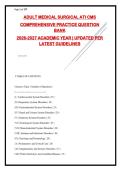
ADULT MEDICAL SURGICAL ATI CMS
COMPREHENSIVE PRACTICE QUESTION
BANK
2026-2027 ACADEMIC YEAR | UPDATED PER
LATEST GUIDELINES
itsjereguides
# TABLE OF CONTENTS
| Section | Topic | Number of Questions |
|---------|-------|---------------------|
| I | Cardiovascular System Disorders | 35 |
| II | Respiratory System Disorders | 30 |
| III | Gastrointestinal System Disorders | 25 |
| IV | Renal and Urinary System Disorders | 20 |
| V | Endocrine System Disorders | 25 |
| VI | Neurological System Disorders | 25 |
| VII | Musculoskeletal System Disorders | 20 |
| VIII | Immune and Infectious Disorders | 20 |
| IX | Oncology and Hematology | 20 |
| X | Perioperative and Critical Care | 20 |
| XI | Integumentary and Sensory Disorders | 15 |
| XII | Fluid, Electrolyte, and Acid-Base Balance | 15 |
,Page 2 of 177
# SECTION I: CARDIOVASCULAR SYSTEM DISORDERS
## Question 1
**A nurse is caring for a client with heart failure who has been prescribed furosemide. Which of
the following assessment findings indicates that the medication is having the desired therapeutic
effect?**
A. Increased blood pressure and bounding pulses
B. Weight gain of 2 kg in 24 hours
C. Decreased peripheral edema and dyspnea
D. Increased heart rate and jugular venous distension
**Correct Answer: C**
**Rationale:** Furosemide is a loop diuretic that promotes excretion of sodium and water,
reducing fluid volume overload. The therapeutic effects include decreased peripheral edema,
reduced pulmonary congestion, and improved dyspnea. These findings indicate successful
reduction of preload and alleviation of heart failure symptoms.
**Distractor Analysis:**
- **A:** Increased blood pressure and bounding pulses suggest fluid volume excess, not the
desired effect of a diuretic.
- **B:** Weight gain indicates fluid retention, which is opposite to the expected therapeutic
effect of furosemide.
- **D:** Increased heart rate and jugular venous distension are signs of worsening heart failure,
not improvement.
---
## Question 2
,Page 3 of 177
**A client with acute coronary syndrome is prescribed clopidogrel. The nurse should monitor the
client for which of the following adverse effects?**
A. Hypertension
B. Thrombocytopenia
C. Hyperkalemia
D. Bradycardia
**Correct Answer: B**
**Rationale:** Clopidogrel is an antiplatelet agent that inhibits platelet aggregation by blocking
the P2Y12 receptor. A significant adverse effect is thrombocytopenia (decreased platelet count),
which increases the risk of bleeding. Nurses should monitor platelet counts and assess for signs
of bleeding such as petechiae, ecchymosis, and unusual bleeding.
**Distractor Analysis:**
- **A:** Hypertension is not a typical adverse effect of clopidogrel; it may cause hypotension in
some cases.
- **C:** Hyperkalemia is not associated with clopidogrel use; it is more commonly related to
ACE inhibitors or potassium-sparing diuretics.
- **D:** Bradycardia is not a known adverse effect of clopidogrel; it may be seen with beta-
blockers or calcium channel blockers.
---
## Question 3
**A nurse is assessing a client who has peripheral arterial disease (PAD). Which of the following
findings should the nurse expect?**
A. Brownish discoloration of the lower extremities
, Page 4 of 177
B. Thick, tough, and leathery skin on the lower extremities
C. Pallor of the affected extremity when elevated
D. Warm, flushed skin on the affected extremity
**Correct Answer: C**
**Rationale:** In peripheral arterial disease, arterial blood flow is compromised. When the
extremity is elevated, gravity reduces blood flow further, leading to pallor (blanching) of the
skin. This is a classic sign of arterial insufficiency. Other findings include dependent rubor
(redness when the leg is dependent), diminished pulses, and cool skin temperature.
**Distractor Analysis:**
- **A:** Brownish discoloration is characteristic of chronic venous insufficiency due to
hemosiderin deposition.
- **B:** Thick, tough, leathery skin is associated with chronic venous stasis and
lipodermatosclerosis.
- **D:** Warm, flushed skin is more consistent with venous insufficiency or inflammation, not
arterial disease.
---
## Question 4
**A client with hypertension is prescribed lisinopril. The nurse should instruct the client to
report which of the following adverse effects immediately?**
A. Dry cough
B. Constipation
C. Weight loss
D. Blurred vision
ADULT MEDICAL SURGICAL ATI CMS
COMPREHENSIVE PRACTICE QUESTION
BANK
2026-2027 ACADEMIC YEAR | UPDATED PER
LATEST GUIDELINES
itsjereguides
# TABLE OF CONTENTS
| Section | Topic | Number of Questions |
|---------|-------|---------------------|
| I | Cardiovascular System Disorders | 35 |
| II | Respiratory System Disorders | 30 |
| III | Gastrointestinal System Disorders | 25 |
| IV | Renal and Urinary System Disorders | 20 |
| V | Endocrine System Disorders | 25 |
| VI | Neurological System Disorders | 25 |
| VII | Musculoskeletal System Disorders | 20 |
| VIII | Immune and Infectious Disorders | 20 |
| IX | Oncology and Hematology | 20 |
| X | Perioperative and Critical Care | 20 |
| XI | Integumentary and Sensory Disorders | 15 |
| XII | Fluid, Electrolyte, and Acid-Base Balance | 15 |
,Page 2 of 177
# SECTION I: CARDIOVASCULAR SYSTEM DISORDERS
## Question 1
**A nurse is caring for a client with heart failure who has been prescribed furosemide. Which of
the following assessment findings indicates that the medication is having the desired therapeutic
effect?**
A. Increased blood pressure and bounding pulses
B. Weight gain of 2 kg in 24 hours
C. Decreased peripheral edema and dyspnea
D. Increased heart rate and jugular venous distension
**Correct Answer: C**
**Rationale:** Furosemide is a loop diuretic that promotes excretion of sodium and water,
reducing fluid volume overload. The therapeutic effects include decreased peripheral edema,
reduced pulmonary congestion, and improved dyspnea. These findings indicate successful
reduction of preload and alleviation of heart failure symptoms.
**Distractor Analysis:**
- **A:** Increased blood pressure and bounding pulses suggest fluid volume excess, not the
desired effect of a diuretic.
- **B:** Weight gain indicates fluid retention, which is opposite to the expected therapeutic
effect of furosemide.
- **D:** Increased heart rate and jugular venous distension are signs of worsening heart failure,
not improvement.
---
## Question 2
,Page 3 of 177
**A client with acute coronary syndrome is prescribed clopidogrel. The nurse should monitor the
client for which of the following adverse effects?**
A. Hypertension
B. Thrombocytopenia
C. Hyperkalemia
D. Bradycardia
**Correct Answer: B**
**Rationale:** Clopidogrel is an antiplatelet agent that inhibits platelet aggregation by blocking
the P2Y12 receptor. A significant adverse effect is thrombocytopenia (decreased platelet count),
which increases the risk of bleeding. Nurses should monitor platelet counts and assess for signs
of bleeding such as petechiae, ecchymosis, and unusual bleeding.
**Distractor Analysis:**
- **A:** Hypertension is not a typical adverse effect of clopidogrel; it may cause hypotension in
some cases.
- **C:** Hyperkalemia is not associated with clopidogrel use; it is more commonly related to
ACE inhibitors or potassium-sparing diuretics.
- **D:** Bradycardia is not a known adverse effect of clopidogrel; it may be seen with beta-
blockers or calcium channel blockers.
---
## Question 3
**A nurse is assessing a client who has peripheral arterial disease (PAD). Which of the following
findings should the nurse expect?**
A. Brownish discoloration of the lower extremities
, Page 4 of 177
B. Thick, tough, and leathery skin on the lower extremities
C. Pallor of the affected extremity when elevated
D. Warm, flushed skin on the affected extremity
**Correct Answer: C**
**Rationale:** In peripheral arterial disease, arterial blood flow is compromised. When the
extremity is elevated, gravity reduces blood flow further, leading to pallor (blanching) of the
skin. This is a classic sign of arterial insufficiency. Other findings include dependent rubor
(redness when the leg is dependent), diminished pulses, and cool skin temperature.
**Distractor Analysis:**
- **A:** Brownish discoloration is characteristic of chronic venous insufficiency due to
hemosiderin deposition.
- **B:** Thick, tough, leathery skin is associated with chronic venous stasis and
lipodermatosclerosis.
- **D:** Warm, flushed skin is more consistent with venous insufficiency or inflammation, not
arterial disease.
---
## Question 4
**A client with hypertension is prescribed lisinopril. The nurse should instruct the client to
report which of the following adverse effects immediately?**
A. Dry cough
B. Constipation
C. Weight loss
D. Blurred vision


