

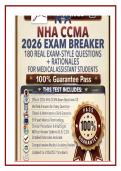
,NHA CCMA 2026 Exam Breaker | 180 Real
Exam-Style Questions + Rationales for
Medical Assistant Students
1. A patient arrives for an appointment and reports sudden chest
pressure, shortness of breath, and sweating. What should the medical
assistant do first?
A. Have the patient complete the registration form
B. Place the patient in the waiting room
C. Notify the appropriate clinical staff immediately
D. Schedule the patient for another day
Answer: C
Rationale: Chest pressure accompanied by dyspnea and diaphoresis can
indicate a medical emergency. The patient should receive prompt
clinical assessment.
2. Which action is most effective for preventing the spread of infection
in a medical office?
A. Wearing gloves continuously
B. Performing hand hygiene at appropriate times
C. Wearing a surgical mask for every encounter
D. Cleaning the examination room once daily
Answer: B
Rationale: Proper hand hygiene is one of the most important measures
for preventing transmission of microorganisms.
3. Which vein is typically preferred for routine venipuncture?
A. Median cubital
,B. Carotid
C. Femoral
D. Dorsalis pedis
Answer: A
Rationale: The median cubital vein is commonly preferred because it is
generally well anchored and accessible.
4. Which color tube is commonly used for a complete blood count
(CBC)?
A. Gray
B. Lavender
C. Light blue
D. Yellow
Answer: B
Rationale: Lavender-top tubes typically contain EDTA and are
commonly used for hematology testing such as a CBC.
5. A patient becomes pale and says they feel faint during venipuncture.
What should the medical assistant do?
A. Continue the collection quickly
B. Remove the tourniquet and needle and assist the patient safely
C. Ask the patient to stand
D. Give the patient water while the needle remains inserted
Answer: B
Rationale: The collection should be stopped and the patient protected
from injury. The patient should be positioned safely and monitored
according to office protocol.
, 6. Which ECG component represents ventricular depolarization?
A. P wave
B. PR interval
C. QRS complex
D. T wave
Answer: C
Rationale: The QRS complex represents electrical depolarization of
the ventricles.
7. What does the P wave represent?
A. Ventricular repolarization
B. Atrial depolarization
C. Ventricular depolarization
D. Cardiac relaxation only
Answer: B
Rationale: The P wave represents electrical depolarization of the atria.
8. Which action can cause ECG artifact?
A. Having the patient remain still
B. Properly preparing the skin
C. Patient movement
D. Correct electrode placement
Answer: C
Rationale: Movement can create electrical and muscle artifact that
interferes with ECG interpretation.
9. Which organization regulates workplace safety in the United States?
A. OSHA
B. HIPAA
Exam-Style Questions + Rationales for
Medical Assistant Students
1. A patient arrives for an appointment and reports sudden chest
pressure, shortness of breath, and sweating. What should the medical
assistant do first?
A. Have the patient complete the registration form
B. Place the patient in the waiting room
C. Notify the appropriate clinical staff immediately
D. Schedule the patient for another day
Answer: C
Rationale: Chest pressure accompanied by dyspnea and diaphoresis can
indicate a medical emergency. The patient should receive prompt
clinical assessment.
2. Which action is most effective for preventing the spread of infection
in a medical office?
A. Wearing gloves continuously
B. Performing hand hygiene at appropriate times
C. Wearing a surgical mask for every encounter
D. Cleaning the examination room once daily
Answer: B
Rationale: Proper hand hygiene is one of the most important measures
for preventing transmission of microorganisms.
3. Which vein is typically preferred for routine venipuncture?
A. Median cubital
,B. Carotid
C. Femoral
D. Dorsalis pedis
Answer: A
Rationale: The median cubital vein is commonly preferred because it is
generally well anchored and accessible.
4. Which color tube is commonly used for a complete blood count
(CBC)?
A. Gray
B. Lavender
C. Light blue
D. Yellow
Answer: B
Rationale: Lavender-top tubes typically contain EDTA and are
commonly used for hematology testing such as a CBC.
5. A patient becomes pale and says they feel faint during venipuncture.
What should the medical assistant do?
A. Continue the collection quickly
B. Remove the tourniquet and needle and assist the patient safely
C. Ask the patient to stand
D. Give the patient water while the needle remains inserted
Answer: B
Rationale: The collection should be stopped and the patient protected
from injury. The patient should be positioned safely and monitored
according to office protocol.
, 6. Which ECG component represents ventricular depolarization?
A. P wave
B. PR interval
C. QRS complex
D. T wave
Answer: C
Rationale: The QRS complex represents electrical depolarization of
the ventricles.
7. What does the P wave represent?
A. Ventricular repolarization
B. Atrial depolarization
C. Ventricular depolarization
D. Cardiac relaxation only
Answer: B
Rationale: The P wave represents electrical depolarization of the atria.
8. Which action can cause ECG artifact?
A. Having the patient remain still
B. Properly preparing the skin
C. Patient movement
D. Correct electrode placement
Answer: C
Rationale: Movement can create electrical and muscle artifact that
interferes with ECG interpretation.
9. Which organization regulates workplace safety in the United States?
A. OSHA
B. HIPAA


