

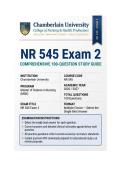
,NR 545 Exam 2 – Cardiology, MSK & Neuro –
Q&A (2026) PDF | Chamberlain
1. The nurse practitioner is evaluating a patient with chest pain that occurs with
exertion and is relieved by rest. This presentation is most consistent with:
A) Unstable angina
B) Myocardial infarction
C) Pericarditis
D) Stable angina
Correct Answer: D) Stable angina
Rationale: Stable angina is predictable, occurs with exertion, and is relieved by
rest or nitroglycerin. Unstable angina occurs at rest or with increasing
frequency. MI pain is prolonged and not relieved by rest. Pericarditis pain is
positional.
2. A 55-year-old man with a history of hypertension reports sudden onset of
severe, tearing chest pain radiating to the back. The nurse practitioner suspects:
A) Aortic dissection
B) Pulmonary embolism
C) Acute myocardial infarction
D) Esophageal spasm
Correct Answer: A) Aortic dissection
,Rationale: The classic presentation of aortic dissection is abrupt, severe, tearing
pain that often radiates to the back. It is a medical emergency. MI usually has
pressure-like pain; PE has dyspnea and pleuritic pain.
3. The nurse practitioner is teaching a patient with stable angina about
nitroglycerin use. Which instruction is correct?
A) Take one tablet every 5 minutes for up to 3 doses; if pain persists, call 911
B) Swallow the tablet with a full glass of water
C) Take the medication only at bedtime
D) Use it only once per week
Correct Answer: A) Take one tablet every 5 minutes for up to 3 doses; if pain
persists, call 911
Rationale: Nitroglycerin is administered sublingually at the onset of angina,
repeated every 5 minutes for a maximum of 3 doses. If pain is unrelieved,
emergency medical services should be activated because of possible MI.
4. A patient with a history of myocardial infarction is prescribed a statin. The
nurse practitioner explains that the primary benefit of statins post-MI is:
A) Lowering blood pressure
B) Reducing inflammation and stabilizing plaque
C) Increasing heart rate
D) Preventing arrhythmias
Correct Answer: B) Reducing inflammation and stabilizing plaque
, Rationale: Statins lower LDL cholesterol, reduce inflammation, and stabilize
atherosclerotic plaques, decreasing the risk of recurrent MI. They do not
primarily lower BP or prevent arrhythmias.
5. Which laboratory test is most specific for myocardial injury?
A) Myoglobin
B) CK-MB
C) Troponin I
D) LDH
Correct Answer: C) Troponin I
Rationale: Cardiac troponins (I and T) are the most sensitive and specific
biomarkers for myocardial necrosis. CK-MB is less specific; myoglobin rises early
but is nonspecific.
6. The nurse practitioner is assessing a patient with left-sided heart failure.
Which finding is most characteristic?
A) Peripheral edema
B) Jugular venous distention
C) Pulmonary crackles and dyspnea
D) Hepatomegaly
Correct Answer: C) Pulmonary crackles and dyspnea
Q&A (2026) PDF | Chamberlain
1. The nurse practitioner is evaluating a patient with chest pain that occurs with
exertion and is relieved by rest. This presentation is most consistent with:
A) Unstable angina
B) Myocardial infarction
C) Pericarditis
D) Stable angina
Correct Answer: D) Stable angina
Rationale: Stable angina is predictable, occurs with exertion, and is relieved by
rest or nitroglycerin. Unstable angina occurs at rest or with increasing
frequency. MI pain is prolonged and not relieved by rest. Pericarditis pain is
positional.
2. A 55-year-old man with a history of hypertension reports sudden onset of
severe, tearing chest pain radiating to the back. The nurse practitioner suspects:
A) Aortic dissection
B) Pulmonary embolism
C) Acute myocardial infarction
D) Esophageal spasm
Correct Answer: A) Aortic dissection
,Rationale: The classic presentation of aortic dissection is abrupt, severe, tearing
pain that often radiates to the back. It is a medical emergency. MI usually has
pressure-like pain; PE has dyspnea and pleuritic pain.
3. The nurse practitioner is teaching a patient with stable angina about
nitroglycerin use. Which instruction is correct?
A) Take one tablet every 5 minutes for up to 3 doses; if pain persists, call 911
B) Swallow the tablet with a full glass of water
C) Take the medication only at bedtime
D) Use it only once per week
Correct Answer: A) Take one tablet every 5 minutes for up to 3 doses; if pain
persists, call 911
Rationale: Nitroglycerin is administered sublingually at the onset of angina,
repeated every 5 minutes for a maximum of 3 doses. If pain is unrelieved,
emergency medical services should be activated because of possible MI.
4. A patient with a history of myocardial infarction is prescribed a statin. The
nurse practitioner explains that the primary benefit of statins post-MI is:
A) Lowering blood pressure
B) Reducing inflammation and stabilizing plaque
C) Increasing heart rate
D) Preventing arrhythmias
Correct Answer: B) Reducing inflammation and stabilizing plaque
, Rationale: Statins lower LDL cholesterol, reduce inflammation, and stabilize
atherosclerotic plaques, decreasing the risk of recurrent MI. They do not
primarily lower BP or prevent arrhythmias.
5. Which laboratory test is most specific for myocardial injury?
A) Myoglobin
B) CK-MB
C) Troponin I
D) LDH
Correct Answer: C) Troponin I
Rationale: Cardiac troponins (I and T) are the most sensitive and specific
biomarkers for myocardial necrosis. CK-MB is less specific; myoglobin rises early
but is nonspecific.
6. The nurse practitioner is assessing a patient with left-sided heart failure.
Which finding is most characteristic?
A) Peripheral edema
B) Jugular venous distention
C) Pulmonary crackles and dyspnea
D) Hepatomegaly
Correct Answer: C) Pulmonary crackles and dyspnea


