

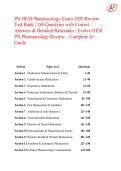
PN HESI Pharmacology Exam 2026 Review
Test Bank | 180 Questions with Correct
Answers & Detailed Rationales | Evolve HESI
PN Pharmacology Review – Complete A+
Guide
Section Topic Area Questions
Section 1 Medication Administration & Safety 1–20
Section 2 Cardiovascular Medications 21–40
Section 3 Respiratory Medications 41–60
Section 4 Endocrine Medications (Diabetes & Thyroid) 61–80
Section 5 Neurological & Psychiatric Medications 81–100
Section 6 Pain Management & Antidotes 101–120
Section 7 Antibiotics & Anti-infectives 121–140
Section 8 Gastrointestinal Medications 141–180
Section 9 Diuretics & Renal Medications 161–140
Section 10 Anticoagulants & Hematological Agents 181–200
Section 11 Women's Health & Prenatal Medications 201–220
Section 12 Antidotes & Emergency Medications 221–240
Section 13 Geriatric Pharmacology Considerations 241-260
,SECTION 1: MEDICATION ADMINISTRATION & SAFETY
QUESTION 1
How do you safely prepare medication?
A. Prepare in a busy area to save time
B. Have good lighting and work alone, checking the medication label
three times
C. Transfer medications to unlabeled bottles for convenience
D. Prepare medications for multiple patients at once
Answer: B. Have good lighting and work alone, checking the
medication label three times
Rationale: Safe medication preparation requires good lighting, working
alone without distractions, and checking the medication label three
times: when removing it from the drawer, before dispensing, and when
replacing the container. Never use unlabeled medication containers.
QUESTION 2
How would you administer medication via the intramuscular (IM)
route?
A. Inject at a 15-degree angle using a ½-inch needle
B. Inject at a 90-degree angle using the Z-track method
C. Inject at a 45-degree angle into fatty tissue
D. Inject intradermally and raise a wheal
,Answer: B. Inject at a 90-degree angle using the Z-track method
Rationale: IM injections are administered at a 90-degree angle. The Z-
track method is recommended to prevent medication leakage into
subcutaneous tissue and to minimize irritation. The ventrogluteal site is
preferred for adults due to its distance from major nerves and blood
vessels.
QUESTION 3
A nurse is preparing to administer a medication. Which action is
most important for preventing a medication error?
A. Verify the medication order, patient identity, medication, dose, route,
and time before administration
B. Ask the patient whether the medication looks familiar
C. Prepare medications for several patients at the same time
D. Rely on memory when administering frequently used medications
Answer: A. Verify the medication order, patient identity,
medication, dose, route, and time before administration
Rationale: Systematic verification of the medication order and patient
information helps prevent errors. Nurses should not rely on memory or
medication appearance alone.
QUESTION 4
Which patient identifier should the nurse use when verifying a
patient's identity before medication administration?
, A. Room number
B. Date of birth
C. Diagnosis
D. Bed location
Answer: B. Date of birth
Rationale: Date of birth is an appropriate patient identifier when used
according to facility policy, typically together with another identifier.
Room or bed numbers should not be used as patient identifiers because
patients can change locations.
QUESTION 5
A nurse receives an order for a medication with an unclear dosage.
What should the nurse do?
A. Administer the lowest available dose
B. Ask the patient which dose they normally take
C. Clarify the order with the prescriber before administering the
medication
D. Ask another patient what dose is usually prescribed
Answer: C. Clarify the order with the prescriber before
administering the medication
Rationale: An unclear medication order must be clarified before
administration. The nurse should never guess the intended dose because
an incorrect dose may cause harm.
Test Bank | 180 Questions with Correct
Answers & Detailed Rationales | Evolve HESI
PN Pharmacology Review – Complete A+
Guide
Section Topic Area Questions
Section 1 Medication Administration & Safety 1–20
Section 2 Cardiovascular Medications 21–40
Section 3 Respiratory Medications 41–60
Section 4 Endocrine Medications (Diabetes & Thyroid) 61–80
Section 5 Neurological & Psychiatric Medications 81–100
Section 6 Pain Management & Antidotes 101–120
Section 7 Antibiotics & Anti-infectives 121–140
Section 8 Gastrointestinal Medications 141–180
Section 9 Diuretics & Renal Medications 161–140
Section 10 Anticoagulants & Hematological Agents 181–200
Section 11 Women's Health & Prenatal Medications 201–220
Section 12 Antidotes & Emergency Medications 221–240
Section 13 Geriatric Pharmacology Considerations 241-260
,SECTION 1: MEDICATION ADMINISTRATION & SAFETY
QUESTION 1
How do you safely prepare medication?
A. Prepare in a busy area to save time
B. Have good lighting and work alone, checking the medication label
three times
C. Transfer medications to unlabeled bottles for convenience
D. Prepare medications for multiple patients at once
Answer: B. Have good lighting and work alone, checking the
medication label three times
Rationale: Safe medication preparation requires good lighting, working
alone without distractions, and checking the medication label three
times: when removing it from the drawer, before dispensing, and when
replacing the container. Never use unlabeled medication containers.
QUESTION 2
How would you administer medication via the intramuscular (IM)
route?
A. Inject at a 15-degree angle using a ½-inch needle
B. Inject at a 90-degree angle using the Z-track method
C. Inject at a 45-degree angle into fatty tissue
D. Inject intradermally and raise a wheal
,Answer: B. Inject at a 90-degree angle using the Z-track method
Rationale: IM injections are administered at a 90-degree angle. The Z-
track method is recommended to prevent medication leakage into
subcutaneous tissue and to minimize irritation. The ventrogluteal site is
preferred for adults due to its distance from major nerves and blood
vessels.
QUESTION 3
A nurse is preparing to administer a medication. Which action is
most important for preventing a medication error?
A. Verify the medication order, patient identity, medication, dose, route,
and time before administration
B. Ask the patient whether the medication looks familiar
C. Prepare medications for several patients at the same time
D. Rely on memory when administering frequently used medications
Answer: A. Verify the medication order, patient identity,
medication, dose, route, and time before administration
Rationale: Systematic verification of the medication order and patient
information helps prevent errors. Nurses should not rely on memory or
medication appearance alone.
QUESTION 4
Which patient identifier should the nurse use when verifying a
patient's identity before medication administration?
, A. Room number
B. Date of birth
C. Diagnosis
D. Bed location
Answer: B. Date of birth
Rationale: Date of birth is an appropriate patient identifier when used
according to facility policy, typically together with another identifier.
Room or bed numbers should not be used as patient identifiers because
patients can change locations.
QUESTION 5
A nurse receives an order for a medication with an unclear dosage.
What should the nurse do?
A. Administer the lowest available dose
B. Ask the patient which dose they normally take
C. Clarify the order with the prescriber before administering the
medication
D. Ask another patient what dose is usually prescribed
Answer: C. Clarify the order with the prescriber before
administering the medication
Rationale: An unclear medication order must be clarified before
administration. The nurse should never guess the intended dose because
an incorrect dose may cause harm.


