1. Introduction and some facts & figures (niet kennen) [5]
1.1. Introduction
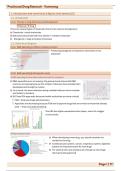
1.1.A. Phases in drug discovery and development
Molecule → drug
There are several types of molecules that can be used as therapeutics:
❥ Chemicals = small molecules
❥ Natural products (derived from plants) = complex molecules
❥ Biologicals = large (complex) molecules
1.2. Some facts & figures
1.2.A. R&D spending in different industry sectors
Producing biologicals compared to chemicals is very
expensive
1.2.B. R&D spending & therapeutic areas
① R&D spending of international pharmaceutical companies
❥ R&D expenditure are increasing: the general trend shows that R&D
costs are increasing because the simpler molecules have already been
developed and brought to market
❥ As a result, the new molecules being created today are more complex
and harder to produce
❥ BUT less FDA approvals (because health authorities are more critical)
❣ FDA = food and drugs administration
❣ Approvals are decreasing because FDA won’t approve drugs that are similar to those that already
exist → they must add something
The USA has higher expenditure than Japan, since it’s a bigger
country (duh)
② Major disease areas
❥ When developing a new drug, you should consider the
market for the drug
❥ Cardiovascular system, cancer, respiratory system, digestive
system are important areas for new drugs
❥ For asthma there are already a lot of drugs so new drugs
don’t get easily approved
,③ Preclinical/non-clinical and clinical phases
❥ For the non-clinical trials we need a defined set of studies
❥ When the results are fine, the first clinical trial (phase 1) may start ① here you
asses the pharmacokinetics of the drug → this is done in young men
❣ During spermatogenesis, every 2 months there are new sperm cells produced
❣ If something goes wrong, there won’t be sperm produced in the next 2 months
❣ We don’t use young women in this phase for 2 reasons (expect when they’re the only population):
⤷ Women are born with a pool of primordial follicles, and when a toxic drug attacks these follicles,
the women will go in menopause and they won’t be able to reproduce
⤷ Women can be pregnant and when a drug has influence on the foetus, it can cause malformations
❥ When the pharmacokinetics data are fine, you can go to phase 2 of the clinical trials
❣ Here you asses the efficacy of a drug in a small population
❣ Before starting phase 2, non-clinical trials are once again performed first
❥ Non-clinical (preclinical) and clinical trials alternate each other
❥ Non-clinical trials are not so expensive (20%) <> clinical trials are
expensive (60%)
❥ Every step, the costs increase
❥ Fail fast fail cheap principle: it’s better to kill the compound early on,
then to have it killed when it’s just marketed
1.2.C. Annual population growth rates
❥ A lot of big pharma industries are interested in China → wealthy
people, huge population
❥ Regions are only relevant if the disease is present in that region
❥ The 80+ population is also an interesting market
1.2.D. Healthcare spending in relation to age
❥ There are a lot of age-related diseases (CV, cancer…)
❥ Several patients have multiple of those diseases
,1.2.E. Development costs and revenue cycle
❥ Discovery is not that expensive
❥ The preclinical development cost a little
❥ The clinical development are very expensive
❥ Once on the market, we get a peak for the sales
❥ Once the patent expires, the cash flow lowers because of
generic competition
No investment in neglected diseases or orphan diseases BUT now with gene therapy, you don’t need a lot
of patients to make a lot of money + often the development for orphan diseases are funded via
foundations
1.2.F. Pharmaceutical sales by region
Overall, there is an increase in sales
1.2.G. Blockbuster drugs
= a drug that gives a revenue of >1B USD/year
❥ 70% of industry’s profits come from 20% of drugs marketed →
Driving force behind recent mergers
❥ Pharmaceutical industry is a core sector for Europe (600 000
employees) but competitiveness is declining!!
1.2.H. Top drug launches 2019
❥ Biopharmaceuticals are becoming more and more important compared to small molecules
❥ Small molecules have been around for a long time → difficult to still find a very specific drug
1.2.I. Timelines of drug development
❥ Developing a drug can take at least 10 years, and sometimes even longer
❥ After the drug is on the market, money will be made from it
❥ Even after approval, the drug must be continuously monitored = pharmacovigilance
❣ In a phase 3 clinical trial, usually around 5,000 subjects are included
❣ Once the drug is on the market, it may be taken by hundreds of thousands of people
❣ As a result, side effects can appear that were not detected during clinical trials
❥ Adverse effects: liver toxicity
❣ The liver detoxifies drugs while the kidney eliminates them from the body
❣ Because of these roles, both organs are common targets of drug toxicity
❣ Some types of liver toxicity only become apparent when large populations use the drug =
Idiosyncratic DILI (drug-induced liver injury)
, 1.2.J. Competition in pharmaceutical market
❥ Exclusivity of first drug in a therapeutic class
❥ It has become very difficult to be the only drug
for a certain disease
1.2.K. Challenges for pharma industry
❥ Generic competition → as soon as the patent is
over, generic drugs are made
❥ Price containment → national government has
their own negotiation with pharma companies to
set the price
❥ Poor product differentiation and “me-too”
→companies struggle to show that their product is
better than competitors
❥ Counterfeiting of drugs = production and sale of
fake medicines that are deliberately mislabelled in terms
of identity or source
1.2.L. Product positioning
❥ High (sales) volume of your drug can be profitable,
but from generics we know that it’s also highly
competitive
❥ The targeted therapeutics give low sales volumes, so
it needs to be expensive and we also know that the
differentiation is very high → we need something
very specific
❥ Mega-blockbusters have a medical differentiation
but it doesn’t need to be very exclusive, it needs to
have a certain value and it’s also not highly
competitive
1.2.M. Failure rates in drug development
❥ Only 10% from all the compounds we start with end
up being approved
❥ Majority of compounds are failing in the preclinical
development (fail fast fail cheap)
❥ The reason why a lot of drugs are failing is because of
pharmacokinetics (animal models aren’t always that
good in predicting the pharmacokinetics) and lack of
efficacy
1.1. Introduction
1.1.A. Phases in drug discovery and development
Molecule → drug
There are several types of molecules that can be used as therapeutics:
❥ Chemicals = small molecules
❥ Natural products (derived from plants) = complex molecules
❥ Biologicals = large (complex) molecules
1.2. Some facts & figures
1.2.A. R&D spending in different industry sectors
Producing biologicals compared to chemicals is very
expensive
1.2.B. R&D spending & therapeutic areas
① R&D spending of international pharmaceutical companies
❥ R&D expenditure are increasing: the general trend shows that R&D
costs are increasing because the simpler molecules have already been
developed and brought to market
❥ As a result, the new molecules being created today are more complex
and harder to produce
❥ BUT less FDA approvals (because health authorities are more critical)
❣ FDA = food and drugs administration
❣ Approvals are decreasing because FDA won’t approve drugs that are similar to those that already
exist → they must add something
The USA has higher expenditure than Japan, since it’s a bigger
country (duh)
② Major disease areas
❥ When developing a new drug, you should consider the
market for the drug
❥ Cardiovascular system, cancer, respiratory system, digestive
system are important areas for new drugs
❥ For asthma there are already a lot of drugs so new drugs
don’t get easily approved
,③ Preclinical/non-clinical and clinical phases
❥ For the non-clinical trials we need a defined set of studies
❥ When the results are fine, the first clinical trial (phase 1) may start ① here you
asses the pharmacokinetics of the drug → this is done in young men
❣ During spermatogenesis, every 2 months there are new sperm cells produced
❣ If something goes wrong, there won’t be sperm produced in the next 2 months
❣ We don’t use young women in this phase for 2 reasons (expect when they’re the only population):
⤷ Women are born with a pool of primordial follicles, and when a toxic drug attacks these follicles,
the women will go in menopause and they won’t be able to reproduce
⤷ Women can be pregnant and when a drug has influence on the foetus, it can cause malformations
❥ When the pharmacokinetics data are fine, you can go to phase 2 of the clinical trials
❣ Here you asses the efficacy of a drug in a small population
❣ Before starting phase 2, non-clinical trials are once again performed first
❥ Non-clinical (preclinical) and clinical trials alternate each other
❥ Non-clinical trials are not so expensive (20%) <> clinical trials are
expensive (60%)
❥ Every step, the costs increase
❥ Fail fast fail cheap principle: it’s better to kill the compound early on,
then to have it killed when it’s just marketed
1.2.C. Annual population growth rates
❥ A lot of big pharma industries are interested in China → wealthy
people, huge population
❥ Regions are only relevant if the disease is present in that region
❥ The 80+ population is also an interesting market
1.2.D. Healthcare spending in relation to age
❥ There are a lot of age-related diseases (CV, cancer…)
❥ Several patients have multiple of those diseases
,1.2.E. Development costs and revenue cycle
❥ Discovery is not that expensive
❥ The preclinical development cost a little
❥ The clinical development are very expensive
❥ Once on the market, we get a peak for the sales
❥ Once the patent expires, the cash flow lowers because of
generic competition
No investment in neglected diseases or orphan diseases BUT now with gene therapy, you don’t need a lot
of patients to make a lot of money + often the development for orphan diseases are funded via
foundations
1.2.F. Pharmaceutical sales by region
Overall, there is an increase in sales
1.2.G. Blockbuster drugs
= a drug that gives a revenue of >1B USD/year
❥ 70% of industry’s profits come from 20% of drugs marketed →
Driving force behind recent mergers
❥ Pharmaceutical industry is a core sector for Europe (600 000
employees) but competitiveness is declining!!
1.2.H. Top drug launches 2019
❥ Biopharmaceuticals are becoming more and more important compared to small molecules
❥ Small molecules have been around for a long time → difficult to still find a very specific drug
1.2.I. Timelines of drug development
❥ Developing a drug can take at least 10 years, and sometimes even longer
❥ After the drug is on the market, money will be made from it
❥ Even after approval, the drug must be continuously monitored = pharmacovigilance
❣ In a phase 3 clinical trial, usually around 5,000 subjects are included
❣ Once the drug is on the market, it may be taken by hundreds of thousands of people
❣ As a result, side effects can appear that were not detected during clinical trials
❥ Adverse effects: liver toxicity
❣ The liver detoxifies drugs while the kidney eliminates them from the body
❣ Because of these roles, both organs are common targets of drug toxicity
❣ Some types of liver toxicity only become apparent when large populations use the drug =
Idiosyncratic DILI (drug-induced liver injury)
, 1.2.J. Competition in pharmaceutical market
❥ Exclusivity of first drug in a therapeutic class
❥ It has become very difficult to be the only drug
for a certain disease
1.2.K. Challenges for pharma industry
❥ Generic competition → as soon as the patent is
over, generic drugs are made
❥ Price containment → national government has
their own negotiation with pharma companies to
set the price
❥ Poor product differentiation and “me-too”
→companies struggle to show that their product is
better than competitors
❥ Counterfeiting of drugs = production and sale of
fake medicines that are deliberately mislabelled in terms
of identity or source
1.2.L. Product positioning
❥ High (sales) volume of your drug can be profitable,
but from generics we know that it’s also highly
competitive
❥ The targeted therapeutics give low sales volumes, so
it needs to be expensive and we also know that the
differentiation is very high → we need something
very specific
❥ Mega-blockbusters have a medical differentiation
but it doesn’t need to be very exclusive, it needs to
have a certain value and it’s also not highly
competitive
1.2.M. Failure rates in drug development
❥ Only 10% from all the compounds we start with end
up being approved
❥ Majority of compounds are failing in the preclinical
development (fail fast fail cheap)
❥ The reason why a lot of drugs are failing is because of
pharmacokinetics (animal models aren’t always that
good in predicting the pharmacokinetics) and lack of
efficacy