

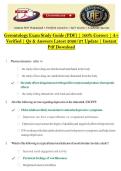
Gerontology Exam Study Guide (PDF) | 100% Correct | A+
Verified | Qs & Answers Latest 2026/27 Update | Instant
Pdf Download
1. Pharmacodynamics refers to .. ..
. . the study of how drugs are absrobed and distributed in the body
.. .. .. .. .. .. .. .. .. .. ..
. . the study of how drugs are metabolized and eliminated from the body
.. .. .. .. .. .. .. .. .. .. ..
.. the study of how drugs interact with specific receptors and produce therapeutic
. . . . . . . . . . ..
.. effects
. . the study of drug interactions with food and other meds
.. .. .. .. .. .. .. .. ..
2. All of the following are true regarding depression in the older adult, EXCEPT:
. .. .. .. .. .. .. .. .. .. . ..
.. Older adults are likely toseekintervention for depressive symptoms.
. . . . . . . . ..
. . Depression can have a major influence on occupational performance.
.. .. .. .. .. .. .. ..
. . Depression may increase the degree of disability and negatively affect rehabpotential.
.. .. .. .. .. .. . .. . .. .
.. OTs working with older adults should screen for depressive symptoms and help clients
. . . . . . . . . .. . .
manage depression.
. .
3. Which of the following is a typical behavioral indicator of mood disorders in older adults?
. .. .. . .. . . . . .. .. .. .. ..
. . Increased social engagement and activity
.. .. .. ..
. . Persistent feelings of worthlessness .. .. ..
. . Heightened interest in hobbies .. .. ..
, . . Improved sleep patterns .. ..
4. Most cases of elder abuse occur _____; and the most common perpetrators are _____ .
.. .. .. .. .. .. .. .. .. .. .. .. . .
. . at home; adult children
.. .. ..
. . in a hospital; medical & nursing professionals
.. .. .. .. .. ..
. . in a nursing home; spouses
.. .. .. ..
.. long-term memory care units; custodial& personal care assistants (PCAs)
. . .. . . .. . .. ..
5. Which are risk factors for depression in the elderly?
. .. . .. . .. .. ..
. . Prior depression or family history .. .. .. ..
. . Chronic medical illness .. ..
. . Being alone, lack of social support .. .. .. .. ..
. . All are risk factors .. .. ..
6. The persecution and degradation of people due to their age is called
.. .. .. .. .. .. .. .. .. .. ..
. . elder abuse ..
. . gerontophobia
. . gerontology
. . ageism
7. How is a durable power of attorney helpful to an incapacitated patient?
.. .. .. .. .. .. .. .. .. .. ..
. . It directs treatment in accordance with the patient's wishes.
.. .. .. .. .. .. .. ..
. . It directs an agent to make health care decisions.
.. .. .. .. .. .. .. ..
It gives powerto an agent to make decisions regarding health, property, and other
. . .. .. . .. .. .. .. .. .. .. . . .
assets.
.
. . It can only be executed by an attorney.
.. .. .. .. .. .. ..
8. What is the most common contributing factor to elder financial exploitation?
.. .. .. .. .. .. .. .. .. ..
, . . Some cognitive impairment .. ..
. . Really smart fraudsters .. ..
. . Credit union staff .. ..
. . The elder has too much time on their hands
.. .. .. .. .. .. .. ..
9. : During a health fair on aging, a nurse discusses the significance of
.. .. .. .. .. .. .. .. .. .. .. ..
distinguishing between normal cognitive aging and cognitive impairment. Whyis this
.. .. .. .. .. .. .. . . . .
differentiation important?
. .
. . To ensure that all elderly individuals receive the same level of care.
.. .. .. .. .. .. .. .. .. .. ..
. . Because cognitive impairment requires specific interventions not necessary for
. .. . . . . .. ..
normal aging.
.. ..
. . It helps in planning educational activities for older adults.
.. .. .. .. . .. . .
. . To reduce healthcare costs by avoiding unnecessary treatments.
.. .. .. .. .. .. ..
. . All cognitive changes are considered normaland do not need differentiation.
. .. .. .. .. . .. .. .. ..
10. Which of the following health-related conditions can significantly impact cognitive
.. .. .. .. .. .. .. .. ..
function in older adults?
. . . .
. . Hypertension
. . Osteoporosis
. . Chronic pain ..
. . All of the above .. .. ..
11. : What is a key aspect of preventing elder abuse in healthcare settings?
.. .. .. .. .. .. .. .. .. .. .. ..
. . Limiting family visits to reduce stress .. .. .. .. ..
. . Regularly training healthcare professionals on elder abuse .. .. .. .. .. ..
. . Avoiding involvement in the personal affairs of patients .. .. .. .. . .. ..
. . Focusing only on physical signs of abuse .. .. .. .. .. ..
, 12. Choose one of the following statements about mood disorders in the elderly.
.. .. .. .. .. .. .. .. .. .. ..
. . Depressive mood is often severe compared to young people. .. .. .. .. .. .. .. ..
. . Senile depression is often associated with physical symptoms.
.. .. .. .. .. .. ..
. . There is little association with emotional incontinence.
.. .. .. .. .. .
13. In what ways can cultural beliefs impact the perception and management of depression
.. .. .. .. .. .. .. .. .. .. .. ..
among older adults?
. . .
. . Cultural beliefs can lead to stigma around mental health, affecting willingness
. . .. . . . . . . ..
..to seek help.
.. ..
. . Cultural beliefs have no significant impact on mental health treatment.
.. .. .. .. .. .. .. .. ..
. . Cultural beliefs only influence younger populations, not the elderly.
.. .. .. .. .. .. .. ..
. . Cultural beliefs simplify the treatment process for depression.
.. .. .. .. .. .. .
14. A living will is
. .. ..
. . An advanced directive
.. ..
. . Specifies a patient's wish about medical treatment to prolong life
.. .. .. .. .. .. .. .. ..
. . A&B .. ..
. . None of the above .. .. ..
15. How do functional limitations impact the mental health of elderly individuals?
.. .. .. .. .. .. . . .. ..
. . They can lead to increased independence and self-esteem.
.. .. .. .. .. .. ..
. . They may result in social isolation and decreased engagement in activities.
. . . .. . .. .. .. . ..
. . They have no significant effect on mental health.
.. .. .. .. .. .. ..
.. They primarily affect physical health without influencing emotional well-being.
.. . . .. .. . . ..
16. Biologicaltheories explain aging in terms of:
. .. .. .. .. ..
. . cellular damage. ..
Verified | Qs & Answers Latest 2026/27 Update | Instant
Pdf Download
1. Pharmacodynamics refers to .. ..
. . the study of how drugs are absrobed and distributed in the body
.. .. .. .. .. .. .. .. .. .. ..
. . the study of how drugs are metabolized and eliminated from the body
.. .. .. .. .. .. .. .. .. .. ..
.. the study of how drugs interact with specific receptors and produce therapeutic
. . . . . . . . . . ..
.. effects
. . the study of drug interactions with food and other meds
.. .. .. .. .. .. .. .. ..
2. All of the following are true regarding depression in the older adult, EXCEPT:
. .. .. .. .. .. .. .. .. .. . ..
.. Older adults are likely toseekintervention for depressive symptoms.
. . . . . . . . ..
. . Depression can have a major influence on occupational performance.
.. .. .. .. .. .. .. ..
. . Depression may increase the degree of disability and negatively affect rehabpotential.
.. .. .. .. .. .. . .. . .. .
.. OTs working with older adults should screen for depressive symptoms and help clients
. . . . . . . . . .. . .
manage depression.
. .
3. Which of the following is a typical behavioral indicator of mood disorders in older adults?
. .. .. . .. . . . . .. .. .. .. ..
. . Increased social engagement and activity
.. .. .. ..
. . Persistent feelings of worthlessness .. .. ..
. . Heightened interest in hobbies .. .. ..
, . . Improved sleep patterns .. ..
4. Most cases of elder abuse occur _____; and the most common perpetrators are _____ .
.. .. .. .. .. .. .. .. .. .. .. .. . .
. . at home; adult children
.. .. ..
. . in a hospital; medical & nursing professionals
.. .. .. .. .. ..
. . in a nursing home; spouses
.. .. .. ..
.. long-term memory care units; custodial& personal care assistants (PCAs)
. . .. . . .. . .. ..
5. Which are risk factors for depression in the elderly?
. .. . .. . .. .. ..
. . Prior depression or family history .. .. .. ..
. . Chronic medical illness .. ..
. . Being alone, lack of social support .. .. .. .. ..
. . All are risk factors .. .. ..
6. The persecution and degradation of people due to their age is called
.. .. .. .. .. .. .. .. .. .. ..
. . elder abuse ..
. . gerontophobia
. . gerontology
. . ageism
7. How is a durable power of attorney helpful to an incapacitated patient?
.. .. .. .. .. .. .. .. .. .. ..
. . It directs treatment in accordance with the patient's wishes.
.. .. .. .. .. .. .. ..
. . It directs an agent to make health care decisions.
.. .. .. .. .. .. .. ..
It gives powerto an agent to make decisions regarding health, property, and other
. . .. .. . .. .. .. .. .. .. .. . . .
assets.
.
. . It can only be executed by an attorney.
.. .. .. .. .. .. ..
8. What is the most common contributing factor to elder financial exploitation?
.. .. .. .. .. .. .. .. .. ..
, . . Some cognitive impairment .. ..
. . Really smart fraudsters .. ..
. . Credit union staff .. ..
. . The elder has too much time on their hands
.. .. .. .. .. .. .. ..
9. : During a health fair on aging, a nurse discusses the significance of
.. .. .. .. .. .. .. .. .. .. .. ..
distinguishing between normal cognitive aging and cognitive impairment. Whyis this
.. .. .. .. .. .. .. . . . .
differentiation important?
. .
. . To ensure that all elderly individuals receive the same level of care.
.. .. .. .. .. .. .. .. .. .. ..
. . Because cognitive impairment requires specific interventions not necessary for
. .. . . . . .. ..
normal aging.
.. ..
. . It helps in planning educational activities for older adults.
.. .. .. .. . .. . .
. . To reduce healthcare costs by avoiding unnecessary treatments.
.. .. .. .. .. .. ..
. . All cognitive changes are considered normaland do not need differentiation.
. .. .. .. .. . .. .. .. ..
10. Which of the following health-related conditions can significantly impact cognitive
.. .. .. .. .. .. .. .. ..
function in older adults?
. . . .
. . Hypertension
. . Osteoporosis
. . Chronic pain ..
. . All of the above .. .. ..
11. : What is a key aspect of preventing elder abuse in healthcare settings?
.. .. .. .. .. .. .. .. .. .. .. ..
. . Limiting family visits to reduce stress .. .. .. .. ..
. . Regularly training healthcare professionals on elder abuse .. .. .. .. .. ..
. . Avoiding involvement in the personal affairs of patients .. .. .. .. . .. ..
. . Focusing only on physical signs of abuse .. .. .. .. .. ..
, 12. Choose one of the following statements about mood disorders in the elderly.
.. .. .. .. .. .. .. .. .. .. ..
. . Depressive mood is often severe compared to young people. .. .. .. .. .. .. .. ..
. . Senile depression is often associated with physical symptoms.
.. .. .. .. .. .. ..
. . There is little association with emotional incontinence.
.. .. .. .. .. .
13. In what ways can cultural beliefs impact the perception and management of depression
.. .. .. .. .. .. .. .. .. .. .. ..
among older adults?
. . .
. . Cultural beliefs can lead to stigma around mental health, affecting willingness
. . .. . . . . . . ..
..to seek help.
.. ..
. . Cultural beliefs have no significant impact on mental health treatment.
.. .. .. .. .. .. .. .. ..
. . Cultural beliefs only influence younger populations, not the elderly.
.. .. .. .. .. .. .. ..
. . Cultural beliefs simplify the treatment process for depression.
.. .. .. .. .. .. .
14. A living will is
. .. ..
. . An advanced directive
.. ..
. . Specifies a patient's wish about medical treatment to prolong life
.. .. .. .. .. .. .. .. ..
. . A&B .. ..
. . None of the above .. .. ..
15. How do functional limitations impact the mental health of elderly individuals?
.. .. .. .. .. .. . . .. ..
. . They can lead to increased independence and self-esteem.
.. .. .. .. .. .. ..
. . They may result in social isolation and decreased engagement in activities.
. . . .. . .. .. .. . ..
. . They have no significant effect on mental health.
.. .. .. .. .. .. ..
.. They primarily affect physical health without influencing emotional well-being.
.. . . .. .. . . ..
16. Biologicaltheories explain aging in terms of:
. .. .. .. .. ..
. . cellular damage. ..


