Ainsworth’s Strange Situation
Procedure
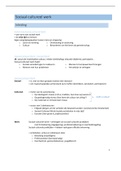
- Controlled observation to measure the security of attachment with a
caregiver.
- Lab conditions with a two-way mirror to observe behaviour.
- Procedure has 7 episodes, each lasting 3 minutes.
- Behaviours to judge attachment-
→ Child is encouraged to explore -> tests exploration and secure base.
→ A stranger comes in and tries to interact with the child -> tests
stranger anxiety
→ The caregiver leaves the child & stranger -> tests separation &
stranger anxiety
→ The caregiver returns and stranger leaves -> tests reunion
behaviour and secure base
→ The caregiver leaves the child alone -> tests separation anxiety
→ The stranger returns -> tests stranger anxiety
→ The caregiver returns and is reunited with the child -> tests reunion
behaviour
Findings
- Secure attachment (Type B)
→ Children explore happily but go back to their caregiver (proximity
seeking and secure base behaviour).
→ Show moderate separation distress and moderate stranger anxiety.
→ Securely attached children require and accept comfort from the
caregiver in the reunion stage.
→ About 65% of British toddlers are securely attached.
- Insecure-avoidant attachment (Type A)
→ Children explore freely but do not show secure base behaviour.
→ Show little to no reaction when caregiver leaves and makes little
contact once they return.
→ Show little stranger anxiety.
→ Do not require comfort at the reunion stage.
→ 25% of toddlers are insecure avoidant.
- Insecure-resistant attachment (Type C)
→ Seek greater proximity than others so explore less.
→ Show huge stranger and separation distress but resist comfort when
reunited with caregiver.
→ 3% of toddlers are insecure-resistant.
Procedure
- Controlled observation to measure the security of attachment with a
caregiver.
- Lab conditions with a two-way mirror to observe behaviour.
- Procedure has 7 episodes, each lasting 3 minutes.
- Behaviours to judge attachment-
→ Child is encouraged to explore -> tests exploration and secure base.
→ A stranger comes in and tries to interact with the child -> tests
stranger anxiety
→ The caregiver leaves the child & stranger -> tests separation &
stranger anxiety
→ The caregiver returns and stranger leaves -> tests reunion
behaviour and secure base
→ The caregiver leaves the child alone -> tests separation anxiety
→ The stranger returns -> tests stranger anxiety
→ The caregiver returns and is reunited with the child -> tests reunion
behaviour
Findings
- Secure attachment (Type B)
→ Children explore happily but go back to their caregiver (proximity
seeking and secure base behaviour).
→ Show moderate separation distress and moderate stranger anxiety.
→ Securely attached children require and accept comfort from the
caregiver in the reunion stage.
→ About 65% of British toddlers are securely attached.
- Insecure-avoidant attachment (Type A)
→ Children explore freely but do not show secure base behaviour.
→ Show little to no reaction when caregiver leaves and makes little
contact once they return.
→ Show little stranger anxiety.
→ Do not require comfort at the reunion stage.
→ 25% of toddlers are insecure avoidant.
- Insecure-resistant attachment (Type C)
→ Seek greater proximity than others so explore less.
→ Show huge stranger and separation distress but resist comfort when
reunited with caregiver.
→ 3% of toddlers are insecure-resistant.