

WGU D771 EXAM SCRIPT TESTED
QUESTIONS AND SOLUTIONS 100 PERCENT
CORRECT
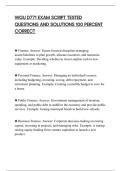
◉ Finance. Answer: Future-focused discipline managing
assets/liabilities to plan growth, allocate resources, and maximize
value. Example: Deciding whether to invest surplus cash in new
equipment or marketing.
◉ Personal Finance. Answer: Managing an individual's money,
including budgeting, investing, saving, debt repayment, and
retirement planning. Example: Creating a monthly budget to save for
a home.
◉ Public Finance. Answer: Government management of taxation,
spending, and public debt to stabilize the economy and provide public
services. Example: Issuing municipal bonds to build new schools.
◉ Business Finance. Answer: Corporate decision-making on raising
capital, investing in projects, and managing risks. Example: A startup
raising equity funding from venture capitalists to launch a new
product.
, ◉ Common Stock. Answer: Equity ownership in a company with
voting rights and variable dividends. Last to be paid in liquidation.
Example: Shares of Apple (AAPL).
◉ Preferred Stock. Answer: Equity ownership with fixed dividends
and priority over common stock in payouts, usually without voting
rights.
◉ Bonds. Answer: Debt securities where issuers borrow from
investors, repaying principal plus interest.
◉ Corporate Bonds. Answer: Higher yield and risk; issued by
companies.
◉ Municipal Bonds. Answer: Issued by local governments; often tax-
free interest income.
◉ Treasury Securities. Answer: U.S. government debt with low risk;
includes T-bills, notes, and bonds.
◉ Options. Answer: Derivatives giving the right (not obligation) to
buy/sell an asset at a set price before expiration.
◉ Futures. Answer: Contracts obligating buy/sell at a set price on a
future date.
QUESTIONS AND SOLUTIONS 100 PERCENT
CORRECT
◉ Finance. Answer: Future-focused discipline managing
assets/liabilities to plan growth, allocate resources, and maximize
value. Example: Deciding whether to invest surplus cash in new
equipment or marketing.
◉ Personal Finance. Answer: Managing an individual's money,
including budgeting, investing, saving, debt repayment, and
retirement planning. Example: Creating a monthly budget to save for
a home.
◉ Public Finance. Answer: Government management of taxation,
spending, and public debt to stabilize the economy and provide public
services. Example: Issuing municipal bonds to build new schools.
◉ Business Finance. Answer: Corporate decision-making on raising
capital, investing in projects, and managing risks. Example: A startup
raising equity funding from venture capitalists to launch a new
product.
, ◉ Common Stock. Answer: Equity ownership in a company with
voting rights and variable dividends. Last to be paid in liquidation.
Example: Shares of Apple (AAPL).
◉ Preferred Stock. Answer: Equity ownership with fixed dividends
and priority over common stock in payouts, usually without voting
rights.
◉ Bonds. Answer: Debt securities where issuers borrow from
investors, repaying principal plus interest.
◉ Corporate Bonds. Answer: Higher yield and risk; issued by
companies.
◉ Municipal Bonds. Answer: Issued by local governments; often tax-
free interest income.
◉ Treasury Securities. Answer: U.S. government debt with low risk;
includes T-bills, notes, and bonds.
◉ Options. Answer: Derivatives giving the right (not obligation) to
buy/sell an asset at a set price before expiration.
◉ Futures. Answer: Contracts obligating buy/sell at a set price on a
future date.


