

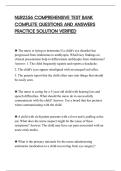
NUR2356 COMPREHENSIVE TEST BANK
COMPLETE QUESTIONS AND ANSWERS
PRACTICE SOLUTION VERIFIED
◉ The nurse is trying to determine if a child's eye disorder has
progressed from strabismus to amblyopia. Which key findings on
clinical presentation help to differentiate amblyopia from strabismus?
Answer: 1. The child frequently squints and reports a headache.
2. The child's eyes appear misaligned with an unequal red reflex.
3. The parents report that the child often runs into things that should
be easily seen.
◉ The nurse is caring for a 5-year-old child with hearing loss and
speech difficulties. What should the nurse do to successfully
communicate with the child? Answer: Use a board that has pictures
when communicating with the child.
◉ A child with cleft palate presents with a fever and is pulling at the
ear. What does the nurse suspect might be the cause of these
symptoms? Answer: The child may have ear pain associated with an
acute otitis media.
◉ What is the primary rationale for the nurse administering
antiemetic medication to a child recovering from eye surgery?
, Answer: Antiemetics decrease the likelihood of vomiting and
vomiting can increase intraocular pressure.
◉ The nurse is assessing a newborn with edema on the skull. The
nurse needs to educate the parents on the condition that the child has.
What assessments can the nurse make to determine what education to
provide to the parents? Answer: 1. The nurse palpates the edema to
see if it crosses the suture line.
2. The nurse identifies the onset of the edema, noting if it was present
at birth or if it occurred later.
◉ The parents of a 4-year-old with pharyngitis are caring for their
child at home. They are not sure their child is receiving enough fluids
and call their health care provider's office. What can the nurse ask to
determine if the child is receiving enough fluids? Answer: "Is the
child urinating a normal amount?"
◉ The nurse is teaching the parents of a 3—month-old how to
administer oral nystatin suspension to their infant. Which statement
made by the parents indicate they need further instruction? Answer: "I
will be sure to discontinue the medication as soon as the white spots
clear up."
◉ An 8-year-old patient presents with a low-grade fever, nasal
congestion with purulent nasal discharge, cough (which usually
increases when the child is lying down), and headache. Which areas
of the head and face should the nurse assess in this patient? Answer:
1. The eyes should be assessed.
COMPLETE QUESTIONS AND ANSWERS
PRACTICE SOLUTION VERIFIED
◉ The nurse is trying to determine if a child's eye disorder has
progressed from strabismus to amblyopia. Which key findings on
clinical presentation help to differentiate amblyopia from strabismus?
Answer: 1. The child frequently squints and reports a headache.
2. The child's eyes appear misaligned with an unequal red reflex.
3. The parents report that the child often runs into things that should
be easily seen.
◉ The nurse is caring for a 5-year-old child with hearing loss and
speech difficulties. What should the nurse do to successfully
communicate with the child? Answer: Use a board that has pictures
when communicating with the child.
◉ A child with cleft palate presents with a fever and is pulling at the
ear. What does the nurse suspect might be the cause of these
symptoms? Answer: The child may have ear pain associated with an
acute otitis media.
◉ What is the primary rationale for the nurse administering
antiemetic medication to a child recovering from eye surgery?
, Answer: Antiemetics decrease the likelihood of vomiting and
vomiting can increase intraocular pressure.
◉ The nurse is assessing a newborn with edema on the skull. The
nurse needs to educate the parents on the condition that the child has.
What assessments can the nurse make to determine what education to
provide to the parents? Answer: 1. The nurse palpates the edema to
see if it crosses the suture line.
2. The nurse identifies the onset of the edema, noting if it was present
at birth or if it occurred later.
◉ The parents of a 4-year-old with pharyngitis are caring for their
child at home. They are not sure their child is receiving enough fluids
and call their health care provider's office. What can the nurse ask to
determine if the child is receiving enough fluids? Answer: "Is the
child urinating a normal amount?"
◉ The nurse is teaching the parents of a 3—month-old how to
administer oral nystatin suspension to their infant. Which statement
made by the parents indicate they need further instruction? Answer: "I
will be sure to discontinue the medication as soon as the white spots
clear up."
◉ An 8-year-old patient presents with a low-grade fever, nasal
congestion with purulent nasal discharge, cough (which usually
increases when the child is lying down), and headache. Which areas
of the head and face should the nurse assess in this patient? Answer:
1. The eyes should be assessed.


