

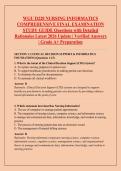
WGU D220 NURSING INFORMATICS
COMPREHENSIVE FINAL EXAMINATION
STUDY GUIDE Questions with Detailed
Rationales Latest 2026 Update | Verified Answers
| Grade A+ Preparation
SECTION 1: CLINICAL DECISION SUPPORT & INFORMATICS
FOUNDATIONS (Questions 1-15)
1. What is the intent of the Clinical Decision Support (CDS) System?
A. To replace nursing judgment in patient care
B. To support healthcare practitioners in making patient-care decisions
C. To eliminate the need for documentation
D. To automate all clinical workflows
Answer: B
Rationale: Clinical Decision Support (CDS) systems are designed to support
healthcare practitioners in making patient-care decisions by providing evidence-
based information at the point of care.
2. Which statement best describes Nursing Informatics?
A. The use of computers to manage patient appointments
B. The integration of nursing science, computer science, and information science
to manage and communicate data, information, knowledge, and wisdom in nursing
practice
C. The process of entering patient data into an electronic record
D. The management of hospital billing systems
Answer: B
Rationale: Nursing informatics integrates nursing science, computer science,
information science, cognitive science, management science, and organizational
theory to manage and communicate data, information, knowledge, and wisdom in
nursing practice.
,3. Which information in a patient's electronic medical record (EMR) is an
addition to nursing flowsheets and provider orders that helps a nurse manage
fluctuations in blood glucose levels?
A. Medication Administration Record (MAR)
B. Vital signs flowsheet
C. Progress notes
D. Laboratory results
Answer: A
Rationale: The Medication Administration Record (MAR) helps nurses manage
medications, including insulin administration, which is critical for managing blood
glucose fluctuations.
4. A nurse is planning care for a patient admitted with COVID-19. Which
information in the electronic medical record will help the nurse plan care for
this patient?
A. The patient's laboratory results over the last 72 hours
B. The patient's family history
C. The patient's insurance information
D. The patient's dietary preferences
Answer: A
Rationale: Recent laboratory results (over the last 72 hours) provide current
clinical data essential for planning care for a patient with an acute condition like
COVID-19.
5. Which clinical note type is exempt from being shared with a patient
according to the United States Core Data for Interoperability (USCDI)
standards?
A. Progress notes
B. Discharge summaries
C. Psychotherapy notes
D. History and physical notes
,Answer: C
Rationale: Psychotherapy notes are exempt from patient access requirements
under USCDI standards due to their sensitive nature, as they contain detailed
information about the therapeutic process.
6. An informatics nurse recommends expanding use of the surgical
information system (SIS). Which resolution can improve workflow issues?
A. Radio frequency identification (RFID) in patient labels
B. Additional staff training
C. Upgrading computer hardware
D. Implementing voice recognition
Answer: A
Rationale: RFID technology in patient labels can improve workflow by enabling
accurate patient identification, tracking, and reducing errors in surgical
information systems.
7. An informatics nurse and an emergency nurse are conducting a patient
admission from the ER. Which tool should these nurses use for process
analysis?
A. Gantt chart
B. SWOT template
C. Fishbone diagram
D. Pareto chart
Answer: B
Rationale: A SWOT (Strengths, Weaknesses, Opportunities, Threats) template is a
strategic planning tool used to analyze processes and identify areas for
improvement in patient admission workflows.
8. What is an effective way to reduce the risk of access to electronic protected
health information (ePHI) by unauthorized users?
A. Make sure all users adhere to security and confidentiality policies set forth by
the facility
B. Limit all access to information
, C. Use only paper records
D. Allow all staff access to all records
Answer: A
Rationale: Ensuring all users adhere to established security and confidentiality
policies is the most effective way to reduce unauthorized access to ePHI.
9. How does a healthcare policy assure access to health information for
authorized users?
A. It creates a reliable method to verify the identities of users accessing health
information
B. It allows all users to access all information
C. It eliminates the need for passwords
D. It stores all information on paper
Answer: A
Rationale: Healthcare policies establish reliable identity verification methods
(such as passwords, biometrics, and two-factor authentication) to ensure only
authorized users access health information.
10. What is the typical role of the informatics nurse?
A. Providing direct patient care at the bedside
B. Plans, coordinates, and facilitates education for all computer applications and
software for nursing or clinical user groups
C. Managing hospital finances
D. Performing surgical procedures
Answer: B
Rationale: A typical role of the informatics nurse is to plan, coordinate, and
facilitate education for computer applications and software for nursing and
clinical user groups.
11. What is the goal of the Merit-Based Incentive Payment System (MIPS)
and Meaningful Use (MU)?
A. Increasing hospital profits
B. Patient quality care
COMPREHENSIVE FINAL EXAMINATION
STUDY GUIDE Questions with Detailed
Rationales Latest 2026 Update | Verified Answers
| Grade A+ Preparation
SECTION 1: CLINICAL DECISION SUPPORT & INFORMATICS
FOUNDATIONS (Questions 1-15)
1. What is the intent of the Clinical Decision Support (CDS) System?
A. To replace nursing judgment in patient care
B. To support healthcare practitioners in making patient-care decisions
C. To eliminate the need for documentation
D. To automate all clinical workflows
Answer: B
Rationale: Clinical Decision Support (CDS) systems are designed to support
healthcare practitioners in making patient-care decisions by providing evidence-
based information at the point of care.
2. Which statement best describes Nursing Informatics?
A. The use of computers to manage patient appointments
B. The integration of nursing science, computer science, and information science
to manage and communicate data, information, knowledge, and wisdom in nursing
practice
C. The process of entering patient data into an electronic record
D. The management of hospital billing systems
Answer: B
Rationale: Nursing informatics integrates nursing science, computer science,
information science, cognitive science, management science, and organizational
theory to manage and communicate data, information, knowledge, and wisdom in
nursing practice.
,3. Which information in a patient's electronic medical record (EMR) is an
addition to nursing flowsheets and provider orders that helps a nurse manage
fluctuations in blood glucose levels?
A. Medication Administration Record (MAR)
B. Vital signs flowsheet
C. Progress notes
D. Laboratory results
Answer: A
Rationale: The Medication Administration Record (MAR) helps nurses manage
medications, including insulin administration, which is critical for managing blood
glucose fluctuations.
4. A nurse is planning care for a patient admitted with COVID-19. Which
information in the electronic medical record will help the nurse plan care for
this patient?
A. The patient's laboratory results over the last 72 hours
B. The patient's family history
C. The patient's insurance information
D. The patient's dietary preferences
Answer: A
Rationale: Recent laboratory results (over the last 72 hours) provide current
clinical data essential for planning care for a patient with an acute condition like
COVID-19.
5. Which clinical note type is exempt from being shared with a patient
according to the United States Core Data for Interoperability (USCDI)
standards?
A. Progress notes
B. Discharge summaries
C. Psychotherapy notes
D. History and physical notes
,Answer: C
Rationale: Psychotherapy notes are exempt from patient access requirements
under USCDI standards due to their sensitive nature, as they contain detailed
information about the therapeutic process.
6. An informatics nurse recommends expanding use of the surgical
information system (SIS). Which resolution can improve workflow issues?
A. Radio frequency identification (RFID) in patient labels
B. Additional staff training
C. Upgrading computer hardware
D. Implementing voice recognition
Answer: A
Rationale: RFID technology in patient labels can improve workflow by enabling
accurate patient identification, tracking, and reducing errors in surgical
information systems.
7. An informatics nurse and an emergency nurse are conducting a patient
admission from the ER. Which tool should these nurses use for process
analysis?
A. Gantt chart
B. SWOT template
C. Fishbone diagram
D. Pareto chart
Answer: B
Rationale: A SWOT (Strengths, Weaknesses, Opportunities, Threats) template is a
strategic planning tool used to analyze processes and identify areas for
improvement in patient admission workflows.
8. What is an effective way to reduce the risk of access to electronic protected
health information (ePHI) by unauthorized users?
A. Make sure all users adhere to security and confidentiality policies set forth by
the facility
B. Limit all access to information
, C. Use only paper records
D. Allow all staff access to all records
Answer: A
Rationale: Ensuring all users adhere to established security and confidentiality
policies is the most effective way to reduce unauthorized access to ePHI.
9. How does a healthcare policy assure access to health information for
authorized users?
A. It creates a reliable method to verify the identities of users accessing health
information
B. It allows all users to access all information
C. It eliminates the need for passwords
D. It stores all information on paper
Answer: A
Rationale: Healthcare policies establish reliable identity verification methods
(such as passwords, biometrics, and two-factor authentication) to ensure only
authorized users access health information.
10. What is the typical role of the informatics nurse?
A. Providing direct patient care at the bedside
B. Plans, coordinates, and facilitates education for all computer applications and
software for nursing or clinical user groups
C. Managing hospital finances
D. Performing surgical procedures
Answer: B
Rationale: A typical role of the informatics nurse is to plan, coordinate, and
facilitate education for computer applications and software for nursing and
clinical user groups.
11. What is the goal of the Merit-Based Incentive Payment System (MIPS)
and Meaningful Use (MU)?
A. Increasing hospital profits
B. Patient quality care


