

Written by students who passed Immediately available after payment Read online or as PDF Wrong document? Swap it for free 4.6 TrustPilot
logo-home
Document preview thumbnail
Preview 2 out of 11 pages
Exam (elaborations)

NUR 280 Glucose Regulation Exam 2 Study Guide | 80+ Practice Questions & Verified Answers | Diabetes Mellitus, Insulin, Glucose Metabolism, Diabetic Complications & Nursing Management | 2026

Document preview thumbnail
Preview 2 out of 11 pages

Prepare for NUR 280 Glucose Regulation Exam 2 with this comprehensive study guide featuring 80+ expertly organized practice questions and verified answers covering the essential concepts of glucose regulation, diabetes mellitus, endocrine physiology, and nursing management. This resource provides an in-depth review of carbohydrate metabolism, insulin production and function, glucose transport, glycogenesis, glycogenolysis, gluconeogenesis, diabetes mellitus classifications, diagnostic testing, blood glucose interpretation, hemoglobin A1C, diabetic ketoacidosis (DKA), acute and chronic diabetic complications, glycemic control, patient education, nutrition, exercise, foot care, and self-monitoring of blood glucose. The material is presented in a structured question-and-answer format that promotes active recall, strengthens clinical reasoning, and prepares nursing students for quizzes, unit examinations, comprehensive exams, and NCLEX-style assessments. This study guide systematically explains the principles of glucose metabolism and endocrine regulation, including insulin secretion by the beta cells of the Islets of Langerhans, glucose uptake into body cells, glycogen formation and storage, glycogen breakdown, gluconeogenesis, insulin resistance, and the physiological mechanisms responsible for maintaining blood glucose homeostasis. Students will review the pathophysiology of Type 1 diabetes mellitus, Type 2 diabetes mellitus, gestational diabetes mellitus, and secondary causes of diabetes, while also examining major risk factors such as obesity, sedentary lifestyle, autoimmune disorders, pancreatic disease, medication toxicity, pregnancy-related hormonal changes, and genetic predisposition. The guide also reviews the interpretation of fasting plasma glucose, oral glucose tolerance testing (OGTT), random plasma glucose, glycated hemoglobin (HbA1C), glucosuria, ketonuria, hyperglycemia, and hypoglycemia, reinforcing diagnostic criteria commonly tested in undergraduate nursing courses. The resource further provides extensive coverage of acute and chronic diabetic complications and evidence-based nursing management, including polydipsia, polyuria, polyphagia, diabetic ketoacidosis (DKA), electrolyte disturbances, accelerated atherosclerosis, coronary artery disease, peripheral arterial disease, stroke, nephropathy, renal failure, retinopathy, peripheral neuropathy, lower-extremity amputation, immunosuppression, dermatologic complications, and psychological disturbances. Students will also master the differences between the Dawn Phenomenon and the Somogyi Effect, along with recommended interventions involving insulin adjustment, meal timing, and exercise modification. In addition, the guide emphasizes comprehensive diabetes self-management strategies, including glycemic index nutrition, blood glucose monitoring, cardiovascular risk reduction, smoking cessation, blood pressure and lipid management, proper foot care, podiatry follow-up, and patient education. Organized into concise, exam-focused questions and answers, this study guide serves as an excellent revision resource for mastering the glucose regulation concepts most frequently assessed in NUR 280 Exam 2 and NCLEX-style examinations. The content aligns with the foundational principles presented in leading pathophysiology and medical-surgical nursing textbooks widely adopted in undergraduate nursing, BSN, and ADN programs. Relevant Students: NUR 280 students, Pathophysiology students, Medical-Surgical Nursing students, Adult Health Nursing students, Endocrine Nursing students, BSN students, ADN students, Registered Nursing students, Practical Nursing students, Pre-Licensure Nursing students, NCLEX-RN candidates, Health Sciences students, Nursing Exam Preparation students. APA References: McCance, K. L., & Huether, S. E. (2023). Pathophysiology: The Biologic Basis for Disease in Adults and Children (9th ed.). Elsevier. Harding, M. M., Kwong, J., Roberts, D., Hagler, D., & Reinisch, C. (2023). Lewis's Medical-Surgical Nursing: Assessment and Management of Clinical Problems (12th ed.). Elsevier. American Diabetes Association Professional Practice Committee. (2024). Standards of Care in Diabetes—2024. Diabetes Care, 47(Suppl. 1). Keywords: NUR 280, Glucose Regulation, Exam 2, practice questions, verified answers, diabetes mellitus, Type 1 diabetes, Type 2 diabetes, gestational diabetes, insulin, insulin resistance, beta cells, Islets of Langerhans, carbohydrate metabolism, glucose metabolism, glucose, glycogen, glycogenesis, glycogenolysis, gluconeogenesis, blood glucose, fasting plasma glucose, oral glucose tolerance test, OGTT, random plasma glucose, hemoglobin A1C, glycated hemoglobin, glucosuria, ketonuria, hyperglycemia, hypoglycemia, diabetic ketoacidosis, DKA, polydipsia, polyuria, polyphagia, diabetic complications, nephropathy, renal disease, renal failure, retinopathy, blindness, peripheral neuropathy, peripheral vascular disease, coronary artery disease, stroke, lower extremity amputation, accelerated atherosclerosis, immunosuppression, Dawn phenomenon, Somogyi effect, glycemic index diet, diabetes nutrition, exercise, foot care, podiatry, self-monitoring of blood glucose, blood sugar monitoring, patient education, endocrine disorders, nursing interventions, NCLEX preparation

Content preview

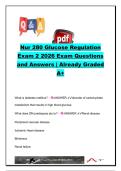
Nur 280 Glucose Regulation
Exam 2 2026 Exam Questions
and Answers | Already Graded
A+


What is diabetes mellitus? - ANSWER ✔✔disorder of carbohydrate

metabolism that results in high blood glucose


What does DM predispose pts to? - ANSWER ✔✔Renal disease


Peripheral vascular disease

Ischemic Heart disease

Blindness

Renal failure

, Lower extremity amputation


What are the types of DM? - ANSWER ✔✔Type 1


Type 2

Gestational (GDM)


What can cause DM? - ANSWER ✔✔Obesity


Sedentary lifestyle


Insulin resistance


Autoimmune mechanisms


Hormonal changes during pregnancy


Genetic mutations


Pancreatic disease- Cystic fibrosis pancreatitis

Document information

Uploaded on
July 31, 2026
Number of pages
11
Written in
2025/2026
Type
Exam (elaborations)
Contains
Questions & answers
$18.99

Wrong document? Swap it for free Within 14 days of purchase and before downloading, you can choose a different document. You can simply spend the amount again.
Written by students who passed
Immediately available after payment
Read online or as PDF

Seller avatar
Reputation scores are based on the amount of documents a seller has sold for a fee and the reviews they have received for those documents. There are three levels: Bronze, Silver and Gold. The better the reputation, the more your can rely on the quality of the sellers work.
NinjaNerd
3.4
(76)
Sold
396
Followers
6
Items
15309
Last sold
1 day ago


Why students choose Stuvia

Created by fellow students, verified by reviews

Quality you can trust: written by students who passed their tests and reviewed by others who've used these notes.

Didn't get what you expected? Choose another document

No worries! You can instantly pick a different document that better fits what you're looking for.

Pay as you like, start learning right away

No subscription, no commitments. Pay the way you're used to via credit card and download your PDF document instantly.

Student with book image

“Bought, downloaded, and aced it. It really can be that simple.”

Alisha Student

Working on your references?

Create accurate citations in APA, MLA and Harvard with our free citation generator.

Working on your references?

Frequently asked questions

