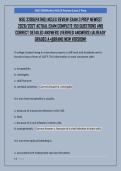
NSG 3280(Patho) NCLEX Review Exam 3 Prep
NSG 3280(PATHO) NCLEX REVIEW EXAM 3 PREP NEWEST
2026/2027 ACTUAL EXAM COMPLETE 150 QUESTIONS AND
CORRECT DETAILED ANSWERS (VERIFIED ANSWERS) |ALREADY
GRADED A+||BRAND NEW VERSION!!
A college student living in a dormitory reports a stiff neck and headache and is
found to have a fever of 102°F. This information is most consistent with:
a. encephalitis.
b. meningitis.
c. skull fracture.
d. cerebral ischemia. - Correct Answer-b. meningitis
It is true that encephalitis is usually:
a. because of a bacterial infection in the CNS.
b. fatal.
c. because of a viral infection in brain cells.
d. asymptomatic. - Correct Answer-c. because of a viral infection in brain cells.
It is true that epidural bleeding is:
a. associated with widespread vascular disruption.
1|Page
, NSG 3280(Patho) NCLEX Review Exam 3 Prep
b. located between the arachnoid and the dura mater.
c. usually because of venous leakage.
d. characterized by a lucid interval immediately after injury. - Correct Answer-d.
characterized by a lucid interval immediately after injury.
The most important determinant for prescribing therapy for acute stroke is:
a. location of ischemia.
b. thrombotic versus embolic cause.
c. ischemic versus hemorrhagic cause.
d. age of the patient. - Correct Answer-C. ischemic versus hemorrhagic cause.
Intracranial pressure normally ranges from - mm Hg
a. O to 15
b. 10 to 20
c. 15 to 25
d. 20 to 30 - Correct Answer-a. O to 15
- edema occurs when ischemic tissue swells because of cellular energy failure.
a. Interstitial
b. Osmotic
2|Page
, NSG 3280(Patho) NCLEX Review Exam 3 Prep
c. Vasogenic
d. Cytotoxic - Correct Answer-d. Cytotoxic
A severe complication of elevated intracranial pressure is:
a. Cushing reflex.
b. brain herniation.
c. burr hole.
d. hydrocephalus. - Correct Answer-b. brain herniation.
The physiologic change most likely to lead to an increase in intracranial pressure is
a. cerebral vasodilation.
b. hypernatremia.
c. respiratory hyperventilation.
d. REM sleep. - Correct Answer-a. cerebral vasodilation
Manifestations of acute brain ischemia (Cushing reflex) are due primarily to
a. parasympathetic nervous system activation.
b. sympathetic nervous system activation.
c. autoregulation of body systems.
3|Page
, NSG 3280(Patho) NCLEX Review Exam 3 Prep
d. loss of brainstem reflexes. - Correct Answer-b. sympathetic nervous system
activation.
Which group of clinical findings indicates the poorest neurologic functioning?
a. Spontaneous eye opening, movement to command, oriented to self only.
b. Eyes open to light touch on shoulder, pupils briskly reactive to light bilaterally.
c. Assumes decorticate posture with light touch, no verbal response.
d. No eye opening, responds to painful stimulus by withdrawing. - Correct Answer-
c. Assumes decorticate posture with light touch, no verbal response.
Acceleration-deceleration movements of the head often result in polar injuries in
which:
a. injury is localized to the site of initial impact.
b. widespread neuronal damage is incurred.
c. bleeding from venules fills the subdural space.
d. focal injuries occur in two places at opposite poles. - Correct Answer-d. focal
injuries occur in two places at opposite poles.
Secondary injury after head trauma refers to:
a. brain injury resulting from the initial trauma.
b. focal areas of bleeding.
4|Page
NSG 3280(PATHO) NCLEX REVIEW EXAM 3 PREP NEWEST
2026/2027 ACTUAL EXAM COMPLETE 150 QUESTIONS AND
CORRECT DETAILED ANSWERS (VERIFIED ANSWERS) |ALREADY
GRADED A+||BRAND NEW VERSION!!
A college student living in a dormitory reports a stiff neck and headache and is
found to have a fever of 102°F. This information is most consistent with:
a. encephalitis.
b. meningitis.
c. skull fracture.
d. cerebral ischemia. - Correct Answer-b. meningitis
It is true that encephalitis is usually:
a. because of a bacterial infection in the CNS.
b. fatal.
c. because of a viral infection in brain cells.
d. asymptomatic. - Correct Answer-c. because of a viral infection in brain cells.
It is true that epidural bleeding is:
a. associated with widespread vascular disruption.
1|Page
, NSG 3280(Patho) NCLEX Review Exam 3 Prep
b. located between the arachnoid and the dura mater.
c. usually because of venous leakage.
d. characterized by a lucid interval immediately after injury. - Correct Answer-d.
characterized by a lucid interval immediately after injury.
The most important determinant for prescribing therapy for acute stroke is:
a. location of ischemia.
b. thrombotic versus embolic cause.
c. ischemic versus hemorrhagic cause.
d. age of the patient. - Correct Answer-C. ischemic versus hemorrhagic cause.
Intracranial pressure normally ranges from - mm Hg
a. O to 15
b. 10 to 20
c. 15 to 25
d. 20 to 30 - Correct Answer-a. O to 15
- edema occurs when ischemic tissue swells because of cellular energy failure.
a. Interstitial
b. Osmotic
2|Page
, NSG 3280(Patho) NCLEX Review Exam 3 Prep
c. Vasogenic
d. Cytotoxic - Correct Answer-d. Cytotoxic
A severe complication of elevated intracranial pressure is:
a. Cushing reflex.
b. brain herniation.
c. burr hole.
d. hydrocephalus. - Correct Answer-b. brain herniation.
The physiologic change most likely to lead to an increase in intracranial pressure is
a. cerebral vasodilation.
b. hypernatremia.
c. respiratory hyperventilation.
d. REM sleep. - Correct Answer-a. cerebral vasodilation
Manifestations of acute brain ischemia (Cushing reflex) are due primarily to
a. parasympathetic nervous system activation.
b. sympathetic nervous system activation.
c. autoregulation of body systems.
3|Page
, NSG 3280(Patho) NCLEX Review Exam 3 Prep
d. loss of brainstem reflexes. - Correct Answer-b. sympathetic nervous system
activation.
Which group of clinical findings indicates the poorest neurologic functioning?
a. Spontaneous eye opening, movement to command, oriented to self only.
b. Eyes open to light touch on shoulder, pupils briskly reactive to light bilaterally.
c. Assumes decorticate posture with light touch, no verbal response.
d. No eye opening, responds to painful stimulus by withdrawing. - Correct Answer-
c. Assumes decorticate posture with light touch, no verbal response.
Acceleration-deceleration movements of the head often result in polar injuries in
which:
a. injury is localized to the site of initial impact.
b. widespread neuronal damage is incurred.
c. bleeding from venules fills the subdural space.
d. focal injuries occur in two places at opposite poles. - Correct Answer-d. focal
injuries occur in two places at opposite poles.
Secondary injury after head trauma refers to:
a. brain injury resulting from the initial trauma.
b. focal areas of bleeding.
4|Page