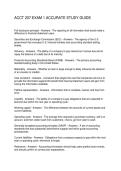
ACCT 207 EXAM 1 ACCURATE STUDY GUIDE
Full disclosure principal - Answers - The reporting of all information that would make a
difference to financial statement users.
Securities and Exchange Commission (SEC) - Answers - The agency of the U.S.
government that oversees U.S. financial markets and accounting standard-setting
bodies.
Solvency - Answers - The ability of a company to pay interest as it comes due and to
repay the balance of a debt due at its maturity.
Financial Accounting Standards Board (FASB) - Answers - The primary accounting
standard-setting body in the United States.
Materiality - Answers - Whether an item is large enough to likely influence the decision
of an investor or creditor.
Cost constraint - Answers - Constraint that weighs the cost that companies will incur to
provide the information against the benefit that financial statement users will gain from
having the information available.
Faithful representation - Answers - Information that is complete, neutral, and free from
error.
Liquidity - Answers - The ability of a company to pay obligations that are expected to
become due within the next year or operating cycle.
Working capital - Answers - The difference between the amounts of current assets and
current liabilities.
Operating cycle - Answers - The average time required to purchase inventory, sell it on
account, and then collect cash from customers—that is, go from cash to cash.
Generally accepted accounting principles (GAAP) - Answers - A set of accounting
standards that has substantial authoritative support and which guide accounting
professionals.
Current liabilities - Answers - Obligations that a company expects to pay within the next
year or operating cycle, whichever is longer.
Relevance - Answers - Accounting information should help users predict future events,
and should confirm or correct prior expectations.
Full disclosure principal - Answers - The reporting of all information that would make a
difference to financial statement users.
Securities and Exchange Commission (SEC) - Answers - The agency of the U.S.
government that oversees U.S. financial markets and accounting standard-setting
bodies.
Solvency - Answers - The ability of a company to pay interest as it comes due and to
repay the balance of a debt due at its maturity.
Financial Accounting Standards Board (FASB) - Answers - The primary accounting
standard-setting body in the United States.
Materiality - Answers - Whether an item is large enough to likely influence the decision
of an investor or creditor.
Cost constraint - Answers - Constraint that weighs the cost that companies will incur to
provide the information against the benefit that financial statement users will gain from
having the information available.
Faithful representation - Answers - Information that is complete, neutral, and free from
error.
Liquidity - Answers - The ability of a company to pay obligations that are expected to
become due within the next year or operating cycle.
Working capital - Answers - The difference between the amounts of current assets and
current liabilities.
Operating cycle - Answers - The average time required to purchase inventory, sell it on
account, and then collect cash from customers—that is, go from cash to cash.
Generally accepted accounting principles (GAAP) - Answers - A set of accounting
standards that has substantial authoritative support and which guide accounting
professionals.
Current liabilities - Answers - Obligations that a company expects to pay within the next
year or operating cycle, whichever is longer.
Relevance - Answers - Accounting information should help users predict future events,
and should confirm or correct prior expectations.