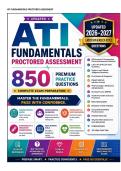
ATI FUNDAMENTALS PROCTORED ASSESSMENT
,ATI Fundamentals Proctored Assessment
Table of Contents
Section Topic Questions
1 Nursing Process 1–50
2 Safety & Infection Control 51–120
3 Basic Care & Comfort 121–180
4 Health Promotion & Maintenance 181–240
5 Psychosocial Integrity 241–300
6 Pharmacological & Parenteral Therapies 301–400
7 Reduction of Risk Potential 401–500
8 Clinical Judgment & Prioritization 501–650
9 Comprehensive Mixed Practice Exam 651–750
10 ATI Fundamentals Final Readiness Assessment 751–850
Exam Overview
• 850 Premium ATI Fundamentals Proctored Assessment Questions
• Latest ATI & NCLEX-Style Questions
• Higher-Level Clinical Judgment Questions
• Prioritization & Delegation
• Patient Safety & Infection Control
• Pharmacology & Medication Administration
• Nursing Process (ADPIE)
• Health Promotion & Disease Prevention
• Basic Nursing Skills
• Reduction of Risk Potential
• Comprehensive Mixed Practice Exams
, • Detailed Rationales
• Why the Other Options Are Less Appropriate
• Clinical Pearls
• ATI High-Yield Tips
ATI Fundamentals Proctored Assessment – Nursing Process
Question 1
During admission to the medical-surgical unit, a nurse enters the room and finds a newly admitted patient
sitting upright, speaking only one- to two-word sentences, with nasal flaring and an oxygen saturation of 84%
on room air. Which nursing action should be performed first?
A. Position the patient in High-Fowler's position and administer oxygen as prescribed.
B. Complete the admission history before initiating interventions.
C. Notify the healthcare provider of the patient's respiratory status.
D. Obtain an arterial blood gas specimen.
Correct Answer: A. Position the patient in High-Fowler's position and administer oxygen as prescribed.
Rationale: Airway and breathing are the highest priorities. Immediately improving oxygenation by positioning
the patient upright and administering oxygen helps stabilize the patient before additional assessments,
diagnostics, or provider notification.
Why the other options are less appropriate:
• B: Completing the admission history should not delay lifesaving interventions.
• C: The provider should be notified after immediate nursing actions are initiated.
• D: Diagnostic testing is appropriate after stabilizing the patient's respiratory status.
Clinical Pearl: When ABCs are compromised, stabilize the patient before completing routine assessments.
ATI High-Yield Tip: Priority questions frequently require choosing the intervention that immediately
improves oxygenation.
Question 2
While reviewing assessment findings before developing a care plan, the nurse notes a patient has a
temperature of 39°C (102.2°F), purulent drainage from a surgical incision, and increasing redness surrounding
the wound. Which nursing diagnosis should receive the highest priority?
,A. Acute pain related to tissue inflammation
B. Risk for impaired skin integrity
C. Impaired physical mobility related to postoperative discomfort
D. Infection related to surgical wound contamination
Correct Answer: D. Infection related to surgical wound contamination
Rationale: The patient demonstrates objective evidence of an active infection. Actual physiological problems
that can rapidly progress to systemic complications should receive higher priority than comfort or mobility
concerns.
Why the other options are less appropriate:
• A: Pain management is important but does not take precedence over treating an active infection.
• B: The patient already has an actual problem rather than being only at risk.
• C: Limited mobility is secondary to controlling the infection.
Clinical Pearl: Actual nursing diagnoses generally take priority over risk diagnoses when patient safety is
threatened.
ATI High-Yield Tip: Prioritize conditions that can quickly lead to sepsis or organ dysfunction.
Question 3
Before identifying nursing diagnoses for a newly admitted patient, which action should the nurse complete?
A. Develop expected patient outcomes.
B. Implement nursing interventions.
C. Collect comprehensive subjective and objective assessment data.
D. Evaluate whether interventions achieved the desired outcomes.
Correct Answer: C. Collect comprehensive subjective and objective assessment data.
Rationale: Assessment is the foundation of the nursing process. Accurate subjective and objective data are
necessary before identifying nursing diagnoses and planning individualized care.
Why the other options are less appropriate:
• A: Outcomes are established after nursing diagnoses are identified.
• B: Interventions should not begin until assessment and planning are complete unless emergency action
is required.
• D: Evaluation occurs after implementation.
Clinical Pearl: In non-emergency situations, every nursing decision begins with a thorough assessment.
, ATI High-Yield Tip: Remember ADPIE: Assessment → Diagnosis → Planning → Implementation →
Evaluation.
Question 4
A patient recovering from abdominal surgery tells the nurse, "Every time I cough, I feel a sharp pain near my
incision." Which information represents subjective assessment data?
A. Heart rate is 108 beats/min.
B. Respiratory rate is 24 breaths/min.
C. The abdominal dressing contains a 2-cm area of drainage.
D. "Every time I cough, I feel a sharp pain near my incision."
Correct Answer: D. "Every time I cough, I feel a sharp pain near my incision."
Rationale: Subjective data consist of symptoms that can only be reported by the patient. Pain is a personal
experience and cannot be directly measured by the nurse.
Why the other options are less appropriate:
• A: Heart rate is objective.
• B: Respiratory rate is objective.
• C: Drainage is an observable finding.
Clinical Pearl: Symptoms are reported by the patient; signs are observed or measured by the healthcare
provider.
ATI High-Yield Tip: If the patient says it, it's generally subjective.
Question 5
Thirty minutes after administering IV furosemide, the nurse measures the patient's urine output, lung sounds,
respiratory status, and weight to determine the medication's effectiveness. Which step of the nursing process
is being demonstrated?
A. Assessment
B. Evaluation
C. Planning
D. Diagnosis
Correct Answer: B. Evaluation
Rationale: Evaluation involves determining whether nursing interventions successfully achieved the expected
patient outcomes by comparing current findings with established goals.
Why the other options are less appropriate:
, • A: Although reassessment occurs, its purpose is to evaluate treatment effectiveness.
• C: Planning occurs before interventions are implemented.
• D: No new nursing diagnosis is being formulated.
Clinical Pearl: Every intervention should be followed by an evaluation of the patient's response.
ATI High-Yield Tip: Whenever the question asks whether an intervention "worked," think Evaluation.
Question 6
A nurse is developing expected outcomes for a patient with impaired mobility following a hip fracture. Which
outcome is written correctly?
A. The patient should improve mobility soon.
B. The nurse will assist the patient with ambulation twice daily.
C. Physical therapy will increase the patient's strength.
D. The patient will walk 150 feet with a walker and standby assistance within 72 hours.
Correct Answer: D. The patient will walk 150 feet with a walker and standby assistance within 72 hours.
Rationale: Effective patient outcomes are patient-centered, measurable, realistic, and include a specific
timeframe for evaluation.
Why the other options are less appropriate:
• A: "Soon" is vague and not measurable.
• B: Describes a nursing intervention instead of a patient outcome.
• C: Focuses on the healthcare provider rather than the patient.
Clinical Pearl: Patient outcomes describe what the patient is expected to achieve—not what the nurse
plans to do.
ATI High-Yield Tip: Strong outcomes contain measurable actions and defined timeframes.
Question 7
During a comprehensive assessment, the nurse notes that the patient's report of fluid intake differs
significantly from information provided by the family. Which action is most appropriate?
A. Document only the patient's statement because it is primary information.
B. Record both accounts without attempting further clarification.
C. Validate the discrepancy by reviewing additional sources and performing further assessment.
D. Accept the family's report because they observe the patient more frequently.
,Correct Answer: C. Validate the discrepancy by reviewing additional sources and performing further
assessment.
Rationale: Conflicting assessment data should always be verified before making clinical decisions or
documenting conclusions.
Why the other options are less appropriate:
• A: Patient reports are valuable but should be validated when inconsistencies exist.
• B: Clarification is necessary before relying on conflicting information.
• D: Family observations supplement but do not replace nursing assessment.
Clinical Pearl: Verification improves the accuracy of assessment findings and clinical judgment.
ATI High-Yield Tip: Unexpected or conflicting data should always be reassessed before action is taken.
Question 8
Following assessment of a postoperative patient who reports severe incisional pain rated 9/10 and exhibits
guarding of the abdomen, which nursing diagnosis is most appropriate?
A. Acute pain related to tissue trauma as evidenced by a pain rating of 9/10 and guarding behavior.
B. Risk for falls related to hospitalization.
C. Anxiety related to hospitalization.
D. Impaired physical mobility related to postoperative weakness.
Correct Answer: A. Acute pain related to tissue trauma as evidenced by a pain rating of 9/10 and guarding
behavior.
Rationale: The assessment findings directly support an actual diagnosis of acute pain with appropriate related
factors and defining characteristics.
Why the other options are less appropriate:
• B: Risk diagnoses do not take priority over an actual problem.
• C: Anxiety is not supported by the assessment findings.
• D: Mobility may be affected but is secondary to severe pain.
Clinical Pearl: Base nursing diagnoses on the strongest assessment evidence available.
ATI High-Yield Tip: Choose the diagnosis most directly supported by the patient's current findings.
Question 9
,While preparing a patient with pneumonia for discharge, which nursing action represents the implementation
phase of the nursing process?
A. Identifying ineffective airway clearance as the priority nursing diagnosis.
B. Determining whether oxygen saturation has improved since admission.
C. Establishing a goal for the patient to remain free from respiratory complications.
D. Teaching the patient how to use an incentive spirometer and confirming correct technique.
Correct Answer: D. Teaching the patient how to use an incentive spirometer and confirming correct
technique.
Rationale: Patient education is a nursing intervention performed during implementation. Teaching promotes
self-management and reduces the risk of postoperative pulmonary complications.
Why the other options are less appropriate:
• A: Identifying diagnoses occurs after assessment.
• B: Comparing outcomes reflects evaluation.
• C: Goal setting is part of planning.
Clinical Pearl: Implementation includes interventions such as treatments, education, coordination, and
direct patient care.
ATI High-Yield Tip: If the nurse is actively performing care or teaching, the question is usually testing
Implementation.
Question 10
Despite receiving prescribed insulin, a patient's blood glucose remains above the target range throughout the
shift. Which nursing action is most appropriate before contacting the healthcare provider?
A. Administer an additional dose of insulin without a prescription.
B. Discontinue the scheduled insulin because it is ineffective.
C. Reassess the patient, review dietary intake, medication timing, and other contributing factors.
D. Delay further action until the next scheduled blood glucose check.
Correct Answer: C. Reassess the patient, review dietary intake, medication timing, and other contributing
factors.
Rationale: When expected outcomes are not achieved, the nurse should reassess the patient and identify
possible contributing factors before modifying the plan of care or notifying the provider.
Why the other options are less appropriate:
• A: Additional insulin requires an appropriate prescription.
• B: Nurses should not discontinue prescribed medications independently.
, • D: Delaying reassessment may postpone necessary treatment.
Clinical Pearl: Reassessment is the bridge between evaluation and revising the plan of care.
ATI High-Yield Tip: When outcomes are unmet, think Reassess → Analyze → Modify → Reevaluate before
escalating care.
Question 11
While caring for a patient who has been on bed rest for several days following a cerebrovascular accident,
which nursing intervention should be included in the plan of care to reduce complications of immobility?
A. Limit activity until muscle strength fully returns.
B. Encourage the patient to remain in a semi-Fowler's position throughout the day.
C. Reposition the patient every 4 hours to conserve energy.
D. Assist the patient with progressive ambulation and active or passive range-of-motion exercises as tolerated.
Correct Answer: D. Assist the patient with progressive ambulation and active or passive range-of-motion
exercises as tolerated.
Rationale: Progressive mobility and range-of-motion exercises decrease the risk of pressure injuries, venous
thromboembolism, muscle atrophy, and pulmonary complications while promoting functional recovery.
Why the other options are less appropriate:
• A: Prolonged inactivity increases complications.
• B: Remaining in one position contributes to skin breakdown and respiratory complications.
• C: Repositioning every 4 hours is inadequate; high-risk patients generally require repositioning at least
every 2 hours.
Clinical Pearl: Early mobility is one of the most effective nursing interventions for preventing complications
of hospitalization.
ATI High-Yield Tip: Unless contraindicated, promote the highest safe level of patient mobility.
Question 12
During an interdisciplinary care conference, the nurse discusses discharge goals with a patient recovering from
heart failure. Which statement best demonstrates patient-centered planning?
A. "Your provider has already determined the goals you should achieve before discharge."
B. "Let's identify goals that fit your lifestyle and that you feel confident you can achieve at home."
C. "We'll use the same discharge goals we developed for patients with similar diagnoses."
D. "Your family will decide which goals are most appropriate for your recovery."
, Correct Answer: B. "Let's identify goals that fit your lifestyle and that you feel confident you can achieve at
home."
Rationale: Patient-centered planning requires collaboration with the patient to establish realistic,
individualized, and meaningful goals that promote adherence and successful self-management.
Why the other options are less appropriate:
• A: Patients should actively participate in planning whenever possible.
• C: Care plans should always be individualized.
• D: Family participation is valuable but should not replace the patient's role if the patient has decision-
making capacity.
Clinical Pearl: Patients who help establish their own goals are more likely to achieve them.
ATI High-Yield Tip: Collaboration is a hallmark of patient-centered nursing care.
Question 13
Following implementation of a fall-prevention plan, which finding best indicates that the nursing interventions
have been successful?
A. The patient consistently requests assistance before getting out of bed and remains free from falls.
B. The patient verbalizes understanding of the importance of using the call light but attempts to ambulate
independently.
C. The nurse documents that hourly rounding was completed throughout the shift.
D. Bed alarms remain activated during hospitalization.
Correct Answer: A. The patient consistently requests assistance before getting out of bed and remains free
from falls.
Rationale: Successful evaluation requires objective evidence that both the desired behavior and expected
outcome have been achieved.
Why the other options are less appropriate:
• B: Understanding without appropriate behavior does not demonstrate success.
• C: This documents a nursing intervention rather than the patient outcome.
• D: Safety equipment alone does not confirm that the goal was achieved.
Clinical Pearl: Evaluate outcomes by focusing on measurable patient behaviors rather than nursing
activities.
ATI High-Yield Tip: Patient behavior provides stronger evidence of learning than verbal statements alone.
,ATI Fundamentals Proctored Assessment
Table of Contents
Section Topic Questions
1 Nursing Process 1–50
2 Safety & Infection Control 51–120
3 Basic Care & Comfort 121–180
4 Health Promotion & Maintenance 181–240
5 Psychosocial Integrity 241–300
6 Pharmacological & Parenteral Therapies 301–400
7 Reduction of Risk Potential 401–500
8 Clinical Judgment & Prioritization 501–650
9 Comprehensive Mixed Practice Exam 651–750
10 ATI Fundamentals Final Readiness Assessment 751–850
Exam Overview
• 850 Premium ATI Fundamentals Proctored Assessment Questions
• Latest ATI & NCLEX-Style Questions
• Higher-Level Clinical Judgment Questions
• Prioritization & Delegation
• Patient Safety & Infection Control
• Pharmacology & Medication Administration
• Nursing Process (ADPIE)
• Health Promotion & Disease Prevention
• Basic Nursing Skills
• Reduction of Risk Potential
• Comprehensive Mixed Practice Exams
, • Detailed Rationales
• Why the Other Options Are Less Appropriate
• Clinical Pearls
• ATI High-Yield Tips
ATI Fundamentals Proctored Assessment – Nursing Process
Question 1
During admission to the medical-surgical unit, a nurse enters the room and finds a newly admitted patient
sitting upright, speaking only one- to two-word sentences, with nasal flaring and an oxygen saturation of 84%
on room air. Which nursing action should be performed first?
A. Position the patient in High-Fowler's position and administer oxygen as prescribed.
B. Complete the admission history before initiating interventions.
C. Notify the healthcare provider of the patient's respiratory status.
D. Obtain an arterial blood gas specimen.
Correct Answer: A. Position the patient in High-Fowler's position and administer oxygen as prescribed.
Rationale: Airway and breathing are the highest priorities. Immediately improving oxygenation by positioning
the patient upright and administering oxygen helps stabilize the patient before additional assessments,
diagnostics, or provider notification.
Why the other options are less appropriate:
• B: Completing the admission history should not delay lifesaving interventions.
• C: The provider should be notified after immediate nursing actions are initiated.
• D: Diagnostic testing is appropriate after stabilizing the patient's respiratory status.
Clinical Pearl: When ABCs are compromised, stabilize the patient before completing routine assessments.
ATI High-Yield Tip: Priority questions frequently require choosing the intervention that immediately
improves oxygenation.
Question 2
While reviewing assessment findings before developing a care plan, the nurse notes a patient has a
temperature of 39°C (102.2°F), purulent drainage from a surgical incision, and increasing redness surrounding
the wound. Which nursing diagnosis should receive the highest priority?
,A. Acute pain related to tissue inflammation
B. Risk for impaired skin integrity
C. Impaired physical mobility related to postoperative discomfort
D. Infection related to surgical wound contamination
Correct Answer: D. Infection related to surgical wound contamination
Rationale: The patient demonstrates objective evidence of an active infection. Actual physiological problems
that can rapidly progress to systemic complications should receive higher priority than comfort or mobility
concerns.
Why the other options are less appropriate:
• A: Pain management is important but does not take precedence over treating an active infection.
• B: The patient already has an actual problem rather than being only at risk.
• C: Limited mobility is secondary to controlling the infection.
Clinical Pearl: Actual nursing diagnoses generally take priority over risk diagnoses when patient safety is
threatened.
ATI High-Yield Tip: Prioritize conditions that can quickly lead to sepsis or organ dysfunction.
Question 3
Before identifying nursing diagnoses for a newly admitted patient, which action should the nurse complete?
A. Develop expected patient outcomes.
B. Implement nursing interventions.
C. Collect comprehensive subjective and objective assessment data.
D. Evaluate whether interventions achieved the desired outcomes.
Correct Answer: C. Collect comprehensive subjective and objective assessment data.
Rationale: Assessment is the foundation of the nursing process. Accurate subjective and objective data are
necessary before identifying nursing diagnoses and planning individualized care.
Why the other options are less appropriate:
• A: Outcomes are established after nursing diagnoses are identified.
• B: Interventions should not begin until assessment and planning are complete unless emergency action
is required.
• D: Evaluation occurs after implementation.
Clinical Pearl: In non-emergency situations, every nursing decision begins with a thorough assessment.
, ATI High-Yield Tip: Remember ADPIE: Assessment → Diagnosis → Planning → Implementation →
Evaluation.
Question 4
A patient recovering from abdominal surgery tells the nurse, "Every time I cough, I feel a sharp pain near my
incision." Which information represents subjective assessment data?
A. Heart rate is 108 beats/min.
B. Respiratory rate is 24 breaths/min.
C. The abdominal dressing contains a 2-cm area of drainage.
D. "Every time I cough, I feel a sharp pain near my incision."
Correct Answer: D. "Every time I cough, I feel a sharp pain near my incision."
Rationale: Subjective data consist of symptoms that can only be reported by the patient. Pain is a personal
experience and cannot be directly measured by the nurse.
Why the other options are less appropriate:
• A: Heart rate is objective.
• B: Respiratory rate is objective.
• C: Drainage is an observable finding.
Clinical Pearl: Symptoms are reported by the patient; signs are observed or measured by the healthcare
provider.
ATI High-Yield Tip: If the patient says it, it's generally subjective.
Question 5
Thirty minutes after administering IV furosemide, the nurse measures the patient's urine output, lung sounds,
respiratory status, and weight to determine the medication's effectiveness. Which step of the nursing process
is being demonstrated?
A. Assessment
B. Evaluation
C. Planning
D. Diagnosis
Correct Answer: B. Evaluation
Rationale: Evaluation involves determining whether nursing interventions successfully achieved the expected
patient outcomes by comparing current findings with established goals.
Why the other options are less appropriate:
, • A: Although reassessment occurs, its purpose is to evaluate treatment effectiveness.
• C: Planning occurs before interventions are implemented.
• D: No new nursing diagnosis is being formulated.
Clinical Pearl: Every intervention should be followed by an evaluation of the patient's response.
ATI High-Yield Tip: Whenever the question asks whether an intervention "worked," think Evaluation.
Question 6
A nurse is developing expected outcomes for a patient with impaired mobility following a hip fracture. Which
outcome is written correctly?
A. The patient should improve mobility soon.
B. The nurse will assist the patient with ambulation twice daily.
C. Physical therapy will increase the patient's strength.
D. The patient will walk 150 feet with a walker and standby assistance within 72 hours.
Correct Answer: D. The patient will walk 150 feet with a walker and standby assistance within 72 hours.
Rationale: Effective patient outcomes are patient-centered, measurable, realistic, and include a specific
timeframe for evaluation.
Why the other options are less appropriate:
• A: "Soon" is vague and not measurable.
• B: Describes a nursing intervention instead of a patient outcome.
• C: Focuses on the healthcare provider rather than the patient.
Clinical Pearl: Patient outcomes describe what the patient is expected to achieve—not what the nurse
plans to do.
ATI High-Yield Tip: Strong outcomes contain measurable actions and defined timeframes.
Question 7
During a comprehensive assessment, the nurse notes that the patient's report of fluid intake differs
significantly from information provided by the family. Which action is most appropriate?
A. Document only the patient's statement because it is primary information.
B. Record both accounts without attempting further clarification.
C. Validate the discrepancy by reviewing additional sources and performing further assessment.
D. Accept the family's report because they observe the patient more frequently.
,Correct Answer: C. Validate the discrepancy by reviewing additional sources and performing further
assessment.
Rationale: Conflicting assessment data should always be verified before making clinical decisions or
documenting conclusions.
Why the other options are less appropriate:
• A: Patient reports are valuable but should be validated when inconsistencies exist.
• B: Clarification is necessary before relying on conflicting information.
• D: Family observations supplement but do not replace nursing assessment.
Clinical Pearl: Verification improves the accuracy of assessment findings and clinical judgment.
ATI High-Yield Tip: Unexpected or conflicting data should always be reassessed before action is taken.
Question 8
Following assessment of a postoperative patient who reports severe incisional pain rated 9/10 and exhibits
guarding of the abdomen, which nursing diagnosis is most appropriate?
A. Acute pain related to tissue trauma as evidenced by a pain rating of 9/10 and guarding behavior.
B. Risk for falls related to hospitalization.
C. Anxiety related to hospitalization.
D. Impaired physical mobility related to postoperative weakness.
Correct Answer: A. Acute pain related to tissue trauma as evidenced by a pain rating of 9/10 and guarding
behavior.
Rationale: The assessment findings directly support an actual diagnosis of acute pain with appropriate related
factors and defining characteristics.
Why the other options are less appropriate:
• B: Risk diagnoses do not take priority over an actual problem.
• C: Anxiety is not supported by the assessment findings.
• D: Mobility may be affected but is secondary to severe pain.
Clinical Pearl: Base nursing diagnoses on the strongest assessment evidence available.
ATI High-Yield Tip: Choose the diagnosis most directly supported by the patient's current findings.
Question 9
,While preparing a patient with pneumonia for discharge, which nursing action represents the implementation
phase of the nursing process?
A. Identifying ineffective airway clearance as the priority nursing diagnosis.
B. Determining whether oxygen saturation has improved since admission.
C. Establishing a goal for the patient to remain free from respiratory complications.
D. Teaching the patient how to use an incentive spirometer and confirming correct technique.
Correct Answer: D. Teaching the patient how to use an incentive spirometer and confirming correct
technique.
Rationale: Patient education is a nursing intervention performed during implementation. Teaching promotes
self-management and reduces the risk of postoperative pulmonary complications.
Why the other options are less appropriate:
• A: Identifying diagnoses occurs after assessment.
• B: Comparing outcomes reflects evaluation.
• C: Goal setting is part of planning.
Clinical Pearl: Implementation includes interventions such as treatments, education, coordination, and
direct patient care.
ATI High-Yield Tip: If the nurse is actively performing care or teaching, the question is usually testing
Implementation.
Question 10
Despite receiving prescribed insulin, a patient's blood glucose remains above the target range throughout the
shift. Which nursing action is most appropriate before contacting the healthcare provider?
A. Administer an additional dose of insulin without a prescription.
B. Discontinue the scheduled insulin because it is ineffective.
C. Reassess the patient, review dietary intake, medication timing, and other contributing factors.
D. Delay further action until the next scheduled blood glucose check.
Correct Answer: C. Reassess the patient, review dietary intake, medication timing, and other contributing
factors.
Rationale: When expected outcomes are not achieved, the nurse should reassess the patient and identify
possible contributing factors before modifying the plan of care or notifying the provider.
Why the other options are less appropriate:
• A: Additional insulin requires an appropriate prescription.
• B: Nurses should not discontinue prescribed medications independently.
, • D: Delaying reassessment may postpone necessary treatment.
Clinical Pearl: Reassessment is the bridge between evaluation and revising the plan of care.
ATI High-Yield Tip: When outcomes are unmet, think Reassess → Analyze → Modify → Reevaluate before
escalating care.
Question 11
While caring for a patient who has been on bed rest for several days following a cerebrovascular accident,
which nursing intervention should be included in the plan of care to reduce complications of immobility?
A. Limit activity until muscle strength fully returns.
B. Encourage the patient to remain in a semi-Fowler's position throughout the day.
C. Reposition the patient every 4 hours to conserve energy.
D. Assist the patient with progressive ambulation and active or passive range-of-motion exercises as tolerated.
Correct Answer: D. Assist the patient with progressive ambulation and active or passive range-of-motion
exercises as tolerated.
Rationale: Progressive mobility and range-of-motion exercises decrease the risk of pressure injuries, venous
thromboembolism, muscle atrophy, and pulmonary complications while promoting functional recovery.
Why the other options are less appropriate:
• A: Prolonged inactivity increases complications.
• B: Remaining in one position contributes to skin breakdown and respiratory complications.
• C: Repositioning every 4 hours is inadequate; high-risk patients generally require repositioning at least
every 2 hours.
Clinical Pearl: Early mobility is one of the most effective nursing interventions for preventing complications
of hospitalization.
ATI High-Yield Tip: Unless contraindicated, promote the highest safe level of patient mobility.
Question 12
During an interdisciplinary care conference, the nurse discusses discharge goals with a patient recovering from
heart failure. Which statement best demonstrates patient-centered planning?
A. "Your provider has already determined the goals you should achieve before discharge."
B. "Let's identify goals that fit your lifestyle and that you feel confident you can achieve at home."
C. "We'll use the same discharge goals we developed for patients with similar diagnoses."
D. "Your family will decide which goals are most appropriate for your recovery."
, Correct Answer: B. "Let's identify goals that fit your lifestyle and that you feel confident you can achieve at
home."
Rationale: Patient-centered planning requires collaboration with the patient to establish realistic,
individualized, and meaningful goals that promote adherence and successful self-management.
Why the other options are less appropriate:
• A: Patients should actively participate in planning whenever possible.
• C: Care plans should always be individualized.
• D: Family participation is valuable but should not replace the patient's role if the patient has decision-
making capacity.
Clinical Pearl: Patients who help establish their own goals are more likely to achieve them.
ATI High-Yield Tip: Collaboration is a hallmark of patient-centered nursing care.
Question 13
Following implementation of a fall-prevention plan, which finding best indicates that the nursing interventions
have been successful?
A. The patient consistently requests assistance before getting out of bed and remains free from falls.
B. The patient verbalizes understanding of the importance of using the call light but attempts to ambulate
independently.
C. The nurse documents that hourly rounding was completed throughout the shift.
D. Bed alarms remain activated during hospitalization.
Correct Answer: A. The patient consistently requests assistance before getting out of bed and remains free
from falls.
Rationale: Successful evaluation requires objective evidence that both the desired behavior and expected
outcome have been achieved.
Why the other options are less appropriate:
• B: Understanding without appropriate behavior does not demonstrate success.
• C: This documents a nursing intervention rather than the patient outcome.
• D: Safety equipment alone does not confirm that the goal was achieved.
Clinical Pearl: Evaluate outcomes by focusing on measurable patient behaviors rather than nursing
activities.
ATI High-Yield Tip: Patient behavior provides stronger evidence of learning than verbal statements alone.