Types of long-term memory
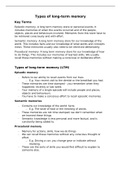
Key Terms
Episodic memory- A long term memory store or personal events. It
includes memories of when the events occurred and of the people,
objects, places and behaviours involved. Memories from this store have to
be retrieved consciously and with effort.
Semantic memory- A long term memory store for our knowledge of the
world. This includes facts and our knowledge of what words and concepts
mean. These memories usually also need to be retrieved deliberately.
Procedural memory- A long term memory store for our knowledge of how
to do things. This includes our memories of learned skills. We usually
recall these memories without making a conscious or deliberate effort.
Types of long-term memory (LTM)
Episodic memory
- Refers to our ability to recall events from our lives.
→ E.g. Your recent visit to the dentist or the breakfast you had.
- These memories are time stamped – you remember when they
happened; recently or last week.
- Your memory of a single episode will include people and places,
objects and behaviours.
- You have to make a conscious effort to recall episodic memories.
Semantic memories
- Contains our knowledge of the world: facts.
→ E.g. The taste of food or the meaning of words.
- These memories are not time stamped; we don’t remember when
we learned these things.
- Semantic knowledge is less personal and more factual, and is
constantly being added to.
Procedural memory
- Memory for actions, skills, how we do things.
- We can recall these memories without any conscious thought or
effort.
→ E.g. Driving a car; you change gear or indicate without
realising.
- These are the sorts of skills you would find difficult to explain to
someone else.
Key Terms
Episodic memory- A long term memory store or personal events. It
includes memories of when the events occurred and of the people,
objects, places and behaviours involved. Memories from this store have to
be retrieved consciously and with effort.
Semantic memory- A long term memory store for our knowledge of the
world. This includes facts and our knowledge of what words and concepts
mean. These memories usually also need to be retrieved deliberately.
Procedural memory- A long term memory store for our knowledge of how
to do things. This includes our memories of learned skills. We usually
recall these memories without making a conscious or deliberate effort.
Types of long-term memory (LTM)
Episodic memory
- Refers to our ability to recall events from our lives.
→ E.g. Your recent visit to the dentist or the breakfast you had.
- These memories are time stamped – you remember when they
happened; recently or last week.
- Your memory of a single episode will include people and places,
objects and behaviours.
- You have to make a conscious effort to recall episodic memories.
Semantic memories
- Contains our knowledge of the world: facts.
→ E.g. The taste of food or the meaning of words.
- These memories are not time stamped; we don’t remember when
we learned these things.
- Semantic knowledge is less personal and more factual, and is
constantly being added to.
Procedural memory
- Memory for actions, skills, how we do things.
- We can recall these memories without any conscious thought or
effort.
→ E.g. Driving a car; you change gear or indicate without
realising.
- These are the sorts of skills you would find difficult to explain to
someone else.