

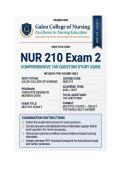
,NUR 210 Exam 2 – Pharmacology – Actual
Q&A (GCN) (Updated PDF)
1. A nurse is preparing to administer bethanechol to a patient with urinary
retention. The nurse understands that bethanechol is classified as a:
A) Adrenergic antagonist
B) Cholinergic agonist
C) Cholinergic antagonist
D) Adrenergic agonist
Correct Answer: B) Cholinergic agonist
Rationale: Bethanechol is a direct-acting cholinergic agonist that stimulates
muscarinic receptors to increase bladder contraction, used for non-obstructive
urinary retention. Adrenergic drugs affect the sympathetic nervous system, not
the parasympathetic.
2. Which of the following correctly describes the sympathetic nervous system's
effect on the body?
A) Decreases heart rate and stimulates digestion
B) Increases heart rate, dilates bronchi, and increases blood glucose
C) Promotes elimination and conserves energy
D) Constricts pupils and slows peristalsis
Correct Answer: B) Increases heart rate, dilates bronchi, and increases blood
glucose
,Rationale: The sympathetic nervous system triggers the "fight or flight"
response, increasing cardiac output, bronchodilation, and glycogenolysis. The
parasympathetic system mediates rest-and-digest functions like decreased
heart rate and increased GI activity.
3. A patient with glaucoma is prescribed pilocarpine eye drops. The nurse
explains that pilocarpine works by:
A) Blocking beta receptors to decrease aqueous humor production
B) Stimulating alpha receptors to improve drainage
C) Mimicking acetylcholine to constrict the pupil and improve aqueous humor
drainage
D) Dilating the pupil to reduce intraocular pressure
Correct Answer: C) Mimicking acetylcholine to constrict the pupil and improve
aqueous humor drainage
Rationale: Pilocarpine is a direct-acting cholinergic agonist that causes miosis
(pupil constriction), which opens the trabecular meshwork and facilitates
aqueous humor outflow, lowering intraocular pressure. It does not block beta
receptors or cause mydriasis.
4. The nurse is teaching a patient about atenolol, a beta-1 selective blocker.
Which statement indicates understanding?
A) "This medication will help relax my airways."
B) "I should take this medication only when I feel short of breath."
C) "This medication lowers my blood pressure and heart rate."
, D) "I can stop taking this medication abruptly if I feel better."
Correct Answer: C) "This medication lowers my blood pressure and heart rate."
Rationale: Atenolol is a beta-1 antagonist that reduces heart rate and cardiac
output, lowering blood pressure. It does not relax airways (beta-2 effect), must
be taken regularly, and should not be stopped abruptly due to rebound
hypertension risk.
5. A patient with COPD asks why ipratropium (Atrovent) was prescribed. The
nurse's best response is that ipratropium:
A) Stimulates beta-2 receptors to bronchodilate
B) Blocks acetylcholine to cause bronchodilation
C) Reduces inflammation in the airways
D) Thins respiratory secretions
Correct Answer: B) Blocks acetylcholine to cause bronchodilation
Rationale: Ipratropium is an anticholinergic that blocks muscarinic receptors,
preventing bronchoconstriction and promoting bronchodilation. Beta-agonists
stimulate receptors, corticosteroids reduce inflammation, and mucolytics thin
secretions.
6. A patient taking digoxin reports seeing yellow-green halos around lights. The
nurse's priority action is to:
A) Administer the next dose as scheduled
B) Check the patient's digoxin level and notify the provider
Q&A (GCN) (Updated PDF)
1. A nurse is preparing to administer bethanechol to a patient with urinary
retention. The nurse understands that bethanechol is classified as a:
A) Adrenergic antagonist
B) Cholinergic agonist
C) Cholinergic antagonist
D) Adrenergic agonist
Correct Answer: B) Cholinergic agonist
Rationale: Bethanechol is a direct-acting cholinergic agonist that stimulates
muscarinic receptors to increase bladder contraction, used for non-obstructive
urinary retention. Adrenergic drugs affect the sympathetic nervous system, not
the parasympathetic.
2. Which of the following correctly describes the sympathetic nervous system's
effect on the body?
A) Decreases heart rate and stimulates digestion
B) Increases heart rate, dilates bronchi, and increases blood glucose
C) Promotes elimination and conserves energy
D) Constricts pupils and slows peristalsis
Correct Answer: B) Increases heart rate, dilates bronchi, and increases blood
glucose
,Rationale: The sympathetic nervous system triggers the "fight or flight"
response, increasing cardiac output, bronchodilation, and glycogenolysis. The
parasympathetic system mediates rest-and-digest functions like decreased
heart rate and increased GI activity.
3. A patient with glaucoma is prescribed pilocarpine eye drops. The nurse
explains that pilocarpine works by:
A) Blocking beta receptors to decrease aqueous humor production
B) Stimulating alpha receptors to improve drainage
C) Mimicking acetylcholine to constrict the pupil and improve aqueous humor
drainage
D) Dilating the pupil to reduce intraocular pressure
Correct Answer: C) Mimicking acetylcholine to constrict the pupil and improve
aqueous humor drainage
Rationale: Pilocarpine is a direct-acting cholinergic agonist that causes miosis
(pupil constriction), which opens the trabecular meshwork and facilitates
aqueous humor outflow, lowering intraocular pressure. It does not block beta
receptors or cause mydriasis.
4. The nurse is teaching a patient about atenolol, a beta-1 selective blocker.
Which statement indicates understanding?
A) "This medication will help relax my airways."
B) "I should take this medication only when I feel short of breath."
C) "This medication lowers my blood pressure and heart rate."
, D) "I can stop taking this medication abruptly if I feel better."
Correct Answer: C) "This medication lowers my blood pressure and heart rate."
Rationale: Atenolol is a beta-1 antagonist that reduces heart rate and cardiac
output, lowering blood pressure. It does not relax airways (beta-2 effect), must
be taken regularly, and should not be stopped abruptly due to rebound
hypertension risk.
5. A patient with COPD asks why ipratropium (Atrovent) was prescribed. The
nurse's best response is that ipratropium:
A) Stimulates beta-2 receptors to bronchodilate
B) Blocks acetylcholine to cause bronchodilation
C) Reduces inflammation in the airways
D) Thins respiratory secretions
Correct Answer: B) Blocks acetylcholine to cause bronchodilation
Rationale: Ipratropium is an anticholinergic that blocks muscarinic receptors,
preventing bronchoconstriction and promoting bronchodilation. Beta-agonists
stimulate receptors, corticosteroids reduce inflammation, and mucolytics thin
secretions.
6. A patient taking digoxin reports seeing yellow-green halos around lights. The
nurse's priority action is to:
A) Administer the next dose as scheduled
B) Check the patient's digoxin level and notify the provider


