HEALTH & SOCIAL CARE UNIT 5 EXAMPLE ANSWER P8
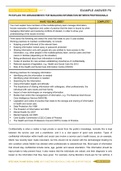
P8 EXPLAIN THE ARRANGEMENTS FOR MANAGING INFORMATION BETWEEN PROFESSIONALS
HAVE YOU INCLUDED? COMPLETE?
You must explain how members of the multidisciplinary team manage information.
Include examples of legislation and codes of practice that the team is bound by when
managing information and resolving conflicts of interest, in order to show your
understanding of the issues involved.
Think about the following and select the ones that relate to your 3 case studies
Working practices to maintain confidentiality, to include:
Keeping yourself informed of the relevant laws
Keeping information locked away or password protected
Sharing information only with people who are entitled to have access to the
information, e.g. other people in the multidisciplinary team, service users and their
carers or families (depending on the situation)
Being professional about how information is shared.
Codes of practice for care workers establishing importance of confidentiality.
Relevant aspects of legislation, e.g. Health and Social Care Act 2012
Role of the Health and Social Care Information Centre (HSCIC)
Working practices for managing information:
Identifying why the information is needed
Identifying what information is needed
Searching for the information
Using information legally and ethically
The importance of sharing information with colleagues, other professionals, the
individual with care needs and their family.
Impact of new technologies on managing information.
Bodies that control the management of information, e.g. The National Adult Social
Care Intelligence Service (NASCIS).
Legislation and codes of practice that relate to the storage and sharing of information
in health and social care.
Data Protection Act 1998
The Freedom of Information Act 2000
Mental Health Act 2007
Mental Capacity Act 2005
Care Quality Commission (CQC) Codes of Practice
The Health and Care Professions Council (HCPC) Codes of Practice.
Confidentiality is when a matter is kept private or secret from the public’s knowledge, normally this is kept
between the service user and a practitioner, and it is a vital aspect of good care practice. Types of
confidential information within health and social care involve a service user’s health issues, as an example,
Martin has recently been made redundant, but this should not be shared with the dermatologist treating his
skin condition unless Martin has allowed other professionals to assess/know this. Most types of information
that should stay confidential include name, age, gender and sexual orientation. This information should be
kept private to help prevent fraud, it also means that the individuals are valued, and their diagnosis is only
based on the information that they have given. For example, during Brenda’s check-ups for her asthma, it
BTEC HEALTH AND SOCIAL CARE UNIT 5 MEETING INDIVIDUAL CARE AND SUPPORT NEEDS
P8 EXPLAIN THE ARRANGEMENTS FOR MANAGING INFORMATION BETWEEN PROFESSIONALS
HAVE YOU INCLUDED? COMPLETE?
You must explain how members of the multidisciplinary team manage information.
Include examples of legislation and codes of practice that the team is bound by when
managing information and resolving conflicts of interest, in order to show your
understanding of the issues involved.
Think about the following and select the ones that relate to your 3 case studies
Working practices to maintain confidentiality, to include:
Keeping yourself informed of the relevant laws
Keeping information locked away or password protected
Sharing information only with people who are entitled to have access to the
information, e.g. other people in the multidisciplinary team, service users and their
carers or families (depending on the situation)
Being professional about how information is shared.
Codes of practice for care workers establishing importance of confidentiality.
Relevant aspects of legislation, e.g. Health and Social Care Act 2012
Role of the Health and Social Care Information Centre (HSCIC)
Working practices for managing information:
Identifying why the information is needed
Identifying what information is needed
Searching for the information
Using information legally and ethically
The importance of sharing information with colleagues, other professionals, the
individual with care needs and their family.
Impact of new technologies on managing information.
Bodies that control the management of information, e.g. The National Adult Social
Care Intelligence Service (NASCIS).
Legislation and codes of practice that relate to the storage and sharing of information
in health and social care.
Data Protection Act 1998
The Freedom of Information Act 2000
Mental Health Act 2007
Mental Capacity Act 2005
Care Quality Commission (CQC) Codes of Practice
The Health and Care Professions Council (HCPC) Codes of Practice.
Confidentiality is when a matter is kept private or secret from the public’s knowledge, normally this is kept
between the service user and a practitioner, and it is a vital aspect of good care practice. Types of
confidential information within health and social care involve a service user’s health issues, as an example,
Martin has recently been made redundant, but this should not be shared with the dermatologist treating his
skin condition unless Martin has allowed other professionals to assess/know this. Most types of information
that should stay confidential include name, age, gender and sexual orientation. This information should be
kept private to help prevent fraud, it also means that the individuals are valued, and their diagnosis is only
based on the information that they have given. For example, during Brenda’s check-ups for her asthma, it
BTEC HEALTH AND SOCIAL CARE UNIT 5 MEETING INDIVIDUAL CARE AND SUPPORT NEEDS