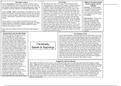
The Nature of God The Trinity Different Christian beliefs
God as Omnipotent -All powerful, unlimited authority, beyond Monothistic (one God). The nature of God is beyond human about Creation and the
human understanding. God’s omnipotence can be seen through understanding so it should not be possible to make full sense of Afterlife
the creation of the universe and miracles performed by Jesus, the it. Belief in God as the trinity makes best sense of it. It is an Literalist - (fundamentalists)
10 plagues, the flood. Nothing can ultimately defeat his power. attempt to explain what the Bible says about the nature of the They believe that everything in
relationship between the Father, Son and the Holy Spirit. One the Bible is written exactly,
God as Loving - Agape, self sacrificed, unconditional love. Jesus’ God is a Trinity of these 3 persons. God does not consist of 3 word for word and that the bile
death on the cross is a supreme example of God’s love, allowing individuals or 3 properties but can be known in each way with was inspired by God and has
humans to achieve heaven. Suffering can bring Christians closer each own characteristic - 3 forms of the same entity. Father - the no mistakes.
to God - sharing pain. Those who do the most evil things can be creator of all life, loving sustainer and creator of the universe.
forgiven. Son - savior who became incarnate, lived died and rose again. Non-Literalist - Fictional story
He is fully God and fully human. Holy Spirit - source of strength with a profound message.
God as Just - He is just, judge of humankind and will never which Christians at work in their hands, when power of God at Believes symbolism, the
support injustice, ill treatment, prejudice or oppression. The Bible work, influencing the world. Belief in the Trinity is used in message is important rather
portrays God as just and that He expects believes to relieve baptism where they declare their faith as well as in hymns and than what actually happened.
suffering and injustice in society. after psalm readings. Humans should show that some unity of Trying to teach religion truths
love and equality in their relationships with others, some suggest about the the nature of God
God is also all knowing (omnicince) and transcendent (beyond Christianity is tritheistic with separate God's linked in some way, and his relationship with
time) critics say it makes no sense humans.
Resurrection and Life after Death The Problem of Evil
Christianity teaches that death is not the How is God omnipotent, omnibenevolent and just when there is evil in the
end, it separates life on earth (with world? God is beyond human understanding, we cannot comprehend how
limitations of time and space temporary) he works to achieve justice through suffering. Many Christians believe in
from life with God (eternal beyond time the existence of a evil force (satan) who tempts humans into disobeying
and space). Death is not something to be God. Humans have free will and the ability to choose their actions moral
feared. Many believe they will be reunited evil) e.g. Adam and Eve. Freedom of choice when mixed with greed,
with loved ones who have already died . Christianity selfishness, hatred leads to evil doings which humans are responsible for
Eternal life is dependent on faith it is a gift not God. Natural evil and suffering is a punishment for wrongdoing, a test
from God. Some Christians reject the idea Beliefs & Teachings of faith. It is a form of education for our souls and is needed as a balance
of cremation because of their belief in the in order to appreciate God. Humans must simply accept suffering as they
physical resurrection, many believe the experience God’s love in other areas of their lives . When they experience
soul is eternal, not the physical body and suffering that seems excessive or pointless, they are prepared to accept
it will be in heaven after judgement. Belief what they cannot understand and trust in God’s goodness. Christians
in resurrection treats the physical body as rather look at how they can respond positively as it becomes a trigger for
an integral and a valuable part of what it action, showing the love of Jesus to their fellow humans.
means to be human. Others believe the
resurrection body will be spiritual, not
physically. Roman Catholics - believe in Judgement, Hell and Heaven
purgatory and intermediate state of Jesus taught that God’s love and mercy is unconditional, though many of is parables speak about God’s judgement after
existence in between death and the death. Judgement day is at the end of time where all will be judged by Jesus according to how they have behaved. Catholics
afterlife. The soul goes to purgatory if it is believe that there are 2 judgements - particular and general - immediately after death and at the second coming where Jesus
destined for heaven, a place of will return in glory. Some Christians reject the idea of a second coming as they think that Jesus was trying to express
purification so that it can become pure something humans could not fully understand. Heaven is a state of being, not physically, with God outside time and space.
and holy enough to enter heaven, it is not Peace, joy, freedom, desires, no pain. Garden paradise. Heaven is a reward for both faith and actions. The Bible depicts hell
a physical place. Catholic - bodily as a place of unquenchable eternal torment fire. Many Christians reject literal reviews of hell, it is eternal separation from
resurrection, physical body is restored God which results from deliberate rejection of any relationship with them - down to human free choice. Some Christians
and transformed into a new spiritual body. reject the idea of hell because it would mean God’s love would not triumph over evil, instead all will be repeated and
forgiven - universalism.
God as Omnipotent -All powerful, unlimited authority, beyond Monothistic (one God). The nature of God is beyond human about Creation and the
human understanding. God’s omnipotence can be seen through understanding so it should not be possible to make full sense of Afterlife
the creation of the universe and miracles performed by Jesus, the it. Belief in God as the trinity makes best sense of it. It is an Literalist - (fundamentalists)
10 plagues, the flood. Nothing can ultimately defeat his power. attempt to explain what the Bible says about the nature of the They believe that everything in
relationship between the Father, Son and the Holy Spirit. One the Bible is written exactly,
God as Loving - Agape, self sacrificed, unconditional love. Jesus’ God is a Trinity of these 3 persons. God does not consist of 3 word for word and that the bile
death on the cross is a supreme example of God’s love, allowing individuals or 3 properties but can be known in each way with was inspired by God and has
humans to achieve heaven. Suffering can bring Christians closer each own characteristic - 3 forms of the same entity. Father - the no mistakes.
to God - sharing pain. Those who do the most evil things can be creator of all life, loving sustainer and creator of the universe.
forgiven. Son - savior who became incarnate, lived died and rose again. Non-Literalist - Fictional story
He is fully God and fully human. Holy Spirit - source of strength with a profound message.
God as Just - He is just, judge of humankind and will never which Christians at work in their hands, when power of God at Believes symbolism, the
support injustice, ill treatment, prejudice or oppression. The Bible work, influencing the world. Belief in the Trinity is used in message is important rather
portrays God as just and that He expects believes to relieve baptism where they declare their faith as well as in hymns and than what actually happened.
suffering and injustice in society. after psalm readings. Humans should show that some unity of Trying to teach religion truths
love and equality in their relationships with others, some suggest about the the nature of God
God is also all knowing (omnicince) and transcendent (beyond Christianity is tritheistic with separate God's linked in some way, and his relationship with
time) critics say it makes no sense humans.
Resurrection and Life after Death The Problem of Evil
Christianity teaches that death is not the How is God omnipotent, omnibenevolent and just when there is evil in the
end, it separates life on earth (with world? God is beyond human understanding, we cannot comprehend how
limitations of time and space temporary) he works to achieve justice through suffering. Many Christians believe in
from life with God (eternal beyond time the existence of a evil force (satan) who tempts humans into disobeying
and space). Death is not something to be God. Humans have free will and the ability to choose their actions moral
feared. Many believe they will be reunited evil) e.g. Adam and Eve. Freedom of choice when mixed with greed,
with loved ones who have already died . Christianity selfishness, hatred leads to evil doings which humans are responsible for
Eternal life is dependent on faith it is a gift not God. Natural evil and suffering is a punishment for wrongdoing, a test
from God. Some Christians reject the idea Beliefs & Teachings of faith. It is a form of education for our souls and is needed as a balance
of cremation because of their belief in the in order to appreciate God. Humans must simply accept suffering as they
physical resurrection, many believe the experience God’s love in other areas of their lives . When they experience
soul is eternal, not the physical body and suffering that seems excessive or pointless, they are prepared to accept
it will be in heaven after judgement. Belief what they cannot understand and trust in God’s goodness. Christians
in resurrection treats the physical body as rather look at how they can respond positively as it becomes a trigger for
an integral and a valuable part of what it action, showing the love of Jesus to their fellow humans.
means to be human. Others believe the
resurrection body will be spiritual, not
physically. Roman Catholics - believe in Judgement, Hell and Heaven
purgatory and intermediate state of Jesus taught that God’s love and mercy is unconditional, though many of is parables speak about God’s judgement after
existence in between death and the death. Judgement day is at the end of time where all will be judged by Jesus according to how they have behaved. Catholics
afterlife. The soul goes to purgatory if it is believe that there are 2 judgements - particular and general - immediately after death and at the second coming where Jesus
destined for heaven, a place of will return in glory. Some Christians reject the idea of a second coming as they think that Jesus was trying to express
purification so that it can become pure something humans could not fully understand. Heaven is a state of being, not physically, with God outside time and space.
and holy enough to enter heaven, it is not Peace, joy, freedom, desires, no pain. Garden paradise. Heaven is a reward for both faith and actions. The Bible depicts hell
a physical place. Catholic - bodily as a place of unquenchable eternal torment fire. Many Christians reject literal reviews of hell, it is eternal separation from
resurrection, physical body is restored God which results from deliberate rejection of any relationship with them - down to human free choice. Some Christians
and transformed into a new spiritual body. reject the idea of hell because it would mean God’s love would not triumph over evil, instead all will be repeated and
forgiven - universalism.