11th October 2018
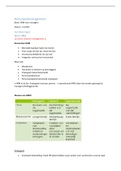
Criminal law – lecture 6
Indirect intention
Something you see clearly but out of the corner of your eye; a side-effect that you
accept as an inevitable or certain accompaniment of your direct intent
In rare cases, D might still legally intend a result that is not their aim or purpose
The historical development of indirect intention
Hyam: high probability
Moloney: natural consequence (moral certainty)
- D claimed that he didn’t aim
- Was death/serious injury a natural consequence of D’s act
- Did D foresee the consequence as a natural consequence of their act
- Broader than the Hyam test
Hancock and Shankland: natural and probable consequence
- Minors on strike
- Moloney is too broad, defective
- Insert reference of probability
- More probable an outcome is, more likely D foresaw situation, the more likely D
intended it
Nedrick: virtual certainty test
- Guilty of manslaughter
Current test for indirect intention
Woollin: a father lost his temper, picked up his baby and threw him across the room; baby
died of fractured skull. D charged with murder. Judge directed jury that they can convict if D
had foreseen a substantial risk of death or serious injury. HL: what judge said blurred the
lines between intent and recklessness; between murder and manslaughter. New test.
Approve test in Nedrick; silightly change: jury is entitled to find intent.
1. Was the result d’s aim or purpose? Yes: direct intent; no, …
2. Was the result virtual certain? & did D appreciate that this result was virtually
certain?
Core criticism of Woollin intent
whats meant by virtually certain?
Does the change of wording from infer to find change anything important?
Must the jury find intent or are they simply entitled to find it? Matthews
- Not obliged
What other factors will the jury take into account?
The test is under-inclusive: not covering people it should
The test is over-inclusive? Covering people it shouldn’t (Steane, see Nicklinson, not
confuse with cox)
Does this test for intention apply outside murder? GBH, Bryson
Criminal law – lecture 6
Indirect intention
Something you see clearly but out of the corner of your eye; a side-effect that you
accept as an inevitable or certain accompaniment of your direct intent
In rare cases, D might still legally intend a result that is not their aim or purpose
The historical development of indirect intention
Hyam: high probability
Moloney: natural consequence (moral certainty)
- D claimed that he didn’t aim
- Was death/serious injury a natural consequence of D’s act
- Did D foresee the consequence as a natural consequence of their act
- Broader than the Hyam test
Hancock and Shankland: natural and probable consequence
- Minors on strike
- Moloney is too broad, defective
- Insert reference of probability
- More probable an outcome is, more likely D foresaw situation, the more likely D
intended it
Nedrick: virtual certainty test
- Guilty of manslaughter
Current test for indirect intention
Woollin: a father lost his temper, picked up his baby and threw him across the room; baby
died of fractured skull. D charged with murder. Judge directed jury that they can convict if D
had foreseen a substantial risk of death or serious injury. HL: what judge said blurred the
lines between intent and recklessness; between murder and manslaughter. New test.
Approve test in Nedrick; silightly change: jury is entitled to find intent.
1. Was the result d’s aim or purpose? Yes: direct intent; no, …
2. Was the result virtual certain? & did D appreciate that this result was virtually
certain?
Core criticism of Woollin intent
whats meant by virtually certain?
Does the change of wording from infer to find change anything important?
Must the jury find intent or are they simply entitled to find it? Matthews
- Not obliged
What other factors will the jury take into account?
The test is under-inclusive: not covering people it should
The test is over-inclusive? Covering people it shouldn’t (Steane, see Nicklinson, not
confuse with cox)
Does this test for intention apply outside murder? GBH, Bryson