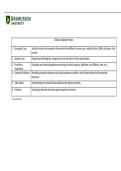
Clinical Judgment Steps
1. Recognize Cues Identify relevant and important information from different sources (e.g., medical history, SBAR, vital signs, chart
review).
2. Analyze Cues Organizing and linking the recognized cues to the client’s clinical presentation.
3. Prioritize a Evaluating and ranking hypotheses according to priority (urgency, likelihood, risk, difficulty, time, etc.).
Hypothesis
4. Generate Solutions Identifying expected outcomes and using hypotheses to define a set of interventions for the expected
outcomes.
5. Take Action Implementing the solution(s) that addresses the highest priorities.
6. Evaluate Comparing observed outcomes against expected outcomes.
Cited: NCSBN, 2023
, Clinical Reasoning/Clinical Judgment (CR/CJ) simulation tool instructions- Complete each step of the clinical judgment
simulation tool and turn it into the simulation instructor at the end of the simulation day.
Prebrief
Using the SBAR report and the patient’s chart, complete each section to prepare you to care for your patient
Recognize Cues- SBAR Report: After receiving the SBAR patient report, what cues did you recognize as important, relevant, irrelevant, and the immediate
concern for the client?
Recognize Cues- Chart Review: Review the chart and list any information/data, what cues did you recognize as important, relevant, irrelevant, and the
immediate concern for the client?
Analyze Cues: From the cues you recognized above, analyze these cues that you identified above to the pathophysiology level. (note-Label them as normal,
abnormal, critical, and urgent).
What condition/disease is consistent with the cues identified?
What other information do you need?
2
1. Recognize Cues Identify relevant and important information from different sources (e.g., medical history, SBAR, vital signs, chart
review).
2. Analyze Cues Organizing and linking the recognized cues to the client’s clinical presentation.
3. Prioritize a Evaluating and ranking hypotheses according to priority (urgency, likelihood, risk, difficulty, time, etc.).
Hypothesis
4. Generate Solutions Identifying expected outcomes and using hypotheses to define a set of interventions for the expected
outcomes.
5. Take Action Implementing the solution(s) that addresses the highest priorities.
6. Evaluate Comparing observed outcomes against expected outcomes.
Cited: NCSBN, 2023
, Clinical Reasoning/Clinical Judgment (CR/CJ) simulation tool instructions- Complete each step of the clinical judgment
simulation tool and turn it into the simulation instructor at the end of the simulation day.
Prebrief
Using the SBAR report and the patient’s chart, complete each section to prepare you to care for your patient
Recognize Cues- SBAR Report: After receiving the SBAR patient report, what cues did you recognize as important, relevant, irrelevant, and the immediate
concern for the client?
Recognize Cues- Chart Review: Review the chart and list any information/data, what cues did you recognize as important, relevant, irrelevant, and the
immediate concern for the client?
Analyze Cues: From the cues you recognized above, analyze these cues that you identified above to the pathophysiology level. (note-Label them as normal,
abnormal, critical, and urgent).
What condition/disease is consistent with the cues identified?
What other information do you need?
2