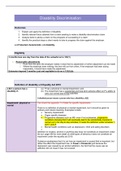
Disability Discrimination
Outcomes
1. Explain and apply the definition of disability
2. Identify relevant facts obtained from a client seeking to make a disability discrimination claim
3. Analyse facts to advise a client on the prospects of succeeding in a claim
4. Identify the practical steps a client needs to take to progress the claim against the employer.
s.4 Protected characteristic- s.6 disability
Eligibility
3 months less one day from the date of the unlawful act s.123(1)
o Reasonable adjustments
o Runs from the point the employer makes it clear that no adjustment or further adjustment can be made
o Where the employer does nothing, the time will run from when, if the employer had been acting
reasonably, it would have made the adjustment
Extension beyond 3 months- just and equitable to do so s.123(1)(b)
Definition of disability s.6 Equality Act 2010
s.6(1) a person has a (a) P has a physical or mental impairment, and
disability if- (b) The impairment has a substantial and long-term adverse effect on P’s ability to
carry out normal day-to-day activities
A disabled person means a person who has a disability s.6(2)
Impairment- physical or Can check the appendix 1 in folder for specific impairments
mental
There is no definition of physical or mental impairment, but it should be given its
ordinary and natural meaning. Examples include:
• Sensory impairments
• Organ specific diseases
• Progressive diseases such as MS- even if not substantial, progressive
conditions showing that it will eventually lead to be substantially impaired in
carried out in his day-to-day activities, it meets the definition under schedule 1,
part 1 para 8
• Mental health conditions such as depression, OCD and eating disorders
•
Addiction to nicotine, alcohol or anything else does not constitute an impairment under
the act- page 458 for more detail on what types of behaviour does not constitute an
impairment under the equality act 2010.
Guidance emphasises that it is not how an impairment is caused that is important, but
rather the effect the impairment has. In Power v Panasonic just because the
depression was caused by an alcohol addiction, the fact that the cause was an
addiction did not mean it was not covered.
, J v DLA piper the tribunal should consider the adverse effect the claimant suffers in
carrying out their day-to-day life as opposed to always identifying a specific
impairment.
Long-term schedule 1 para 2
(1) The effect of the impairment is long term if-
(a) It has lasted for at least 12 months
(b) Is likely to last longer than 12 months, or
(c) It is likely to last for the rest of that person’s life
(2) If the impairment ceases to have a substantial adverse effect on a person’s
ability to carry out day-to-day activities, it is still to be treated as continuing to
have that effect if the effect is likely to recur.
‘likely’ or unlikely to improve
Para C3 ODI guidance states that the meaning of likely
o should be interpreted as that it well could happen and therefore can be used to
determine if the effect will last longer than 12 months.
Substantial adverse impact s.212(1) definition of substantial
on day-to-day activities • The impact being more than minor or trivial
• Guidance states that in assessing whether the impairment leads to a
Progressive diseases will substantial adverse effect, the requirement ‘reflects a general understanding of
meet substantial adverse disability as a limitation going beyond the normal differences in ability which
impact- even if not yet may exist among people.
substantial as because it’s • Look at appendix 1 ODI guidance on subtanstial adverse effect
progressive, it will
eventually lead to him being B4 ODI guidance- cumulative effects of an impairment should be considered and how
substantially impaired that effects a person’s ability to carry out daily activities, so where the isolated events
schedule 1 part 1, para 8 taken together has an adverse effect, this is considered as having adverse impact.
B7- impact on behaviour: use of coping or avoidance strategy might alter the effects of
the impairment on normal-day-to-day activities, however, even with an avoidance or
coping strategy it is likely to still have a substantial adverse impact. In conjunction with
B9 it would not be reasonable to conclude that they do not meet the definition of
disability. It is vital to consider what the person cannot do as opposed to what they can
do (ADEREMI CASE)
Paras 14 and 15 of Equality and Human Rights Commission
Daily activities include: things people do on a regular daily basis
• Walking
• Driving
• Cooking
• Eating
• Lifting etc
• NON-EXHAUSTIVE
Unlawful acts of discrimination s.39
s.39(1) recruitment it is unlawful for an employer to discriminate against a disabled person:
(a) in the arrangements he makes in deciding who to offer employment
to
(b) in the terms of which he offers that person employment; or
(c) by refusing to offer employment
s.60 prevents a prospective employer making enquiries about the applicant’s
health before the offer of the job. However, this does not prevent necessary
Outcomes
1. Explain and apply the definition of disability
2. Identify relevant facts obtained from a client seeking to make a disability discrimination claim
3. Analyse facts to advise a client on the prospects of succeeding in a claim
4. Identify the practical steps a client needs to take to progress the claim against the employer.
s.4 Protected characteristic- s.6 disability
Eligibility
3 months less one day from the date of the unlawful act s.123(1)
o Reasonable adjustments
o Runs from the point the employer makes it clear that no adjustment or further adjustment can be made
o Where the employer does nothing, the time will run from when, if the employer had been acting
reasonably, it would have made the adjustment
Extension beyond 3 months- just and equitable to do so s.123(1)(b)
Definition of disability s.6 Equality Act 2010
s.6(1) a person has a (a) P has a physical or mental impairment, and
disability if- (b) The impairment has a substantial and long-term adverse effect on P’s ability to
carry out normal day-to-day activities
A disabled person means a person who has a disability s.6(2)
Impairment- physical or Can check the appendix 1 in folder for specific impairments
mental
There is no definition of physical or mental impairment, but it should be given its
ordinary and natural meaning. Examples include:
• Sensory impairments
• Organ specific diseases
• Progressive diseases such as MS- even if not substantial, progressive
conditions showing that it will eventually lead to be substantially impaired in
carried out in his day-to-day activities, it meets the definition under schedule 1,
part 1 para 8
• Mental health conditions such as depression, OCD and eating disorders
•
Addiction to nicotine, alcohol or anything else does not constitute an impairment under
the act- page 458 for more detail on what types of behaviour does not constitute an
impairment under the equality act 2010.
Guidance emphasises that it is not how an impairment is caused that is important, but
rather the effect the impairment has. In Power v Panasonic just because the
depression was caused by an alcohol addiction, the fact that the cause was an
addiction did not mean it was not covered.
, J v DLA piper the tribunal should consider the adverse effect the claimant suffers in
carrying out their day-to-day life as opposed to always identifying a specific
impairment.
Long-term schedule 1 para 2
(1) The effect of the impairment is long term if-
(a) It has lasted for at least 12 months
(b) Is likely to last longer than 12 months, or
(c) It is likely to last for the rest of that person’s life
(2) If the impairment ceases to have a substantial adverse effect on a person’s
ability to carry out day-to-day activities, it is still to be treated as continuing to
have that effect if the effect is likely to recur.
‘likely’ or unlikely to improve
Para C3 ODI guidance states that the meaning of likely
o should be interpreted as that it well could happen and therefore can be used to
determine if the effect will last longer than 12 months.
Substantial adverse impact s.212(1) definition of substantial
on day-to-day activities • The impact being more than minor or trivial
• Guidance states that in assessing whether the impairment leads to a
Progressive diseases will substantial adverse effect, the requirement ‘reflects a general understanding of
meet substantial adverse disability as a limitation going beyond the normal differences in ability which
impact- even if not yet may exist among people.
substantial as because it’s • Look at appendix 1 ODI guidance on subtanstial adverse effect
progressive, it will
eventually lead to him being B4 ODI guidance- cumulative effects of an impairment should be considered and how
substantially impaired that effects a person’s ability to carry out daily activities, so where the isolated events
schedule 1 part 1, para 8 taken together has an adverse effect, this is considered as having adverse impact.
B7- impact on behaviour: use of coping or avoidance strategy might alter the effects of
the impairment on normal-day-to-day activities, however, even with an avoidance or
coping strategy it is likely to still have a substantial adverse impact. In conjunction with
B9 it would not be reasonable to conclude that they do not meet the definition of
disability. It is vital to consider what the person cannot do as opposed to what they can
do (ADEREMI CASE)
Paras 14 and 15 of Equality and Human Rights Commission
Daily activities include: things people do on a regular daily basis
• Walking
• Driving
• Cooking
• Eating
• Lifting etc
• NON-EXHAUSTIVE
Unlawful acts of discrimination s.39
s.39(1) recruitment it is unlawful for an employer to discriminate against a disabled person:
(a) in the arrangements he makes in deciding who to offer employment
to
(b) in the terms of which he offers that person employment; or
(c) by refusing to offer employment
s.60 prevents a prospective employer making enquiries about the applicant’s
health before the offer of the job. However, this does not prevent necessary