

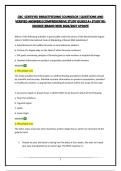
Which of the following activities is permissible under the terms of the World Health Organi-
zation's WHO) International Code of Marketing of Breast Milk Substitutes?
a. Advertisements for toddler formula on local television stations
b. Picture of a happy baby on the label of infant formula containers
c. Gift packs containing samples of formula given to new mothers at hospital discharge
d. Detailed information on product composition provided to health workers
ANSWER
1. The answer is D.
The Code specifies that information on artificial feeding provided to health workers should
be scientific and accurate. Detailed accurate information on product composition, provided
to healthcare workers, is appropriate marketing of products within the scope of the Code.
2. Accessory nipple or breast tissue is LEAST LIKELY to be found in which of the following
a. Near the umbilicus
b. Inguinal region
C. Axilla
d. Outer thigh
ANSWER
2. The answer is D.
The other areas may have extra mammary and/or nipple tissue, which are remnants of the
galactic band.
1. Twenty-six year old Sarah is having her first baby in four weeks. She asks her heath
care auto transplanted at an earlier age. The BEST response is:
1
, a. It may be possible for the first 3 months
b. She should try and see what happens
c. There will be no problem breastfeeding
d. She won't be able to due to the nerve damage
ANSWER
1. The answer is B.
No assumptions can be made about her ability to breastfeed after breast surgery. She should
be followed closely in the first weeks postbirth because the surgery can disrupt ducts and
nerve pathways needed for adequate milk synthesis.
3. Which is the primary or main Immunoglobulin found in human milk?
a. IgA
b. IgG
C. IgE
d. IgM
ANSWER
3. The answer is A.
Secretory IgA is found in large quantities in human milk, protecting the entire GI system. The
other immunoglobulins are also present in lower proportions.
4. Which component of human milk is MOST variable?
a. Minerals
b. Lipids
c. Carbohydrates
d. Proteins
ANSWER
4. The answer is B.
Lipids are the most variable of the components listed. The proportion of fat in milk increases
as the breast empties, and there is a slight variation in fatty acid profiles with maternal diet.
2
zation's WHO) International Code of Marketing of Breast Milk Substitutes?
a. Advertisements for toddler formula on local television stations
b. Picture of a happy baby on the label of infant formula containers
c. Gift packs containing samples of formula given to new mothers at hospital discharge
d. Detailed information on product composition provided to health workers
ANSWER
1. The answer is D.
The Code specifies that information on artificial feeding provided to health workers should
be scientific and accurate. Detailed accurate information on product composition, provided
to healthcare workers, is appropriate marketing of products within the scope of the Code.
2. Accessory nipple or breast tissue is LEAST LIKELY to be found in which of the following
a. Near the umbilicus
b. Inguinal region
C. Axilla
d. Outer thigh
ANSWER
2. The answer is D.
The other areas may have extra mammary and/or nipple tissue, which are remnants of the
galactic band.
1. Twenty-six year old Sarah is having her first baby in four weeks. She asks her heath
care auto transplanted at an earlier age. The BEST response is:
1
, a. It may be possible for the first 3 months
b. She should try and see what happens
c. There will be no problem breastfeeding
d. She won't be able to due to the nerve damage
ANSWER
1. The answer is B.
No assumptions can be made about her ability to breastfeed after breast surgery. She should
be followed closely in the first weeks postbirth because the surgery can disrupt ducts and
nerve pathways needed for adequate milk synthesis.
3. Which is the primary or main Immunoglobulin found in human milk?
a. IgA
b. IgG
C. IgE
d. IgM
ANSWER
3. The answer is A.
Secretory IgA is found in large quantities in human milk, protecting the entire GI system. The
other immunoglobulins are also present in lower proportions.
4. Which component of human milk is MOST variable?
a. Minerals
b. Lipids
c. Carbohydrates
d. Proteins
ANSWER
4. The answer is B.
Lipids are the most variable of the components listed. The proportion of fat in milk increases
as the breast empties, and there is a slight variation in fatty acid profiles with maternal diet.
2


