

NUR 210 Final Exam Study Guide Overview
Questions and Answers with Verified
Solutions | Latest Updated 2026
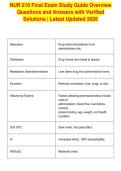
Absorption Drug enters bloodstream from
administration site.
Distribution Drug moves from blood to tissues.
Metabolism (biotransformation) Liver alters drug into active/inactive forms.
Excretion Removal via kidneys, liver, lungs, or skin.
Influencing Factors Factors affecting pharmacokinetics include
route of
administration, blood flow, liver/kidney
function,
protein binding, age, weight, and health
condition.
Oral (PO) Slow onset, first-pass effect.
IV Immediate effect, 100% bioavailability.
IM/SubQ Moderate onset.
,Sublingual, Transdermal, Avoid first-pass effect (some).
Inhalation,
Rectal
Therapeutic Range Range between minimum effective
concentration
(MEC) and toxic level.
Signs of Allergic Reaction to a Signs include rash, itching, hives, swelling,
Drug wheezing, anaphylaxis.
Action for Allergic Reaction Stop the drug immediately, notify provider,
administer antihistamines/epinephrine if
ordered.
7 Rights of Medication Right patient, right drug, right dose, right
Administration route,
right time, right documentation, right
reason.
Opioid Analgesics Examples include Morphine,
hydromorphone,
fentanyl; purpose is moderate to severe
pain relief.
ADRs of Opioid Analgesics Adverse drug reactions include respiratory
depression, constipation, sedation,
euphoria,
urinary retention.
, Nursing for Opioid Analgesics Monitor RR, sedation level, bowel function;
educate on addiction risk.
COX Inhibitors NSAIDs like Ibuprofen, Aspirin, Ketorolac
are anti-
inflammatory, analgesic, antipyretic.
ADRs of COX Inhibitors Adverse drug reactions include GI
bleeding, renal
impairment, bleeding risk.
Nursing for COX Inhibitors Avoid in GI/renal patients, monitor
bleeding, use
with food.
Acetaminophen Purpose is pain/fever relief (no
inflammation
effect).
ADRs of Acetaminophen Liver toxicity (>4g/day).
Nursing for Acetaminophen Avoid alcohol, monitor liver function.
Signs of Opioid Overdose Signs include pinpoint pupils (miosis),
respiratory
depression, unconsciousness.
Treatment for Opioid Overdose Naloxone (Narcan): Opioid antagonist,
reverses
overdose; given IV, IM, or intranasally.
Questions and Answers with Verified
Solutions | Latest Updated 2026
Absorption Drug enters bloodstream from
administration site.
Distribution Drug moves from blood to tissues.
Metabolism (biotransformation) Liver alters drug into active/inactive forms.
Excretion Removal via kidneys, liver, lungs, or skin.
Influencing Factors Factors affecting pharmacokinetics include
route of
administration, blood flow, liver/kidney
function,
protein binding, age, weight, and health
condition.
Oral (PO) Slow onset, first-pass effect.
IV Immediate effect, 100% bioavailability.
IM/SubQ Moderate onset.
,Sublingual, Transdermal, Avoid first-pass effect (some).
Inhalation,
Rectal
Therapeutic Range Range between minimum effective
concentration
(MEC) and toxic level.
Signs of Allergic Reaction to a Signs include rash, itching, hives, swelling,
Drug wheezing, anaphylaxis.
Action for Allergic Reaction Stop the drug immediately, notify provider,
administer antihistamines/epinephrine if
ordered.
7 Rights of Medication Right patient, right drug, right dose, right
Administration route,
right time, right documentation, right
reason.
Opioid Analgesics Examples include Morphine,
hydromorphone,
fentanyl; purpose is moderate to severe
pain relief.
ADRs of Opioid Analgesics Adverse drug reactions include respiratory
depression, constipation, sedation,
euphoria,
urinary retention.
, Nursing for Opioid Analgesics Monitor RR, sedation level, bowel function;
educate on addiction risk.
COX Inhibitors NSAIDs like Ibuprofen, Aspirin, Ketorolac
are anti-
inflammatory, analgesic, antipyretic.
ADRs of COX Inhibitors Adverse drug reactions include GI
bleeding, renal
impairment, bleeding risk.
Nursing for COX Inhibitors Avoid in GI/renal patients, monitor
bleeding, use
with food.
Acetaminophen Purpose is pain/fever relief (no
inflammation
effect).
ADRs of Acetaminophen Liver toxicity (>4g/day).
Nursing for Acetaminophen Avoid alcohol, monitor liver function.
Signs of Opioid Overdose Signs include pinpoint pupils (miosis),
respiratory
depression, unconsciousness.
Treatment for Opioid Overdose Naloxone (Narcan): Opioid antagonist,
reverses
overdose; given IV, IM, or intranasally.


