

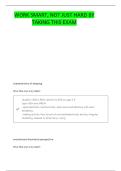
characteristics of sleeping
Give this one a try later!
duration: 50% is REM, decline to 20% by age 3-5
type: REM and NREM
-quiet alertness: inactive body, open eyes and attentive with even
breathing
-waking activity: freq. bursts of uncoordinated body activity, irregular
breathing, relaxed or tense face, crying
evolutionary theoretical perspective
Give this one a try later!
, -seeks to understand value of specieswide cognitive, emotional & social
competencies as those competencies change with age
Kinship studies: twin studies
Give this one a try later!
-monozygotic: identical, egg splits in half (viewed as a set)
-dizygotic: fraternal, two eggs fertilized
active correlation
Give this one a try later!
-individuals actively seek environments related to genotype (niche-picking)
psychoanalytic theoretical perspective
Give this one a try later!
-behavior is motivated by inner forces, memories and conflicts that are
often unconscious
-confront conflicts between biological drives & social expectations,
depends on the persons ability to learn, get along with others and cope
with anxiety
- emphasis on understanding individuals unique life history
, preterm birth & low birth weight risks
Give this one a try later!
-neurological development continues after birth
-brain abnormalities, frequent illness, learning disabilities
cultural context influences on development
Give this one a try later!
-cultural values & practices affect environmental contexts of development
-healthy development depends on laws & government programs that shield
people from harm & foster well-being
cross-sectional
Give this one a try later!
-compare individuals of different ages at one time point
-cheap & fast
-cohort effects, can't explain individual changes
sex chromosomes
Give this one a try later!
Give this one a try later!
duration: 50% is REM, decline to 20% by age 3-5
type: REM and NREM
-quiet alertness: inactive body, open eyes and attentive with even
breathing
-waking activity: freq. bursts of uncoordinated body activity, irregular
breathing, relaxed or tense face, crying
evolutionary theoretical perspective
Give this one a try later!
, -seeks to understand value of specieswide cognitive, emotional & social
competencies as those competencies change with age
Kinship studies: twin studies
Give this one a try later!
-monozygotic: identical, egg splits in half (viewed as a set)
-dizygotic: fraternal, two eggs fertilized
active correlation
Give this one a try later!
-individuals actively seek environments related to genotype (niche-picking)
psychoanalytic theoretical perspective
Give this one a try later!
-behavior is motivated by inner forces, memories and conflicts that are
often unconscious
-confront conflicts between biological drives & social expectations,
depends on the persons ability to learn, get along with others and cope
with anxiety
- emphasis on understanding individuals unique life history
, preterm birth & low birth weight risks
Give this one a try later!
-neurological development continues after birth
-brain abnormalities, frequent illness, learning disabilities
cultural context influences on development
Give this one a try later!
-cultural values & practices affect environmental contexts of development
-healthy development depends on laws & government programs that shield
people from harm & foster well-being
cross-sectional
Give this one a try later!
-compare individuals of different ages at one time point
-cheap & fast
-cohort effects, can't explain individual changes
sex chromosomes
Give this one a try later!


