

UbiSim - Virtual reality training for nursing https://my.ubisimvr.com/scenarios/3819/details
ADN 2026 Graduates
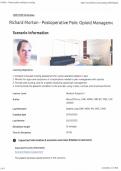
Richard Morton - Postoperative Pain: Opioid Manageme
Scenario Information
Learning Objectives
1. Conduct a focused nursing assessment for a post-operative patient in pain
2. Monitor for signs and symptoms of complications related to pain management with opioids
3. Provide safe nursing care for a patient receiving opioid pain management
4, Communicate the patient's condition to the provider using a clear, concise, and structured format
Learner Level Medical-Surgical 2
Author Maria D'Errico, DNP, APRN, FNP-BC, CNE, CHS
CHSOS
Last Reviewer Debbie Loop DNP, MSN, RN, CNE, CHSE
Creation date 07/14/2020
Last Review 02/21/2025
Simulation length 15 minutes
Time In Simulation 07:00
@ mportantinformation & scenario overview (Hidden to learners)
Important Faculty Information
Scenario Needs Assessment
The patient develops opioid toxicity in this scenario.
1 of 9 6/10/2025, 3:35 PM
,UbiSim - Virtual reality training for nursing https://my.ubisimvr.com/scenarios/3819/details
Inffial State
v
v Introduce self
v State purpose of interaction: Provide care and assessment
v Verify patient ID using two identifiers
v Perform hand hygiene
v Assess VS (BP, HR, RR, Sp02, Pain)
Perform general survey, auscultate heart/lung/bowels, pupit reactivity, mental status
v Identify patient's drowsiness/slurred speech, daughter and patient cues, and ask if he has
taken any additional pain medications from home
Review the electronic heaith record and provider orders
Affer 4 min
v
Identify a deterioration in patient condition
Apply oxygen per provider order
Oxygen Applied
v
v Don gloves
Check capillary blood glucose
Administers naloxone 0.4 mg IV push per provider order
Nxfoxone & 02 Administered
v Reassess patient after naloxone & 02 administration (vital signs, pain assessment, mental
status, auscultate heart/lungs, pupillary response, capillary refill)
+ Update the provider on the patient’s condition in a clear, concise and structured format
+ Don gloves
v Obtain blood sample for serum acetaminophen level ordered by provider
Provide therapeutic communication and support to the patient and daughter
Provide patient-centered education on the diagnosis and prescribed pian of care
{medications/S.E., diet, disease, causes and risks of opioid misuse, non-pharmacological pain
management)
N#foxone Without Oxygen
v
v Reassess patient after naloxone administration
Identify that patient is having shortness of breath with SpO2 at 88%
Apply oxygen per provider order
NCLEX
Clinical Judgement
of 9 6/10/2025, 3:35 PM
,Ubisim - Virtual reality training for nursing https://my.ubisimvr.com/scenarios/3819/details
Integrated Processes
Client Needs
Scenario Introduction
Date: Today Time: 0700 Your Role: Primary RN
Setting: Medical/Surgical Unit Precautions; Standard
Situation: Your patient is a 54 year-old male named Mr. Morton. He is 2 days postoperative from a total left hip
arthroplasty due to joint deterioration from a work injury 5 years ago. His surgery was performed without any
complications. Mr. Morton is frequentty complaining of 10/10 left hip and lower back pain, despite receiving 1mg of I
hydromorphone every 3 hours. The night shift nurse contacted the provider about Mr. Morton's pain and his
hydromorphone dosage was increased to 2 mg, which he received 30 minutes ago. Mr. Morton is upset about his pa
and has asked his daughter, Jenny, to bring in his prescription pain piils from home. Both the provider and night shift
nurse told him it is against hospital policy to take his home pain medications. Jenny is currently at his bedside.
Background: Mr. Morton is a retired firefighter. He has a history of chronic low back pain and left hip pain for the pas
years since falling off a 15 foot ladder while fighting a fire. His chronic pain is managed by his primary care provider :
at home he takes prescription hydrocodone/acetaminophen 7.5/325 mg every 6 hours as needed. He also has a hists
of hypertension, hyperlipidemia, and type 2 diabetes. He takes lisinopril 20 mg daily, simvastatin 40 mg daily, and
metformin 500 mg BID.
Assessment: The last set of vitals taken by the night shift nurse 30 minutes ago were as follows: HR 98; RR 18; BP:
146/82; SpO2 96% on room air, T 98.2 F (36.8 C) oral. His left hip surgical incision is covered by a clean, dry, and int
dressing. Incision is well approximated, sutures intact, draining a small amount of serosanguinous fluid, with no sign:
infection. He has a normal saline |V lock in his left arm that is soft and patent.
Recommendations: You are entering the room. Assess the patient and implement provider orders as appropriate. Nc
the provider as needed for changes in the patient's condition.
Prebriefing
& Preparation Activities
To prepare for the simulation, please review the following materials and research any unfamiliar concept
1. Leaming objectives
2. Scenario Introduction
3. Simulation Length
4. Scenario Medications™
5. Documents**
6. Any additional materials assigned by your instructor
**Note: in some scenarios the Scenario Medications and Documents may not be available as a preparation activity
[Z] Recommended Tutorials
of 9 6/10/2025, 3:35 PM
ADN 2026 Graduates
Richard Morton - Postoperative Pain: Opioid Manageme
Scenario Information
Learning Objectives
1. Conduct a focused nursing assessment for a post-operative patient in pain
2. Monitor for signs and symptoms of complications related to pain management with opioids
3. Provide safe nursing care for a patient receiving opioid pain management
4, Communicate the patient's condition to the provider using a clear, concise, and structured format
Learner Level Medical-Surgical 2
Author Maria D'Errico, DNP, APRN, FNP-BC, CNE, CHS
CHSOS
Last Reviewer Debbie Loop DNP, MSN, RN, CNE, CHSE
Creation date 07/14/2020
Last Review 02/21/2025
Simulation length 15 minutes
Time In Simulation 07:00
@ mportantinformation & scenario overview (Hidden to learners)
Important Faculty Information
Scenario Needs Assessment
The patient develops opioid toxicity in this scenario.
1 of 9 6/10/2025, 3:35 PM
,UbiSim - Virtual reality training for nursing https://my.ubisimvr.com/scenarios/3819/details
Inffial State
v
v Introduce self
v State purpose of interaction: Provide care and assessment
v Verify patient ID using two identifiers
v Perform hand hygiene
v Assess VS (BP, HR, RR, Sp02, Pain)
Perform general survey, auscultate heart/lung/bowels, pupit reactivity, mental status
v Identify patient's drowsiness/slurred speech, daughter and patient cues, and ask if he has
taken any additional pain medications from home
Review the electronic heaith record and provider orders
Affer 4 min
v
Identify a deterioration in patient condition
Apply oxygen per provider order
Oxygen Applied
v
v Don gloves
Check capillary blood glucose
Administers naloxone 0.4 mg IV push per provider order
Nxfoxone & 02 Administered
v Reassess patient after naloxone & 02 administration (vital signs, pain assessment, mental
status, auscultate heart/lungs, pupillary response, capillary refill)
+ Update the provider on the patient’s condition in a clear, concise and structured format
+ Don gloves
v Obtain blood sample for serum acetaminophen level ordered by provider
Provide therapeutic communication and support to the patient and daughter
Provide patient-centered education on the diagnosis and prescribed pian of care
{medications/S.E., diet, disease, causes and risks of opioid misuse, non-pharmacological pain
management)
N#foxone Without Oxygen
v
v Reassess patient after naloxone administration
Identify that patient is having shortness of breath with SpO2 at 88%
Apply oxygen per provider order
NCLEX
Clinical Judgement
of 9 6/10/2025, 3:35 PM
,Ubisim - Virtual reality training for nursing https://my.ubisimvr.com/scenarios/3819/details
Integrated Processes
Client Needs
Scenario Introduction
Date: Today Time: 0700 Your Role: Primary RN
Setting: Medical/Surgical Unit Precautions; Standard
Situation: Your patient is a 54 year-old male named Mr. Morton. He is 2 days postoperative from a total left hip
arthroplasty due to joint deterioration from a work injury 5 years ago. His surgery was performed without any
complications. Mr. Morton is frequentty complaining of 10/10 left hip and lower back pain, despite receiving 1mg of I
hydromorphone every 3 hours. The night shift nurse contacted the provider about Mr. Morton's pain and his
hydromorphone dosage was increased to 2 mg, which he received 30 minutes ago. Mr. Morton is upset about his pa
and has asked his daughter, Jenny, to bring in his prescription pain piils from home. Both the provider and night shift
nurse told him it is against hospital policy to take his home pain medications. Jenny is currently at his bedside.
Background: Mr. Morton is a retired firefighter. He has a history of chronic low back pain and left hip pain for the pas
years since falling off a 15 foot ladder while fighting a fire. His chronic pain is managed by his primary care provider :
at home he takes prescription hydrocodone/acetaminophen 7.5/325 mg every 6 hours as needed. He also has a hists
of hypertension, hyperlipidemia, and type 2 diabetes. He takes lisinopril 20 mg daily, simvastatin 40 mg daily, and
metformin 500 mg BID.
Assessment: The last set of vitals taken by the night shift nurse 30 minutes ago were as follows: HR 98; RR 18; BP:
146/82; SpO2 96% on room air, T 98.2 F (36.8 C) oral. His left hip surgical incision is covered by a clean, dry, and int
dressing. Incision is well approximated, sutures intact, draining a small amount of serosanguinous fluid, with no sign:
infection. He has a normal saline |V lock in his left arm that is soft and patent.
Recommendations: You are entering the room. Assess the patient and implement provider orders as appropriate. Nc
the provider as needed for changes in the patient's condition.
Prebriefing
& Preparation Activities
To prepare for the simulation, please review the following materials and research any unfamiliar concept
1. Leaming objectives
2. Scenario Introduction
3. Simulation Length
4. Scenario Medications™
5. Documents**
6. Any additional materials assigned by your instructor
**Note: in some scenarios the Scenario Medications and Documents may not be available as a preparation activity
[Z] Recommended Tutorials
of 9 6/10/2025, 3:35 PM


