

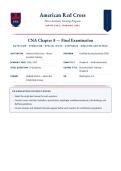
American Red Cross
8 RETPAHC · ANC
CNA Nurse Assistant Training Program
EST. 1881
SAVING LIVES, CHANGING LIVES
CNA Chapter 8 — Final Examination
N U T R I T I O N · H Y D RAT I O N · S P E C I A L D I E TS · DYS P H AG I A · M E A LT I M E A SS I STA N C E
INSTITUTION American Red Cross — Nurse PROGRAM Certified Nursing Assistant (CNA)
Assistant Training
ACADEMIC YEAR EXAM TITLE Chapter 8 — Final Examination
TOTAL QUESTIONS 30 Questions COURSE TITLE Nurse Assistant Training —
Chapter 8
FORMAT Multiple Choice — Select the HQ Washington, D.C.
Single Best Answer
EXAMINATION INSTRUCTIONS
▸ Select the single best answer for each question.
▸ Content covers nutrition, hydration, special diets, dysphagia, mealtime assistance, tube feedings, and
MyPlate guidelines.
▸ Correct answers and detailed rationales appear below each question for certification preparation.
, CNA CHAPTER 8 — NUTRITION, HYDRATION & SPECIAL
Questions 1 – 30
DIETS
1. To help prevent aspiration, residents should be in the ________ position when eating.
A. Upright
B. Lying down
C. Prone
D. Lateral
CORRECT ANSWER A — Upright
RATIONALE An upright position (90 degrees) uses gravity to facilitate swallowing and prevents
food/liquid from entering the airway. Lying down (B) significantly increases
aspiration risk. Prone (C — on stomach) and lateral (D — on side) are
inappropriate for eating. Residents should remain upright for at least 30 minutes
after meals. This is a fundamental safety measure for all residents, especially
those with dysphagia or neurological conditions.
2. A nursing assistant's duties regarding tube feedings include:
A. Inserting tubes
B. Doing the feedings
C. Observing the feeding and reporting problems
D. Cleaning the tubes
CORRECT ANSWER C — Observing the feeding and reporting problems
RATIONALE Tube insertion (A) and administration of tube feedings (B) are nursing procedures
beyond the CNA scope. The CNA's role is OBSERVATION: monitoring for signs of
aspiration, tube displacement, nausea, vomiting, or abdominal distention, and
promptly reporting any problems to the nurse. The CNA should also keep the
head of the bed elevated during feedings and provide oral care to the NPO
resident.
, 3. Which is the most essential nutrient for life?
A. Vegetables
B. Water
C. Grains
D. Protein
CORRECT ANSWER B — Water
RATIONALE Water is the most essential nutrient — a person can survive only about 3 days
without water but weeks without food. Water is required for every cellular
function: temperature regulation, nutrient transport, waste elimination, and
chemical reactions. The body is approximately 60% water. Dehydration is a
serious risk in the elderly, who may have decreased thirst sensation. CNAs must
encourage adequate fluid intake throughout the day.
4. Which of the following is a good source of protein?
A. Corn oil
B. An orange
C. Fish
D. Grape jelly
CORRECT ANSWER C — Fish
RATIONALE Fish is an excellent source of complete protein, containing all essential amino
acids needed for tissue building and repair. Corn oil (A) is a fat. An orange (B) is a
carbohydrate/fruit. Grape jelly (D) is primarily sugar (simple carbohydrate). Other
good protein sources include: meat, poultry, eggs, dairy products, beans, nuts,
and tofu. Protein is essential for wound healing, immune function, and
maintaining muscle mass.
8 RETPAHC · ANC
CNA Nurse Assistant Training Program
EST. 1881
SAVING LIVES, CHANGING LIVES
CNA Chapter 8 — Final Examination
N U T R I T I O N · H Y D RAT I O N · S P E C I A L D I E TS · DYS P H AG I A · M E A LT I M E A SS I STA N C E
INSTITUTION American Red Cross — Nurse PROGRAM Certified Nursing Assistant (CNA)
Assistant Training
ACADEMIC YEAR EXAM TITLE Chapter 8 — Final Examination
TOTAL QUESTIONS 30 Questions COURSE TITLE Nurse Assistant Training —
Chapter 8
FORMAT Multiple Choice — Select the HQ Washington, D.C.
Single Best Answer
EXAMINATION INSTRUCTIONS
▸ Select the single best answer for each question.
▸ Content covers nutrition, hydration, special diets, dysphagia, mealtime assistance, tube feedings, and
MyPlate guidelines.
▸ Correct answers and detailed rationales appear below each question for certification preparation.
, CNA CHAPTER 8 — NUTRITION, HYDRATION & SPECIAL
Questions 1 – 30
DIETS
1. To help prevent aspiration, residents should be in the ________ position when eating.
A. Upright
B. Lying down
C. Prone
D. Lateral
CORRECT ANSWER A — Upright
RATIONALE An upright position (90 degrees) uses gravity to facilitate swallowing and prevents
food/liquid from entering the airway. Lying down (B) significantly increases
aspiration risk. Prone (C — on stomach) and lateral (D — on side) are
inappropriate for eating. Residents should remain upright for at least 30 minutes
after meals. This is a fundamental safety measure for all residents, especially
those with dysphagia or neurological conditions.
2. A nursing assistant's duties regarding tube feedings include:
A. Inserting tubes
B. Doing the feedings
C. Observing the feeding and reporting problems
D. Cleaning the tubes
CORRECT ANSWER C — Observing the feeding and reporting problems
RATIONALE Tube insertion (A) and administration of tube feedings (B) are nursing procedures
beyond the CNA scope. The CNA's role is OBSERVATION: monitoring for signs of
aspiration, tube displacement, nausea, vomiting, or abdominal distention, and
promptly reporting any problems to the nurse. The CNA should also keep the
head of the bed elevated during feedings and provide oral care to the NPO
resident.
, 3. Which is the most essential nutrient for life?
A. Vegetables
B. Water
C. Grains
D. Protein
CORRECT ANSWER B — Water
RATIONALE Water is the most essential nutrient — a person can survive only about 3 days
without water but weeks without food. Water is required for every cellular
function: temperature regulation, nutrient transport, waste elimination, and
chemical reactions. The body is approximately 60% water. Dehydration is a
serious risk in the elderly, who may have decreased thirst sensation. CNAs must
encourage adequate fluid intake throughout the day.
4. Which of the following is a good source of protein?
A. Corn oil
B. An orange
C. Fish
D. Grape jelly
CORRECT ANSWER C — Fish
RATIONALE Fish is an excellent source of complete protein, containing all essential amino
acids needed for tissue building and repair. Corn oil (A) is a fat. An orange (B) is a
carbohydrate/fruit. Grape jelly (D) is primarily sugar (simple carbohydrate). Other
good protein sources include: meat, poultry, eggs, dairy products, beans, nuts,
and tofu. Protein is essential for wound healing, immune function, and
maintaining muscle mass.


