WGU D459 Task 3 - Analyzing the Iceberg Tool
in Systems Thinking Update with complete
solutions.
WGU's Four-Step Tool (based on "Six Steps to Thinking Systemically" by Michael Goodman and
Richard Karash)
The Iceberg Tool is a way to see how the underlying structure causes the individual events and the patterns
or trends that emerge from recurring events. Using the Iceberg Tool allows you to see the basic facts and
interconnections, an important first step.
STEP 1: Complete an Iceberg Tool for this case study.
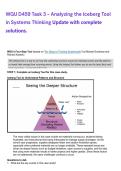
Iceberg Tool to Understand Patterns and Structure
The most visible issues in this case include art materials running out, students feeling
frustrated, and instructional time being interrupted to manage supply shortages. As the
school year progresses, supplies disappear faster and student frustration grows,
especially when preferred materials are no longer available. These repeated issues are
driven by deeper factors such as budget limitations, open access to supplies, and the idea
that using more materials results in better projects and higher grades. Since these factors
are not addressed, the same challenges continue to occur.
Questions to Ask
1. What are the key events in this case study?
, a) At the start of the case study, Ms. Jackson stocks a craft cart with art supplies for her third-
grade class while working within a tight budget. Initially, students are careful with how they use
the materials, but over time they begin creating more detailed projects in hopes of impressing
their teacher and earning higher grades. This leads to materials such as paper, glue, and
markers being used at a faster rate. As supplies run low, students become frustrated,
disagreements arise, and Ms. Jackson must spend additional time restocking instead of
teaching.
2. What patterns do you notice in the key events of this case study?
a) A clear pattern is that students consistently use more materials over time, causing supplies to
run out quickly. This results in repeated frustration among students and requires Ms. Jackson
in Systems Thinking Update with complete
solutions.
WGU's Four-Step Tool (based on "Six Steps to Thinking Systemically" by Michael Goodman and
Richard Karash)
The Iceberg Tool is a way to see how the underlying structure causes the individual events and the patterns
or trends that emerge from recurring events. Using the Iceberg Tool allows you to see the basic facts and
interconnections, an important first step.
STEP 1: Complete an Iceberg Tool for this case study.
Iceberg Tool to Understand Patterns and Structure
The most visible issues in this case include art materials running out, students feeling
frustrated, and instructional time being interrupted to manage supply shortages. As the
school year progresses, supplies disappear faster and student frustration grows,
especially when preferred materials are no longer available. These repeated issues are
driven by deeper factors such as budget limitations, open access to supplies, and the idea
that using more materials results in better projects and higher grades. Since these factors
are not addressed, the same challenges continue to occur.
Questions to Ask
1. What are the key events in this case study?
, a) At the start of the case study, Ms. Jackson stocks a craft cart with art supplies for her third-
grade class while working within a tight budget. Initially, students are careful with how they use
the materials, but over time they begin creating more detailed projects in hopes of impressing
their teacher and earning higher grades. This leads to materials such as paper, glue, and
markers being used at a faster rate. As supplies run low, students become frustrated,
disagreements arise, and Ms. Jackson must spend additional time restocking instead of
teaching.
2. What patterns do you notice in the key events of this case study?
a) A clear pattern is that students consistently use more materials over time, causing supplies to
run out quickly. This results in repeated frustration among students and requires Ms. Jackson