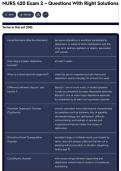
NURS 420 Exam 2 – Questions With Right Solutions
Save Groups
Terms in this set (150)
mood disorders (affective disorders) pervasive alterations in emotions manifested by
depression or mania or both; interference with life,
long-term sadness, agitation or elation; associated
with suicide
How long is a major depressive at least 2 weeks
Episode?
When is a mixed episode diagnosed? when the person experiences both mania and
depression nearly everyday for at least one week
Difference between bipolar I and Bipolar I: one or more manic or mixed episodes
bipolar II usually accompanied by major depressive episodes
Bipolar II: one or more major depressive episodes
accompanied by at least one hypomanic episode
Persistent Depressive Disorder chronic, persistent mood disturbance characterized
(Dysthymia) by symptoms such as insomnia, loss of appetite,
decreased energy, low self-esteem, difficulty
concentrating, and feelings of sadness and
hopelessness that are milder than those of
depression
Disruptive Mood Dysregulation persistent angry or irritable mood, punctuated by
Disorder serve, recurrent temper outbursts that are not in
keeping with provocation or situation, beginning
before age 10
Cyclothymic disorder mild mood swings between hypomania and
depression without loss of social or occupational
functioning
,Substance-induced depressive or characterized by a significant disturbance in mood
bipolar disorder that is a direct physiological consequence of
ingested substances such as alcohol, other drugs, or
toxins
seasonal affective disorder (SAD) Winter depression or fall-onset SAD: people
experience increased sleep, appetite and
carbohydrate cravings, weight gain, interpersonal
conflict, irritability and heaviness in extremities
beginning in late autumn and abating in the spring
and summer
Spring-onset SAD: insomnia, weight loss, and poor
appetite lasting from late spring or early summer
until early fall
* Usually treated with light therapy
postpartum "maternity" blues mild, predictable mood disturbance occurring in the
first several days after delivery of a baby; symptoms:
labile mood and affect, crying spells, sadness,
insomnia, and anxiety
Postpartum depression The symptoms are consistent with those of
depression with onset within 4 weeks of delivery.
Postpartum psychosis severe and debilitating psychiatric illness, with acute
onset in the days following childbirth. Symptoms
begin with fatigue, sadness, emotional lability, poor
memory, and confusion and progress to delusions,
hallucinations, poor insight and judgment, and loss of
contact with reality. This medical emergency requires
immediate treatment. Women who have a history of
serious mental illness are at higher risk for a
postpartum relapse, even if they were well during
pregnancy
Premenstrual dysphoric disorder severe form of premenstrual syndrome and is
defined as recurrent, moderate psychological and
physical symptoms that occur during the week
before menses and resolving with menstruation
, Nonsuicidal self-injury eliberate, intentional cutting, burning, scraping,
hitting, or interference with wound healing. Some
persons who engage in self-injury (sometimes called
self-mutilation) report reasons of alleviation of
negative emotions, self-punishment, seeking
attention, or escaping a situation or responsibility
Biologic Theories - Genetic Theories -transmission of major depression in first-degree
relatives who are at twice the risk for developing
depression compared with the general population
-First-degree relatives of people with bipolar
disorder have a sevenfold risk for developing bipolar
disorder compared with a 1% risk in the general
population
-monozygotic (identical) twins have a concordance
rate (both twins having the disorder) two to four
times higher than that of dizygotic (fraternal) twins.
Biological Theories - Neurochemical -serotonin and norepinephrine are the two major
Theories biogenic amines
Biological Theories - Neuroedocrine -Mood disturbances have been documented in
Influences people with endocrine disorders, such as those of
the thyroid, adrenal, parathyroid, and pituitary
glands.
What is kindling? is the process by which seizure activity in a specific
area of the brain is initially stimulated by reaching a
threshold of the cumulative effects of stress, low
amounts of electric impulses, or chemicals such as
cocaine that sensitize nerve cells and pathways
pyschodynamic theories - self self-reproach and "anger turned inward" related to
depreciation either a real or perceived loss. Feeling abandoned by
this loss, people are then angry while both loving
and hating the lost object.
Save Groups
Terms in this set (150)
mood disorders (affective disorders) pervasive alterations in emotions manifested by
depression or mania or both; interference with life,
long-term sadness, agitation or elation; associated
with suicide
How long is a major depressive at least 2 weeks
Episode?
When is a mixed episode diagnosed? when the person experiences both mania and
depression nearly everyday for at least one week
Difference between bipolar I and Bipolar I: one or more manic or mixed episodes
bipolar II usually accompanied by major depressive episodes
Bipolar II: one or more major depressive episodes
accompanied by at least one hypomanic episode
Persistent Depressive Disorder chronic, persistent mood disturbance characterized
(Dysthymia) by symptoms such as insomnia, loss of appetite,
decreased energy, low self-esteem, difficulty
concentrating, and feelings of sadness and
hopelessness that are milder than those of
depression
Disruptive Mood Dysregulation persistent angry or irritable mood, punctuated by
Disorder serve, recurrent temper outbursts that are not in
keeping with provocation or situation, beginning
before age 10
Cyclothymic disorder mild mood swings between hypomania and
depression without loss of social or occupational
functioning
,Substance-induced depressive or characterized by a significant disturbance in mood
bipolar disorder that is a direct physiological consequence of
ingested substances such as alcohol, other drugs, or
toxins
seasonal affective disorder (SAD) Winter depression or fall-onset SAD: people
experience increased sleep, appetite and
carbohydrate cravings, weight gain, interpersonal
conflict, irritability and heaviness in extremities
beginning in late autumn and abating in the spring
and summer
Spring-onset SAD: insomnia, weight loss, and poor
appetite lasting from late spring or early summer
until early fall
* Usually treated with light therapy
postpartum "maternity" blues mild, predictable mood disturbance occurring in the
first several days after delivery of a baby; symptoms:
labile mood and affect, crying spells, sadness,
insomnia, and anxiety
Postpartum depression The symptoms are consistent with those of
depression with onset within 4 weeks of delivery.
Postpartum psychosis severe and debilitating psychiatric illness, with acute
onset in the days following childbirth. Symptoms
begin with fatigue, sadness, emotional lability, poor
memory, and confusion and progress to delusions,
hallucinations, poor insight and judgment, and loss of
contact with reality. This medical emergency requires
immediate treatment. Women who have a history of
serious mental illness are at higher risk for a
postpartum relapse, even if they were well during
pregnancy
Premenstrual dysphoric disorder severe form of premenstrual syndrome and is
defined as recurrent, moderate psychological and
physical symptoms that occur during the week
before menses and resolving with menstruation
, Nonsuicidal self-injury eliberate, intentional cutting, burning, scraping,
hitting, or interference with wound healing. Some
persons who engage in self-injury (sometimes called
self-mutilation) report reasons of alleviation of
negative emotions, self-punishment, seeking
attention, or escaping a situation or responsibility
Biologic Theories - Genetic Theories -transmission of major depression in first-degree
relatives who are at twice the risk for developing
depression compared with the general population
-First-degree relatives of people with bipolar
disorder have a sevenfold risk for developing bipolar
disorder compared with a 1% risk in the general
population
-monozygotic (identical) twins have a concordance
rate (both twins having the disorder) two to four
times higher than that of dizygotic (fraternal) twins.
Biological Theories - Neurochemical -serotonin and norepinephrine are the two major
Theories biogenic amines
Biological Theories - Neuroedocrine -Mood disturbances have been documented in
Influences people with endocrine disorders, such as those of
the thyroid, adrenal, parathyroid, and pituitary
glands.
What is kindling? is the process by which seizure activity in a specific
area of the brain is initially stimulated by reaching a
threshold of the cumulative effects of stress, low
amounts of electric impulses, or chemicals such as
cocaine that sensitize nerve cells and pathways
pyschodynamic theories - self self-reproach and "anger turned inward" related to
depreciation either a real or perceived loss. Feeling abandoned by
this loss, people are then angry while both loving
and hating the lost object.