

Property_ Estates and Future Interests.pdf Property_ Estates and Future Interests.pdf Property_ Estates and Future Interests.pdf
STUVIA 2024/2025
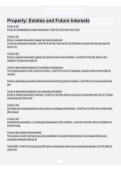
Property: Estates and Future Interests
A has a LE
B has an indefeasibly vested remainder - ✔✔To A for Life, then to B.
A has a LE
B has a vested remainder subject to total divestment.
C has an executory interest. - ✔✔To A for life, then to B, but if B does not pass the bar by age 40,
then to C.
A has a LE.
B has a vested remainder subject to open if A has more children. - ✔✔"To A for life, then to A's
children." A has one child, B.
A has a fee simple subject to a condition subsequent.
The original grantor has a right of reentry. - ✔✔To A, but if x happens, grantor reserves the right to
reenter.
A has a springing executory interest (cuts short the grantor's estate). - ✔✔To A if A ever passes the
bar
%
A has a fee simple subject to an executory limitation.
B has a shifting executory interest. - ✔✔To A and his heirs, as long as A practices law, but if A stops
practicing law, then to B.
A has a LE.
B's heirs are unascertained so they have a contingent remainder. - ✔✔To A for life, then to B's heirs
(B is alive).
A has a LE.
Conditional precedent --> contingent remainder in B's children. - ✔✔To A for life, then to children of
B then living.
A has a fee simple determinable.
The grantor would normally have the possibility of reverter following this, but instead there is an
executory interest held by B.
*note RAP - ✔✔To A so long as the farm continues to serve as a community garden, but if it fails to,
then to B.
stuvia
Property_ Estates and Future Interests.pdf Property_ Estates and Future Interests.pdf Property_ Estates and Future Interests.pdf
STUVIA 2024/2025
Property: Estates and Future Interests
A has a LE
B has an indefeasibly vested remainder - ✔✔To A for Life, then to B.
A has a LE
B has a vested remainder subject to total divestment.
C has an executory interest. - ✔✔To A for life, then to B, but if B does not pass the bar by age 40,
then to C.
A has a LE.
B has a vested remainder subject to open if A has more children. - ✔✔"To A for life, then to A's
children." A has one child, B.
A has a fee simple subject to a condition subsequent.
The original grantor has a right of reentry. - ✔✔To A, but if x happens, grantor reserves the right to
reenter.
A has a springing executory interest (cuts short the grantor's estate). - ✔✔To A if A ever passes the
bar
%
A has a fee simple subject to an executory limitation.
B has a shifting executory interest. - ✔✔To A and his heirs, as long as A practices law, but if A stops
practicing law, then to B.
A has a LE.
B's heirs are unascertained so they have a contingent remainder. - ✔✔To A for life, then to B's heirs
(B is alive).
A has a LE.
Conditional precedent --> contingent remainder in B's children. - ✔✔To A for life, then to children of
B then living.
A has a fee simple determinable.
The grantor would normally have the possibility of reverter following this, but instead there is an
executory interest held by B.
*note RAP - ✔✔To A so long as the farm continues to serve as a community garden, but if it fails to,
then to B.
stuvia
Property_ Estates and Future Interests.pdf Property_ Estates and Future Interests.pdf Property_ Estates and Future Interests.pdf


