NREMT Complete Study Guide 2026 | Comprehensive Exam
Review | Graded A+
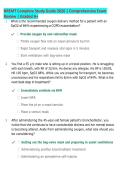
1. What is the recommended oxygen delivery method for a patient with an
SpO2 of 84% experiencing a COPD exacerbation?
Provide oxygen by non-rebreather mask
Titrate oxygen flow rate on nasal cannula to 6L/min
Rapid transport and reassess vital signs in 5 minutes
Start ventilations with bag-valve mask
2. You find a 55 y/o male who is sitting up in a tripod position. He is struggling
with each breath, with RR of 32/min. He denies any allergies. His BP is 155/85,
HR 105 bpm, SpO2 88%. While you are preparing for transport, he becomes
unconscious and his respirations fall to 8/min with SpO2 of 84%. What is the
next best step in treatment?
Immediately ventilate via BVM
Insert NPA
Place the pt on a nasal cannula
Place a venturi mask
3. After administering the 45-year-old female patient's bronchodilator, you
notice that she continues to have considerable distress and her mental status
is becoming altered. Aside from administering oxygen, what else should you
be considering?
Getting out the bag-valve mask and preparing to assist ventilations
Administering another bronchodilator treatment
Administering an epinephrine self-injector
, Using CPAP
4. If a patient with croup is showing signs of respiratory distress, which
combination of actions should you prioritize to ensure their safety?
Begin CPR, administer IV fluids, and transport immediately.
Keep oxygen saturation above 94%, keep the patient calm, and use
blow-by oxygen.
Use bag valve mask ventilations, keep the patient calm, and monitor
vital signs.
Administer a non-rebreather mask, perform chest compressions, and
call for advanced support.
5. An irregular respiratory pattern called Cheyne-Stokes presents with the
patient breathing at an increasing rate and depth of respiration, followed by a
period of apnea. What types of disease or injury cause Cheyne-Stokes
respirations?
Strokes and serious head injuries
Kidney failure and abdominal trauma
Diabetes and cervical trauma
Cardiac arrest and blunt chest trauma
6. What is the primary role of the epiglottis in the larynx?
Support for the vocal cords
Vocalization
Protection during swallowing
Gas exchange
,7. What is the primary site for gas exchange in the respiratory system?
Trachea
Alveoli
Larynx
Bronchioles
8. Which of the following is a recommended action for managing a patient with
croup or epiglottitis?
Perform chest compressions immediately
Provide intravenous fluids
Administer high-flow oxygen via non-rebreather mask
Keep the patient calm
9. Describe the role of the larynx in separating the upper and lower respiratory
tracts.
The larynx filters and humidifies the air before it reaches the lungs.
The larynx is the primary site for oxygen absorption.
The larynx acts as a barrier that prevents food and liquids from
entering the trachea while allowing air to pass through.
The larynx is responsible for gas exchange in the lungs.
10. Describe the significance of using a nonrebreather mask in emergency
situations.
A nonrebreather mask delivers oxygen at low flow rates for comfort.
A nonrebreather mask is used for patients who are stable and do not
require oxygen.
, A nonrebreather mask provides high concentrations of oxygen,
crucial for patients with severe respiratory distress.
A nonrebreather mask is primarily used for delivering medications.
11. What condition is characterized by absent lung sounds on one side of the
chest after trauma?
Tension pneumothorax
Right chest contusion
Flail chest
Cardiac tamponade
12. What is the first action you should take if bag-valve mask ventilations do not
result in chest rise?
Place an oropharyngeal airway
Call ALS for advanced airway placement
Suction the oropharynx for 20 seconds
Reposition the head
13. If a patient with COPD in Fowler's position begins to show signs of
respiratory distress, what should be your immediate action?
Increase the patient's transport speed without reassessing.
Administer a bronchodilator without consulting medical direction.
Change the patient's position to supine immediately.
Administer supplemental oxygen and reassess the patient's
condition.
Review | Graded A+
1. What is the recommended oxygen delivery method for a patient with an
SpO2 of 84% experiencing a COPD exacerbation?
Provide oxygen by non-rebreather mask
Titrate oxygen flow rate on nasal cannula to 6L/min
Rapid transport and reassess vital signs in 5 minutes
Start ventilations with bag-valve mask
2. You find a 55 y/o male who is sitting up in a tripod position. He is struggling
with each breath, with RR of 32/min. He denies any allergies. His BP is 155/85,
HR 105 bpm, SpO2 88%. While you are preparing for transport, he becomes
unconscious and his respirations fall to 8/min with SpO2 of 84%. What is the
next best step in treatment?
Immediately ventilate via BVM
Insert NPA
Place the pt on a nasal cannula
Place a venturi mask
3. After administering the 45-year-old female patient's bronchodilator, you
notice that she continues to have considerable distress and her mental status
is becoming altered. Aside from administering oxygen, what else should you
be considering?
Getting out the bag-valve mask and preparing to assist ventilations
Administering another bronchodilator treatment
Administering an epinephrine self-injector
, Using CPAP
4. If a patient with croup is showing signs of respiratory distress, which
combination of actions should you prioritize to ensure their safety?
Begin CPR, administer IV fluids, and transport immediately.
Keep oxygen saturation above 94%, keep the patient calm, and use
blow-by oxygen.
Use bag valve mask ventilations, keep the patient calm, and monitor
vital signs.
Administer a non-rebreather mask, perform chest compressions, and
call for advanced support.
5. An irregular respiratory pattern called Cheyne-Stokes presents with the
patient breathing at an increasing rate and depth of respiration, followed by a
period of apnea. What types of disease or injury cause Cheyne-Stokes
respirations?
Strokes and serious head injuries
Kidney failure and abdominal trauma
Diabetes and cervical trauma
Cardiac arrest and blunt chest trauma
6. What is the primary role of the epiglottis in the larynx?
Support for the vocal cords
Vocalization
Protection during swallowing
Gas exchange
,7. What is the primary site for gas exchange in the respiratory system?
Trachea
Alveoli
Larynx
Bronchioles
8. Which of the following is a recommended action for managing a patient with
croup or epiglottitis?
Perform chest compressions immediately
Provide intravenous fluids
Administer high-flow oxygen via non-rebreather mask
Keep the patient calm
9. Describe the role of the larynx in separating the upper and lower respiratory
tracts.
The larynx filters and humidifies the air before it reaches the lungs.
The larynx is the primary site for oxygen absorption.
The larynx acts as a barrier that prevents food and liquids from
entering the trachea while allowing air to pass through.
The larynx is responsible for gas exchange in the lungs.
10. Describe the significance of using a nonrebreather mask in emergency
situations.
A nonrebreather mask delivers oxygen at low flow rates for comfort.
A nonrebreather mask is used for patients who are stable and do not
require oxygen.
, A nonrebreather mask provides high concentrations of oxygen,
crucial for patients with severe respiratory distress.
A nonrebreather mask is primarily used for delivering medications.
11. What condition is characterized by absent lung sounds on one side of the
chest after trauma?
Tension pneumothorax
Right chest contusion
Flail chest
Cardiac tamponade
12. What is the first action you should take if bag-valve mask ventilations do not
result in chest rise?
Place an oropharyngeal airway
Call ALS for advanced airway placement
Suction the oropharynx for 20 seconds
Reposition the head
13. If a patient with COPD in Fowler's position begins to show signs of
respiratory distress, what should be your immediate action?
Increase the patient's transport speed without reassessing.
Administer a bronchodilator without consulting medical direction.
Change the patient's position to supine immediately.
Administer supplemental oxygen and reassess the patient's
condition.