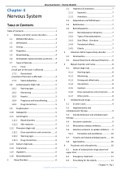
Drug Summaries – Humza Ibrahim
2.1 Hypnotics & anxiolytics ................................ 7
Chapter 4 2.1.1 Hypnotics ............................................. 7
Nervous System 2.1.2 Anxiolytics ............................................ 7
2.2 Dependence and Withdrawal ...................... 7
TABLE OF CONTENTS 2.3 Barbiturates ................................................. 7
2.4 Benzodiazepines .......................................... 7
Table of Contents ......................................................... 1
2.4.1 Benzodiazepine Indications ................. 7
1 Epilepsy and other seizure disorders ............... 3
2.4.2 Types of benzodiazepines .................... 7
1.1 MHRA/CHM advice ...................................... 3
2.4.3 Side Effects - Overdose ........................ 7
1.2 Withdrawal................................................... 3
2.4.4 Paradoxical effects ............................... 7
1.3 Driving .......................................................... 3
2.4.5 Elderly .................................................. 7
1.4 Pregnancy..................................................... 4
3 Attention deficit hyperactivity disorder .......... 7
1.5 Breastfeeding ............................................... 4
3.1 Atomoxetine ................................................ 7
1.6 Antiepileptic hypersensitivity syndrome ..... 4
3.2 Dexsamfetamine & Lidexasamfetamine ...... 8
1.7 Types of Seizures .......................................... 4
4 Bipoalr disorder and mania ............................. 8
1.7.1 Focal
4.1 Lithium (high risk) ........................................ 8
(small part of the brain is affected) ..................... 4
4.1.1 Warning signs....................................... 8
1.7.2 Generalised
(most/all of the brain is affected) ........................ 4 4.1.2 Monitoring ........................................... 8
1.7.3 Status Epilepticus ................................. 4 4.1.3 Driving and skilled tasks ....................... 8
1.8 Carbamazepine (high risk) ........................... 5 4.1.4 Interactions .......................................... 8
1.8.1 Warning signs ....................................... 5 4.1.5 Cautions ............................................... 8
1.8.2 Monitoring ........................................... 5 4.1.6 Dose equivalence and conversion ....... 8
1.8.3 Hepatic ................................................. 5 4.1.7 Other points ......................................... 8
1.8.4 Pregnancy and breastfeeding .............. 5 5 Antidepressant drugs ....................................... 9
1.8.5 Drug interactions.................................. 5 5.1 St John's wort............................................... 9
1.9 Fosphenytoin................................................ 5 5.2 Hyponatraemia and
antidepressant therapy ........................................... 9
1.10 Gabapentin................................................... 5
5.3 Suicidal behaviour and antidepressant
1.11 Lamotragine ................................................. 5
therapy..................................................................... 9
1.11.1 Blood disorders .................................... 5
5.4 Serotonin syndrome .................................... 9
1.11.2 Skin reactions ....................................... 5
5.5 Monoamine-oxidase inhibitors .................... 9
1.12 Phenytoin (high risk) .................................... 6
5.6 Selective serotonin re-uptake inhibitors ..... 9
1.12.1 Dose equivalence and conversion ....... 6
5.6.1 Paroxetine and venlafaxine ............... 10
1.12.2 Warning signs ....................................... 6
5.7 Tricyclic and related antidepressants ........ 10
1.12.3 Drug interactions.................................. 6
5.8 Agomelatine ............................................... 10
1.13 Sodium Valproate......................................... 6
6 Psychoses and schizophrenia......................... 10
1.14 Topiramate ................................................... 6
6.1 doses of antipsychotic drugs above bnf
1.15 Vigabatrin ..................................................... 6 upper limit ............................................................. 10
1.16 Benzodiazepines .......................................... 6 6.2 Emergency treatment ................................ 11
2 Sleep Disorders ................................................ 6 6.3 Prescribing for the elderly ......................... 11
Chapter 4 – Pg 1
Compiled using the British National Formulary
, Drug Summaries – Humza Ibrahim
6.4 Anti-psychotic drugs .................................. 11 12 Antimigraine drugs ........................................ 15
6.4.1 Typical (fist-generation) ..................... 11 12.1 Ergotamine................................................. 15
6.4.2 Atypical (second-generation) ............. 11 13 Substance Dependence ................................. 16
6.5 Side effects ................................................. 11 13.1 Alcohol dependence .................................. 16
6.5.1 Extrapyramidal symptoms ................. 11 13.1.1 Acute alcohol withdrawal .................. 16
6.5.2 Hyperprolactinaemia ......................... 11 13.1.2 Drugs used in alcohol dependence .... 16
6.5.3 Sexual dysfunction ............................. 11 13.2 Nicotine dependence ................................. 16
6.5.4 Cardiovascular .................................... 11 13.2.1 Concomitant medication ................... 16
6.5.5 Hyperglycaemia, 13.2.2 Varenicline ......................................... 16
weight gain, and diabetes .................................. 11 13.3 Opioid dependence.................................... 16
6.5.6 Hypotension and interference with 13.3.1 Opioid substitution therapy ............... 16
temperature regulation ..................................... 11
13.3.2 Pregnancy and breastfeeding ............ 16
6.6 Monitoring ................................................. 11
13.3.3 Methadone ........................................ 17
6.7 Chlorpromazine.......................................... 12
13.3.4 QT-interval prolongation ................... 17
6.8 Pimozide ..................................................... 12
13.3.5 Side effects......................................... 17
6.9 Clozapine .................................................... 12
6.10 Olanzapine ................................................. 12
7 Parkinson’s disease ........................................ 12
7.1 Dopaminergic drugs ................................... 12
7.1.1 Bromocriptine,
Cabergoline, and Pergolide ................................ 13
7.1.2 Pramipexole ....................................... 13
8 Nausea and vertigo ........................................ 13
8.1 Pregnancy................................................... 13
8.2 Motion sickness ......................................... 13
8.3 Ménière's disease ...................................... 13
8.4 Domperidone ............................................. 13
8.5 Metoclopramide ........................................ 13
9 Non-opioid analgesics .................................... 14
9.1 Ibuprofen doses ......................................... 14
9.2 Paracetamol doses ..................................... 14
10 Opiates (high risk) ......................................... 14
10.1 Warning signs ............................................. 14
10.2 Dependence and tolerance ........................ 14
10.3 Monitoring ................................................. 15
10.4 Interactions ................................................ 15
10.5 Other points ............................................... 15
10.6 Codeine ...................................................... 15
10.7 Fentanyl...................................................... 15
11 Neuropathic pain ........................................... 15
Chapter 4 – Pg 2
Compiled using the British National Formulary
, Drug Summaries – Humza Ibrahim
Risk-based categories of antiepileptic drugs
Chapter 4
1. Patient should be maintained on a specific brand
Nervous System Phenytoin, carbamazepine, phenobarbital,
primidone
2. Supply of a specific brand based on clinical
1 EPILEPSY AND OTHER SEIZURE judgment
Valproate, lamotrigine, perampanel, retigabine,
DISORDERS rufinamide, clobazam, clonazepam,
oxcarbazepine, eslicarbazepine, zonisamide,
The main aim of treatment is to prevent the topiramate
occurrence of seizures by maintaining an effective 3. Unnecessary to supply a specific brand
dose of one or more antiepileptic drugs. Dosage Levetiracetam, lacosamide, tiagabine,
frequency should be kept as low as possible to gabapentin, pregabalin, ethosuximide, vigabatrin
encourage adherence, however large doses may
require frequent doses to avoid adverse effects Risk of suicidal thoughts and behaviour
associated with high plasma-drug concentration. All antiepileptic drugs are associated with a small
increased risk of suicidal thoughts and behaviour.
Monotherapy with first or second line antiepileptic Patients should seek medical advice if the develop
drug is preferred, as the concurrent use of multiple symptoms which may occur as early as one week after
drugs increases the risk of adverse effects and drug starting treatment.
interactions. When changing from one antiepileptic to
another, the first drug should be slowly withdrawn.
1.2 WITHDRAWAL
Avoid abrupt withdrawal. Reduction in dosage should
1.1 MHRA/CHM ADVICE be gradual and, in the case of barbiturates,
Switching between different manufacturers’ products withdrawal of the drug may take months. There is a
Loss of seizure control and/or worsening of side- significant risk of seizure recurrence on drug
effects may be associated with but not excluded to withdrawal. In patients receiving several antiepileptic
switching between products. drugs, only one drug should be withdrawn at a time.
The following guidance has been issued to help
minimise risk: 1.3 DRIVING
• Antiepileptic drugs have been divided into three Patients with epilepsy may drive a motor vehicle (but
risk-based categories to decide whether it is not a large goods or passenger carrying vehicle)
necessary to maintain continuity of supply of a provided that they have:
specific manufacturer’s product • Been seizure-free for one year or,
• If a patient is to be maintained on a specific • Established a 3-year period of asleep attacks
manufacturer’s product this should be without awake attacks
prescribed either by specifying a brand name,
or by using the generic drug name and name of Those affected by drowsiness should not drive or
the manufacturer operate machinery. DVLA recommends that patients
• This advice relates only to antiepileptic drug use should not to drive during medication changes or
for treatment of epilepsy; it does not apply to withdrawal of antiepileptic drugs, and for 6 months
their use in other indications (e.g. mood afterwards.
stabilisation, neuropathic pain);
• Please report on a Yellow Card any suspected
adverse reactions to antiepileptic drugs
• If a prescribed product is unavailable, it may be
necessary to dispense a product from a
different manufacturer to maintain continuity
of treatment of that antiepileptic drug
Chapter 4 – Pg 3
Compiled using the British National Formulary
2.1 Hypnotics & anxiolytics ................................ 7
Chapter 4 2.1.1 Hypnotics ............................................. 7
Nervous System 2.1.2 Anxiolytics ............................................ 7
2.2 Dependence and Withdrawal ...................... 7
TABLE OF CONTENTS 2.3 Barbiturates ................................................. 7
2.4 Benzodiazepines .......................................... 7
Table of Contents ......................................................... 1
2.4.1 Benzodiazepine Indications ................. 7
1 Epilepsy and other seizure disorders ............... 3
2.4.2 Types of benzodiazepines .................... 7
1.1 MHRA/CHM advice ...................................... 3
2.4.3 Side Effects - Overdose ........................ 7
1.2 Withdrawal................................................... 3
2.4.4 Paradoxical effects ............................... 7
1.3 Driving .......................................................... 3
2.4.5 Elderly .................................................. 7
1.4 Pregnancy..................................................... 4
3 Attention deficit hyperactivity disorder .......... 7
1.5 Breastfeeding ............................................... 4
3.1 Atomoxetine ................................................ 7
1.6 Antiepileptic hypersensitivity syndrome ..... 4
3.2 Dexsamfetamine & Lidexasamfetamine ...... 8
1.7 Types of Seizures .......................................... 4
4 Bipoalr disorder and mania ............................. 8
1.7.1 Focal
4.1 Lithium (high risk) ........................................ 8
(small part of the brain is affected) ..................... 4
4.1.1 Warning signs....................................... 8
1.7.2 Generalised
(most/all of the brain is affected) ........................ 4 4.1.2 Monitoring ........................................... 8
1.7.3 Status Epilepticus ................................. 4 4.1.3 Driving and skilled tasks ....................... 8
1.8 Carbamazepine (high risk) ........................... 5 4.1.4 Interactions .......................................... 8
1.8.1 Warning signs ....................................... 5 4.1.5 Cautions ............................................... 8
1.8.2 Monitoring ........................................... 5 4.1.6 Dose equivalence and conversion ....... 8
1.8.3 Hepatic ................................................. 5 4.1.7 Other points ......................................... 8
1.8.4 Pregnancy and breastfeeding .............. 5 5 Antidepressant drugs ....................................... 9
1.8.5 Drug interactions.................................. 5 5.1 St John's wort............................................... 9
1.9 Fosphenytoin................................................ 5 5.2 Hyponatraemia and
antidepressant therapy ........................................... 9
1.10 Gabapentin................................................... 5
5.3 Suicidal behaviour and antidepressant
1.11 Lamotragine ................................................. 5
therapy..................................................................... 9
1.11.1 Blood disorders .................................... 5
5.4 Serotonin syndrome .................................... 9
1.11.2 Skin reactions ....................................... 5
5.5 Monoamine-oxidase inhibitors .................... 9
1.12 Phenytoin (high risk) .................................... 6
5.6 Selective serotonin re-uptake inhibitors ..... 9
1.12.1 Dose equivalence and conversion ....... 6
5.6.1 Paroxetine and venlafaxine ............... 10
1.12.2 Warning signs ....................................... 6
5.7 Tricyclic and related antidepressants ........ 10
1.12.3 Drug interactions.................................. 6
5.8 Agomelatine ............................................... 10
1.13 Sodium Valproate......................................... 6
6 Psychoses and schizophrenia......................... 10
1.14 Topiramate ................................................... 6
6.1 doses of antipsychotic drugs above bnf
1.15 Vigabatrin ..................................................... 6 upper limit ............................................................. 10
1.16 Benzodiazepines .......................................... 6 6.2 Emergency treatment ................................ 11
2 Sleep Disorders ................................................ 6 6.3 Prescribing for the elderly ......................... 11
Chapter 4 – Pg 1
Compiled using the British National Formulary
, Drug Summaries – Humza Ibrahim
6.4 Anti-psychotic drugs .................................. 11 12 Antimigraine drugs ........................................ 15
6.4.1 Typical (fist-generation) ..................... 11 12.1 Ergotamine................................................. 15
6.4.2 Atypical (second-generation) ............. 11 13 Substance Dependence ................................. 16
6.5 Side effects ................................................. 11 13.1 Alcohol dependence .................................. 16
6.5.1 Extrapyramidal symptoms ................. 11 13.1.1 Acute alcohol withdrawal .................. 16
6.5.2 Hyperprolactinaemia ......................... 11 13.1.2 Drugs used in alcohol dependence .... 16
6.5.3 Sexual dysfunction ............................. 11 13.2 Nicotine dependence ................................. 16
6.5.4 Cardiovascular .................................... 11 13.2.1 Concomitant medication ................... 16
6.5.5 Hyperglycaemia, 13.2.2 Varenicline ......................................... 16
weight gain, and diabetes .................................. 11 13.3 Opioid dependence.................................... 16
6.5.6 Hypotension and interference with 13.3.1 Opioid substitution therapy ............... 16
temperature regulation ..................................... 11
13.3.2 Pregnancy and breastfeeding ............ 16
6.6 Monitoring ................................................. 11
13.3.3 Methadone ........................................ 17
6.7 Chlorpromazine.......................................... 12
13.3.4 QT-interval prolongation ................... 17
6.8 Pimozide ..................................................... 12
13.3.5 Side effects......................................... 17
6.9 Clozapine .................................................... 12
6.10 Olanzapine ................................................. 12
7 Parkinson’s disease ........................................ 12
7.1 Dopaminergic drugs ................................... 12
7.1.1 Bromocriptine,
Cabergoline, and Pergolide ................................ 13
7.1.2 Pramipexole ....................................... 13
8 Nausea and vertigo ........................................ 13
8.1 Pregnancy................................................... 13
8.2 Motion sickness ......................................... 13
8.3 Ménière's disease ...................................... 13
8.4 Domperidone ............................................. 13
8.5 Metoclopramide ........................................ 13
9 Non-opioid analgesics .................................... 14
9.1 Ibuprofen doses ......................................... 14
9.2 Paracetamol doses ..................................... 14
10 Opiates (high risk) ......................................... 14
10.1 Warning signs ............................................. 14
10.2 Dependence and tolerance ........................ 14
10.3 Monitoring ................................................. 15
10.4 Interactions ................................................ 15
10.5 Other points ............................................... 15
10.6 Codeine ...................................................... 15
10.7 Fentanyl...................................................... 15
11 Neuropathic pain ........................................... 15
Chapter 4 – Pg 2
Compiled using the British National Formulary
, Drug Summaries – Humza Ibrahim
Risk-based categories of antiepileptic drugs
Chapter 4
1. Patient should be maintained on a specific brand
Nervous System Phenytoin, carbamazepine, phenobarbital,
primidone
2. Supply of a specific brand based on clinical
1 EPILEPSY AND OTHER SEIZURE judgment
Valproate, lamotrigine, perampanel, retigabine,
DISORDERS rufinamide, clobazam, clonazepam,
oxcarbazepine, eslicarbazepine, zonisamide,
The main aim of treatment is to prevent the topiramate
occurrence of seizures by maintaining an effective 3. Unnecessary to supply a specific brand
dose of one or more antiepileptic drugs. Dosage Levetiracetam, lacosamide, tiagabine,
frequency should be kept as low as possible to gabapentin, pregabalin, ethosuximide, vigabatrin
encourage adherence, however large doses may
require frequent doses to avoid adverse effects Risk of suicidal thoughts and behaviour
associated with high plasma-drug concentration. All antiepileptic drugs are associated with a small
increased risk of suicidal thoughts and behaviour.
Monotherapy with first or second line antiepileptic Patients should seek medical advice if the develop
drug is preferred, as the concurrent use of multiple symptoms which may occur as early as one week after
drugs increases the risk of adverse effects and drug starting treatment.
interactions. When changing from one antiepileptic to
another, the first drug should be slowly withdrawn.
1.2 WITHDRAWAL
Avoid abrupt withdrawal. Reduction in dosage should
1.1 MHRA/CHM ADVICE be gradual and, in the case of barbiturates,
Switching between different manufacturers’ products withdrawal of the drug may take months. There is a
Loss of seizure control and/or worsening of side- significant risk of seizure recurrence on drug
effects may be associated with but not excluded to withdrawal. In patients receiving several antiepileptic
switching between products. drugs, only one drug should be withdrawn at a time.
The following guidance has been issued to help
minimise risk: 1.3 DRIVING
• Antiepileptic drugs have been divided into three Patients with epilepsy may drive a motor vehicle (but
risk-based categories to decide whether it is not a large goods or passenger carrying vehicle)
necessary to maintain continuity of supply of a provided that they have:
specific manufacturer’s product • Been seizure-free for one year or,
• If a patient is to be maintained on a specific • Established a 3-year period of asleep attacks
manufacturer’s product this should be without awake attacks
prescribed either by specifying a brand name,
or by using the generic drug name and name of Those affected by drowsiness should not drive or
the manufacturer operate machinery. DVLA recommends that patients
• This advice relates only to antiepileptic drug use should not to drive during medication changes or
for treatment of epilepsy; it does not apply to withdrawal of antiepileptic drugs, and for 6 months
their use in other indications (e.g. mood afterwards.
stabilisation, neuropathic pain);
• Please report on a Yellow Card any suspected
adverse reactions to antiepileptic drugs
• If a prescribed product is unavailable, it may be
necessary to dispense a product from a
different manufacturer to maintain continuity
of treatment of that antiepileptic drug
Chapter 4 – Pg 3
Compiled using the British National Formulary