Problem 3. Metacognition & Effective learning
Block 1.8. Educational Psychology
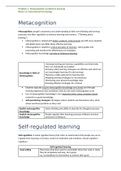
Metacognition
Metacognition: people’s awareness and understanding of their own thinking and learning
processes and their regulation to enhance learning and memory. (“Thinking about
thinking”)
Metacognition is related with better academic achievements but still many students
and adults know very little about effective learning.
Metacognition is related to central executive of memory, which guides info
processing and monitors the effectiveness of strategies.
Metacognitive knowledge can help or hindrance learning.
Knowing learning and memory capabilities and what tasks
they can realistically accomplish
Knowing which learning strategies are effective and which are
Knowledge & Skills of not (meaningful learning VS rote learning)
Metacognition Planning a viable approach to learning task
Adapting learning strategies to circumstances
Monitoring ones present knowledge state
Knowing effective strategies for retrieval
Students typically acquire metacognitive knowledge very slowly and through
learning experiences but sometimes, they do not reach metacognition at all.
Use of metacognitive knowledge is very important when using computer-based
material to acquire knowledge.
Self-questioning strategies: Strategies where students ask themselves who, what,
where and how questions as they read
Explicit metacognitive Active thinking and ability to describe his thought processes
knowledge
Implicit metacognitive People regulate their learning processes without conscious
knowledge awareness of doing so.
Self-regulated learning
Self-regulation: A social cognitive theory that refers to mechanisms that people can use to
regulate their learning. It involves control of motivation and emotions. (Social cognitive+
cognitive)
Self-regulated learning
Goal setting They know what they want to accomplish when they read or study.
They tie immediate and long- term goals.
e.g. set deadlines for themselves to achieve their goals
, Problem 3. Metacognition & Effective learning
Block 1.8. Educational Psychology
Planning They plan their approach to a learning task and use their time
effectively.
Devoting time to challenging material
Ignore material that they think they won’t master in the time they
have
Self-motivation High self-efficacy on their ability to achieve a task. They have self-
discipline
Work before pleasure, delay gratification and not procrastinating
They try to make tasks more interesting to them or promise a
reward to themselves.
Attention control Focus on the subject they have in hand and take their mind off of
possible distractions
Use of effective They have many strategies that use depending on what the goal is.
learning strategies E.g. they read differently for fun and for an exam
Self-monitoring They monitor progress of their learning and if it is necessary they
change their learning strategies or modify their goals
Help-seeking They know when they need an expert’s help to master certain
topics and seek it out actively
Self-evaluation
Evaluate if what they have learned is sufficient for their goals or not
Self-reflection Evaluate the extent to which their strategies have been successful
and efficient and they might identify better ones to use in the
future.
Causes of self-regulated learning
Independent, self-directed learning activities
appropriate for age
Opportunities
Engage in self-regulating models regularly
Socially regulated learning/Transition from
other-regulated to self-regulated (first get
help from others and then increase their
independence and set their own goals)
Vygotsky’s perspective
Co-regulated learning: two or more people
share responsibility for directing many
aspects of learning (scaffolding available and
gradually removed)
Block 1.8. Educational Psychology
Metacognition
Metacognition: people’s awareness and understanding of their own thinking and learning
processes and their regulation to enhance learning and memory. (“Thinking about
thinking”)
Metacognition is related with better academic achievements but still many students
and adults know very little about effective learning.
Metacognition is related to central executive of memory, which guides info
processing and monitors the effectiveness of strategies.
Metacognitive knowledge can help or hindrance learning.
Knowing learning and memory capabilities and what tasks
they can realistically accomplish
Knowing which learning strategies are effective and which are
Knowledge & Skills of not (meaningful learning VS rote learning)
Metacognition Planning a viable approach to learning task
Adapting learning strategies to circumstances
Monitoring ones present knowledge state
Knowing effective strategies for retrieval
Students typically acquire metacognitive knowledge very slowly and through
learning experiences but sometimes, they do not reach metacognition at all.
Use of metacognitive knowledge is very important when using computer-based
material to acquire knowledge.
Self-questioning strategies: Strategies where students ask themselves who, what,
where and how questions as they read
Explicit metacognitive Active thinking and ability to describe his thought processes
knowledge
Implicit metacognitive People regulate their learning processes without conscious
knowledge awareness of doing so.
Self-regulated learning
Self-regulation: A social cognitive theory that refers to mechanisms that people can use to
regulate their learning. It involves control of motivation and emotions. (Social cognitive+
cognitive)
Self-regulated learning
Goal setting They know what they want to accomplish when they read or study.
They tie immediate and long- term goals.
e.g. set deadlines for themselves to achieve their goals
, Problem 3. Metacognition & Effective learning
Block 1.8. Educational Psychology
Planning They plan their approach to a learning task and use their time
effectively.
Devoting time to challenging material
Ignore material that they think they won’t master in the time they
have
Self-motivation High self-efficacy on their ability to achieve a task. They have self-
discipline
Work before pleasure, delay gratification and not procrastinating
They try to make tasks more interesting to them or promise a
reward to themselves.
Attention control Focus on the subject they have in hand and take their mind off of
possible distractions
Use of effective They have many strategies that use depending on what the goal is.
learning strategies E.g. they read differently for fun and for an exam
Self-monitoring They monitor progress of their learning and if it is necessary they
change their learning strategies or modify their goals
Help-seeking They know when they need an expert’s help to master certain
topics and seek it out actively
Self-evaluation
Evaluate if what they have learned is sufficient for their goals or not
Self-reflection Evaluate the extent to which their strategies have been successful
and efficient and they might identify better ones to use in the
future.
Causes of self-regulated learning
Independent, self-directed learning activities
appropriate for age
Opportunities
Engage in self-regulating models regularly
Socially regulated learning/Transition from
other-regulated to self-regulated (first get
help from others and then increase their
independence and set their own goals)
Vygotsky’s perspective
Co-regulated learning: two or more people
share responsibility for directing many
aspects of learning (scaffolding available and
gradually removed)