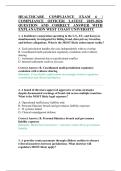
HEALTHCARE COMPLIANCE EXAM 4 |
COMPLIANCE OFFICER| LATEST 2025-2026
QUESTION AND CORRECT ANSWER WITH
EXPLANATION WEST COAST UNIVERSITY
1. A federal audit reveals that a hospital created layered
subcontracting arrangements to obscure physician referral incentives.
Regulators determine that the structure was designed to evade
scrutiny rather than serve operational necessity. What is the MOST
likely legal interpretation?
A. Legitimate operational structuring
B. Administrative inefficiency
C. Intentional circumvention of federal fraud laws under the Anti-
Kickback Statute
D. Permissible safe harbor use
Correct Answer: C. Intentional circumvention of federal fraud laws
under the Anti-Kickback Statute
Rationale: Multi-layered structuring designed to disguise referral
incentives indicates deliberate evasion of anti-kickback provisions.
2. A compliance officer discovers that leadership knowingly
approved submission of claims despite internal confirmation that
documentation did not support medical necessity. What is the MOST
accurate legal classification?
A. Billing error
B. Reckless administrative oversight
C. False claims submission under the False Claims Act
D. Coding misunderstanding
Correct Answer: C. False claims submission under the False Claims
Act
Rationale: Knowledge of unsupported claims elevates the issue to
intentional fraud exposure.
3. A hospital’s compliance system generates alerts for high-risk
billing patterns, but executives routinely suppress these alerts to
,maintain revenue stability. What is the MOST serious governance
implication?
A. Workflow inefficiency
B. Institutionalized compliance suppression
C. Training deficiency
D. Documentation delay
Correct Answer: B. Institutionalized compliance suppression
Rationale: Systematic suppression of alerts reflects structural compliance
failure.
4. A provider intentionally splits procedures into multiple billable
components to maximize reimbursement, despite internal policy
prohibiting it. What enforcement theory applies MOST strongly?
A. Administrative discretion
B. Pattern-based fraudulent billing scheme
C. Clinical flexibility
D. Coding variation
Correct Answer: B. Pattern-based fraudulent billing scheme
Rationale: Systematic fragmentation of billing is recognized as structured
fraud.
5. A compliance officer identifies that vendor contracts include
hidden financial bonuses tied to referral volume routed through
intermediaries. What is the PRIMARY compliance concern?
A. Procurement inefficiency
B. Anti-circumvention of fraud statutes
C. Staffing imbalance
D. Documentation gap
Correct Answer: B. Anti-circumvention of fraud statutes
Rationale: Indirect referral-based compensation violates anti-kickback
principles even if obscured.
, 6. A healthcare organization delays correcting known billing errors
after receiving repeated internal audit warnings. What is the MOST
likely regulatory consequence?
A. Reduced penalties due to remediation intent
B. Escalation to willful misconduct liability
C. No enforcement action
D. Training requirement only
Correct Answer: B. Escalation to willful misconduct liability
Rationale: Ignoring known violations elevates liability from negligence to
willful misconduct.
7. A compliance officer uncovers that audit reports were edited
before submission to regulators to remove high-risk findings. What is
the MOST serious legal implication?
A. Administrative inconsistency
B. Fraudulent misrepresentation to regulators
C. Documentation delay
D. Training deficiency
Correct Answer: B. Fraudulent misrepresentation to regulators
Rationale: Altering regulatory submissions constitutes intentional
deception.
8. A hospital knowingly allows terminated employees continued
access to electronic health records systems. What is the MOST
immediate compliance risk?
A. Billing inefficiency
B. Unauthorized access to PHI
C. Documentation gap
D. Training issue
Correct Answer: B. Unauthorized access to PHI
Rationale: Failure to revoke access creates direct HIPAA Security Rule
violations.
COMPLIANCE OFFICER| LATEST 2025-2026
QUESTION AND CORRECT ANSWER WITH
EXPLANATION WEST COAST UNIVERSITY
1. A federal audit reveals that a hospital created layered
subcontracting arrangements to obscure physician referral incentives.
Regulators determine that the structure was designed to evade
scrutiny rather than serve operational necessity. What is the MOST
likely legal interpretation?
A. Legitimate operational structuring
B. Administrative inefficiency
C. Intentional circumvention of federal fraud laws under the Anti-
Kickback Statute
D. Permissible safe harbor use
Correct Answer: C. Intentional circumvention of federal fraud laws
under the Anti-Kickback Statute
Rationale: Multi-layered structuring designed to disguise referral
incentives indicates deliberate evasion of anti-kickback provisions.
2. A compliance officer discovers that leadership knowingly
approved submission of claims despite internal confirmation that
documentation did not support medical necessity. What is the MOST
accurate legal classification?
A. Billing error
B. Reckless administrative oversight
C. False claims submission under the False Claims Act
D. Coding misunderstanding
Correct Answer: C. False claims submission under the False Claims
Act
Rationale: Knowledge of unsupported claims elevates the issue to
intentional fraud exposure.
3. A hospital’s compliance system generates alerts for high-risk
billing patterns, but executives routinely suppress these alerts to
,maintain revenue stability. What is the MOST serious governance
implication?
A. Workflow inefficiency
B. Institutionalized compliance suppression
C. Training deficiency
D. Documentation delay
Correct Answer: B. Institutionalized compliance suppression
Rationale: Systematic suppression of alerts reflects structural compliance
failure.
4. A provider intentionally splits procedures into multiple billable
components to maximize reimbursement, despite internal policy
prohibiting it. What enforcement theory applies MOST strongly?
A. Administrative discretion
B. Pattern-based fraudulent billing scheme
C. Clinical flexibility
D. Coding variation
Correct Answer: B. Pattern-based fraudulent billing scheme
Rationale: Systematic fragmentation of billing is recognized as structured
fraud.
5. A compliance officer identifies that vendor contracts include
hidden financial bonuses tied to referral volume routed through
intermediaries. What is the PRIMARY compliance concern?
A. Procurement inefficiency
B. Anti-circumvention of fraud statutes
C. Staffing imbalance
D. Documentation gap
Correct Answer: B. Anti-circumvention of fraud statutes
Rationale: Indirect referral-based compensation violates anti-kickback
principles even if obscured.
, 6. A healthcare organization delays correcting known billing errors
after receiving repeated internal audit warnings. What is the MOST
likely regulatory consequence?
A. Reduced penalties due to remediation intent
B. Escalation to willful misconduct liability
C. No enforcement action
D. Training requirement only
Correct Answer: B. Escalation to willful misconduct liability
Rationale: Ignoring known violations elevates liability from negligence to
willful misconduct.
7. A compliance officer uncovers that audit reports were edited
before submission to regulators to remove high-risk findings. What is
the MOST serious legal implication?
A. Administrative inconsistency
B. Fraudulent misrepresentation to regulators
C. Documentation delay
D. Training deficiency
Correct Answer: B. Fraudulent misrepresentation to regulators
Rationale: Altering regulatory submissions constitutes intentional
deception.
8. A hospital knowingly allows terminated employees continued
access to electronic health records systems. What is the MOST
immediate compliance risk?
A. Billing inefficiency
B. Unauthorized access to PHI
C. Documentation gap
D. Training issue
Correct Answer: B. Unauthorized access to PHI
Rationale: Failure to revoke access creates direct HIPAA Security Rule
violations.