

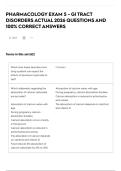
PHARMACOLOGY EXAM 5 - GI TRACT
DISORDERS ACTUAL 2026 QUESTIONS AND
100% CORRECT ANSWERS
Save
Terms in this set (62)
Which time frame describes how 1-3 hours
long a patient can expect the
effects of aluminum hydroxide to
last?
Which statements regarding the Absorption of calcium varies with age.
absorption of calcium carbonate During pregnancy, calcium absorption doubles.
are accurate? Calcium absorption is reduced in achlorhydria
and uremia.
Absorption of calcium varies with The absorption of calcium depends on calcitriol
age. and vitamin D.
During pregnancy, calcium
absorption doubles.
Calcium absorption occurs mostly
in the jejunum.
Calcium absorption is reduced in
achlorhydria and uremia.
The absorption of calcium depends
on calcitriol and vitamin D.
Food reduces the absorption of
calcium carbonate by 10% to 30%.
,Which time frame describes when a .5-6hrs
patient will begin to experience
relief from treatment with
magnesium hydroxide (non
systemic)?
Which administration point would She should shake the suspension well before
the nurse share with Mrs. Woods in administration.
regard to magnesium hydroxide
therapy?
She should shake the suspension
well before administration.
She should take the magnesium
hydroxide as often as needed
throughout the day.
She should take the magnesium
hydroxide 15 to 30 minutes before
she takes aspirin and lisinopril.
She should follow administration of
magnesium hydroxide with an 8-oz
glass of orange juice.
, Which patient parameters would a Calcium levels
nurse ensure are assessed before a Renal function
patient receives calcium Phosphate levels
carbonate?
Weight
Calcium levels
Renal function
Blood pressure (BP)
Phosphate levels
Which patients would a nurse A 29-year-old patient who is pregnant
determine require cautious use or A 71-year-old patient with dyslipidemia
avoidance of aluminum hydroxide? A 55-year-old patient with chronic kidney disease
A 29-year-old patient with hypophosphatemia
A 51-year-old patient with gout
A 29-year-old patient who is
pregnant
A 71-year-old patient with
dyslipidemia
A 55-year-old patient with chronic
kidney disease
A 29-year-old patient with
hypophosphatemia
DISORDERS ACTUAL 2026 QUESTIONS AND
100% CORRECT ANSWERS
Save
Terms in this set (62)
Which time frame describes how 1-3 hours
long a patient can expect the
effects of aluminum hydroxide to
last?
Which statements regarding the Absorption of calcium varies with age.
absorption of calcium carbonate During pregnancy, calcium absorption doubles.
are accurate? Calcium absorption is reduced in achlorhydria
and uremia.
Absorption of calcium varies with The absorption of calcium depends on calcitriol
age. and vitamin D.
During pregnancy, calcium
absorption doubles.
Calcium absorption occurs mostly
in the jejunum.
Calcium absorption is reduced in
achlorhydria and uremia.
The absorption of calcium depends
on calcitriol and vitamin D.
Food reduces the absorption of
calcium carbonate by 10% to 30%.
,Which time frame describes when a .5-6hrs
patient will begin to experience
relief from treatment with
magnesium hydroxide (non
systemic)?
Which administration point would She should shake the suspension well before
the nurse share with Mrs. Woods in administration.
regard to magnesium hydroxide
therapy?
She should shake the suspension
well before administration.
She should take the magnesium
hydroxide as often as needed
throughout the day.
She should take the magnesium
hydroxide 15 to 30 minutes before
she takes aspirin and lisinopril.
She should follow administration of
magnesium hydroxide with an 8-oz
glass of orange juice.
, Which patient parameters would a Calcium levels
nurse ensure are assessed before a Renal function
patient receives calcium Phosphate levels
carbonate?
Weight
Calcium levels
Renal function
Blood pressure (BP)
Phosphate levels
Which patients would a nurse A 29-year-old patient who is pregnant
determine require cautious use or A 71-year-old patient with dyslipidemia
avoidance of aluminum hydroxide? A 55-year-old patient with chronic kidney disease
A 29-year-old patient with hypophosphatemia
A 51-year-old patient with gout
A 29-year-old patient who is
pregnant
A 71-year-old patient with
dyslipidemia
A 55-year-old patient with chronic
kidney disease
A 29-year-old patient with
hypophosphatemia


