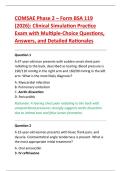
COMSAE Phase 2 – Form BSA 119
(2026): Clinical Simulation Practice
Exam with Multiple-Choice Questions,
Answers, and Detailed Rationales
Question 1
A 67-year-old man presents with sudden onset chest pain
radiating to the back, described as tearing. Blood pressure is
190/110 mmHg in the right arm and 160/90 mmHg in the left
arm. What is the most likely diagnosis?
A. Myocardial infarction
B. Pulmonary embolism
C. Aortic dissection
D. Pericarditis
Rationale: A tearing chest pain radiating to the back with
unequal blood pressures strongly suggests aortic dissection
due to intimal tear and false lumen formation.
Question 2
A 23-year-old woman presents with fever, flank pain, and
dysuria. Costovertebral angle tenderness is present. What is
the most appropriate initial treatment?
A. Oral amoxicillin
B. IV ceftriaxone
,C. Nitrofurantoin
D. Fluconazole
Rationale: Acute pyelonephritis with systemic symptoms
requires IV antibiotics such as ceftriaxone for gram-negative
coverage.
Question 3
A patient with COPD is started on oxygen therapy. Which
complication is most concerning with uncontrolled high-flow
oxygen?
A. Respiratory alkalosis
B. Metabolic acidosis
C. CO₂ retention and respiratory acidosis
D. Hypokalemia
Rationale: COPD patients rely on hypoxic drive; excessive
oxygen can reduce respiratory drive and cause CO₂ narcosis.
Question 4
A 55-year-old man with chronic alcohol use presents with
tremors, confusion, and ophthalmoplegia. What is the
immediate treatment?
A. Diazepam
B. Thiamine
C. Glucose
D. Thiamine before glucose
,Rationale: Wernicke encephalopathy requires immediate
thiamine administration before glucose to prevent worsening
neurologic injury.
Question 5
Which condition is most associated with anti-CCP antibodies?
A. Systemic lupus erythematosus
B. Osteoarthritis
C. Rheumatoid arthritis
D. Gout
Rationale: Anti-CCP antibodies are highly specific for
rheumatoid arthritis and indicate more aggressive disease.
Question 6
A newborn has failure to pass meconium within 48 hours and
abdominal distension. What is the most likely diagnosis?
A. Pyloric stenosis
B. Necrotizing enterocolitis
C. Hirschsprung disease
D. Intussusception
Rationale: Delayed meconium passage and bowel obstruction
suggest aganglionic megacolon (Hirschsprung disease).
Question 7
, Which electrolyte abnormality is most associated with loop
diuretics?
A. Hyperkalemia
B. Hypercalcemia
C. Hypokalemia
D. Hypermagnesemia
Rationale: Loop diuretics increase potassium excretion
leading to hypokalemia.
Question 8
A patient presents with tremor, heat intolerance, and weight
loss. Which lab finding is expected?
A. Elevated TSH
B. Low T3
C. Low TSH and high T4
D. High TSH and low T4
Rationale: Hyperthyroidism suppresses TSH and increases
thyroid hormone levels.
Question 9
A 60-year-old man has painless jaundice and weight loss.
Imaging shows a mass in the head of the pancreas. What is
the most likely diagnosis?
A. Hepatocellular carcinoma
B. Gallstones
(2026): Clinical Simulation Practice
Exam with Multiple-Choice Questions,
Answers, and Detailed Rationales
Question 1
A 67-year-old man presents with sudden onset chest pain
radiating to the back, described as tearing. Blood pressure is
190/110 mmHg in the right arm and 160/90 mmHg in the left
arm. What is the most likely diagnosis?
A. Myocardial infarction
B. Pulmonary embolism
C. Aortic dissection
D. Pericarditis
Rationale: A tearing chest pain radiating to the back with
unequal blood pressures strongly suggests aortic dissection
due to intimal tear and false lumen formation.
Question 2
A 23-year-old woman presents with fever, flank pain, and
dysuria. Costovertebral angle tenderness is present. What is
the most appropriate initial treatment?
A. Oral amoxicillin
B. IV ceftriaxone
,C. Nitrofurantoin
D. Fluconazole
Rationale: Acute pyelonephritis with systemic symptoms
requires IV antibiotics such as ceftriaxone for gram-negative
coverage.
Question 3
A patient with COPD is started on oxygen therapy. Which
complication is most concerning with uncontrolled high-flow
oxygen?
A. Respiratory alkalosis
B. Metabolic acidosis
C. CO₂ retention and respiratory acidosis
D. Hypokalemia
Rationale: COPD patients rely on hypoxic drive; excessive
oxygen can reduce respiratory drive and cause CO₂ narcosis.
Question 4
A 55-year-old man with chronic alcohol use presents with
tremors, confusion, and ophthalmoplegia. What is the
immediate treatment?
A. Diazepam
B. Thiamine
C. Glucose
D. Thiamine before glucose
,Rationale: Wernicke encephalopathy requires immediate
thiamine administration before glucose to prevent worsening
neurologic injury.
Question 5
Which condition is most associated with anti-CCP antibodies?
A. Systemic lupus erythematosus
B. Osteoarthritis
C. Rheumatoid arthritis
D. Gout
Rationale: Anti-CCP antibodies are highly specific for
rheumatoid arthritis and indicate more aggressive disease.
Question 6
A newborn has failure to pass meconium within 48 hours and
abdominal distension. What is the most likely diagnosis?
A. Pyloric stenosis
B. Necrotizing enterocolitis
C. Hirschsprung disease
D. Intussusception
Rationale: Delayed meconium passage and bowel obstruction
suggest aganglionic megacolon (Hirschsprung disease).
Question 7
, Which electrolyte abnormality is most associated with loop
diuretics?
A. Hyperkalemia
B. Hypercalcemia
C. Hypokalemia
D. Hypermagnesemia
Rationale: Loop diuretics increase potassium excretion
leading to hypokalemia.
Question 8
A patient presents with tremor, heat intolerance, and weight
loss. Which lab finding is expected?
A. Elevated TSH
B. Low T3
C. Low TSH and high T4
D. High TSH and low T4
Rationale: Hyperthyroidism suppresses TSH and increases
thyroid hormone levels.
Question 9
A 60-year-old man has painless jaundice and weight loss.
Imaging shows a mass in the head of the pancreas. What is
the most likely diagnosis?
A. Hepatocellular carcinoma
B. Gallstones