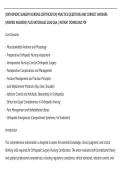
[ORTHOPEDIC SURGERY NURSING CERTIFICATION] PRACTICE QUESTIONS AND CORRECT ANSWERS
(VERIFIED ANSWERS) PLUS RATIONALES 2026 Q&A | INSTANT DOWNLOAD PDF
Core Domains
- Musculoskeletal Anatomy and Physiology
- Preoperative Orthopedic Nursing Assessment
- Intraoperative Nursing Care for Orthopedic Surgery
- Postoperative Complications and Management
- Fracture Management and Traction Principles
- Joint Replacement Protocols (Hip, Knee, Shoulder)
- Infection Control and Antibiotic Stewardship in Orthopedics
- Ethical and Legal Considerations in Orthopedic Nursing
- Pain Management and Rehabilitation Basics
- Orthopedic Emergencies (Compartment Syndrome, Fat Embolism)
Introduction
This comprehensive examination is designed to assess the essential knowledge, clinical judgment, and critical
thinking skills required for Orthopedic Surgery Nursing Certification. The exam evaluates both foundational theory
and applied professional competencies, including regulatory compliance, ethical standards, infection control, and
,real-world clinical decision-making. Each multiple-choice question reflects scenarios encountered in orthopedic
perioperative and postsurgical settings. Emphasis is placed on patient safety, evidence-based interventions, and
complication recognition. Correct answers are verified with detailed rationales to support deep understanding and
exam readiness. This assessment mirrors the structure and rigor of national certification examinations.
SECTION ONE: QUESTIONS 1–100
Question 1
A 72-year-old patient undergoes a right total knee arthroplasty. On postoperative day 1, the nurse notes that
the patient’s right calf is swollen, warm to touch, and painful with dorsiflexion. Which action should the nurse
take first?
A. Apply sequential compression devices immediately
B. Massage the calf to promote venous return
C. Instruct the patient to ambulate in the hallway
D. Notify the healthcare provider and prepare for Doppler ultrasound
🟢D
🔴 RATIONALE: The symptoms suggest deep vein thrombosis (DVT). Massage or ambulation could dislodge a
,clot. Notifying the provider and ordering a Doppler ultrasound is the priority to confirm DVT before
intervention.
Question 2
Which laboratory finding is most indicative of a fat embolism syndrome in a patient with a long bone fracture?
A. Elevated white blood cell count
B. Thrombocytopenia and sudden hypoxemia
C. Hyperkalemia and hypercalcemia
D. Elevated alkaline phosphatase
🟢B
🔴 RATIONALE: Fat embolism syndrome presents with respiratory distress, petechial rash, and neurological
changes. Thrombocytopenia and sudden hypoxemia are key lab and clinical findings.
Question 3
A patient is placed in Buck’s traction preoperatively for a hip fracture. What is the primary purpose of this
intervention?
A. Reduce the fracture definitively
B. Relieve muscle spasms and temporarily stabilize the fracture
, C. Allow full range of motion of the hip joint
D. Prevent skin breakdown in the sacral area
🟢B
🔴 RATIONALE: Buck’s traction is skin traction used to reduce muscle spasms and provide temporary
stabilization until surgical fixation. It does not achieve definitive reduction.
Question 4
Postoperative day 2 following a spinal fusion, the patient reports sudden shortness of breath and chest pain.
The nurse notes oxygen saturation of 88% on room air. Which complication is most likely?
A. Atelectasis
B. Pulmonary embolism
C. Pneumothorax
D. Serotonin syndrome
🟢B
🔴 RATIONALE: Sudden hypoxemia, chest pain, and dyspnea in a postoperative orthopedic patient are classic
signs of pulmonary embolism, often from DVT.
(VERIFIED ANSWERS) PLUS RATIONALES 2026 Q&A | INSTANT DOWNLOAD PDF
Core Domains
- Musculoskeletal Anatomy and Physiology
- Preoperative Orthopedic Nursing Assessment
- Intraoperative Nursing Care for Orthopedic Surgery
- Postoperative Complications and Management
- Fracture Management and Traction Principles
- Joint Replacement Protocols (Hip, Knee, Shoulder)
- Infection Control and Antibiotic Stewardship in Orthopedics
- Ethical and Legal Considerations in Orthopedic Nursing
- Pain Management and Rehabilitation Basics
- Orthopedic Emergencies (Compartment Syndrome, Fat Embolism)
Introduction
This comprehensive examination is designed to assess the essential knowledge, clinical judgment, and critical
thinking skills required for Orthopedic Surgery Nursing Certification. The exam evaluates both foundational theory
and applied professional competencies, including regulatory compliance, ethical standards, infection control, and
,real-world clinical decision-making. Each multiple-choice question reflects scenarios encountered in orthopedic
perioperative and postsurgical settings. Emphasis is placed on patient safety, evidence-based interventions, and
complication recognition. Correct answers are verified with detailed rationales to support deep understanding and
exam readiness. This assessment mirrors the structure and rigor of national certification examinations.
SECTION ONE: QUESTIONS 1–100
Question 1
A 72-year-old patient undergoes a right total knee arthroplasty. On postoperative day 1, the nurse notes that
the patient’s right calf is swollen, warm to touch, and painful with dorsiflexion. Which action should the nurse
take first?
A. Apply sequential compression devices immediately
B. Massage the calf to promote venous return
C. Instruct the patient to ambulate in the hallway
D. Notify the healthcare provider and prepare for Doppler ultrasound
🟢D
🔴 RATIONALE: The symptoms suggest deep vein thrombosis (DVT). Massage or ambulation could dislodge a
,clot. Notifying the provider and ordering a Doppler ultrasound is the priority to confirm DVT before
intervention.
Question 2
Which laboratory finding is most indicative of a fat embolism syndrome in a patient with a long bone fracture?
A. Elevated white blood cell count
B. Thrombocytopenia and sudden hypoxemia
C. Hyperkalemia and hypercalcemia
D. Elevated alkaline phosphatase
🟢B
🔴 RATIONALE: Fat embolism syndrome presents with respiratory distress, petechial rash, and neurological
changes. Thrombocytopenia and sudden hypoxemia are key lab and clinical findings.
Question 3
A patient is placed in Buck’s traction preoperatively for a hip fracture. What is the primary purpose of this
intervention?
A. Reduce the fracture definitively
B. Relieve muscle spasms and temporarily stabilize the fracture
, C. Allow full range of motion of the hip joint
D. Prevent skin breakdown in the sacral area
🟢B
🔴 RATIONALE: Buck’s traction is skin traction used to reduce muscle spasms and provide temporary
stabilization until surgical fixation. It does not achieve definitive reduction.
Question 4
Postoperative day 2 following a spinal fusion, the patient reports sudden shortness of breath and chest pain.
The nurse notes oxygen saturation of 88% on room air. Which complication is most likely?
A. Atelectasis
B. Pulmonary embolism
C. Pneumothorax
D. Serotonin syndrome
🟢B
🔴 RATIONALE: Sudden hypoxemia, chest pain, and dyspnea in a postoperative orthopedic patient are classic
signs of pulmonary embolism, often from DVT.