MEMORY
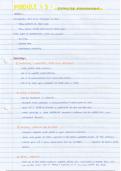
The multi-store model of memory: sensory register, short-term memory and long-term
memory
Features of each store: coding, capacity and duration.
(En)coding the form in which the information is stored in the various memory stores
- Research (also STM + LTM) Conrad
- Aim: determine how STM is encoded
- Procedure Ps presented with sequence of 6 consonants and asked them to recall in
order (serial recall)
- Findings letters with similar sounds (P,T,D) harder to recall than different sounds
even if they look similar (D,O)
- Conclusion encoding is acoustic as more mistakes were made when letters were
acoustically similar
- Research (follow up study of Conrad) Baddley
- Aim determine how STM + LTM is encoded
- Procedure laboratory experiment with 4 types of word lists (conditions) and asked to
recall in order either immediately (STM) or after delay (LTM) and mistakes counted;
words in list were of similar frequency
- Condition 1; AS (acoustically similar)
- Condition 2; SS (semantically similar)
- Condition 3; AD (acoustically similar)
- Condition 4; SA (semantically similar)
- Findings with immediate recall more substitution errors on AS than AD, no difference
between SS and SD . With delayed recall more substitution errors on SS than SD, no
difference between AS and AD
- Conclusion STM encoding is acoustic as Ps were confused when asked to recall in
order as grouped due to sound so made more substitution errors. LTM encoding is
, semantic as Ps were confused when asked to recall in order as grouped due to
meaning so made more substitution errors
Capacity how much information can be stored in the memory store
- Research (also STM) Jacobs
- Aim investigate capacity of STM
- Procedure Ps presented with strings of digits of increasing length and immediately
recall them in order - serial digit span
Findings: on average Ps recalled , 7 letters and also an increase of capacity was
found with age 8 - 7 digits,
- Conclusion capacity 5-9 items
- Research (follow up study of Jacobs) Miller
- Aim investigate capacity of STM
- Procedure same
- Findings same but found chunking can increase capacity (life applications - number
plates)
- Conclusion wrote article called ‘magic no 7 +/- 2’ - capacity 5-9 items but chunking
increases capacity
- Sensory Register Research Sperling
- Aim capacity of SR specifically visual info (iconic storage)
- Procedure phase 1 - 9 letters flashed for 0.05s in 3x3 grid, whole report technique
(recall any letters) phase 2 - 9 letters flashed for 0.05s in 3x3 grid, partial report
technique - heard 1 of 3 pitches (high, middle, low) and recall letters in corresponding
row of grid
- Findings Phase 1: on av recalled 4 Phase 2: 80% recall on average
- Conclusion iconic memory held up to 9 items, but info decays before all could be
recalled, therefore potentially unlimited and we cannot research further as info
decays
Duration how long the information can be stored for
- Research (also STM + LTM) Peterson and Peterson
- Aim test duration of STM by measuring retention of items in STM
- Procedure 24 students, repeated measures design, brown-peterson technique,
shown combinations of 3 letters (nonsense trigrams - not words, no vowels) for 1.5s
and asked to recall after intervals of varying length (3,6,9,12,15 + 18) - intervals had
interference task (counting back in 3s) to prevent rehearsal
- Findings longer interference, smaller proportion of correct letters (lower recall)
, - After 3s - 80% recall, after 18s - <10% recall
- Conclusion longer the interval between recall, lower recall is - STM capacity 18s
- Research Bahrick et Al:
- Aim to investigate duration of very long term memory
- Procedure US grads, ages 17-74 yrs, recall childhood classmates, 4 conditions
- Condition 1 - free recall - as many names as possible
- Condition 2 - photo recognition
- Condition 3 - name recognition
- Condition 4 - name - photo match up
- Findings 90% accuracy for condition 4 (even for those who left school 38 yrs ago)
then declined after 48 years - 80% condition 3 - 40% condition 2 - even less condition
1
- Conclusions classmates rarely forgotten with cues, cue dependant recall is better
than free recall, recognition also better than free recall, recall accuracy decline is
associated with nature of the relationships which serve as a recall mediator
Evaluation of Coding, Capacity and Duration
Strengths
- Higher external validity; one strength of Bahrick et al’s study; real-life meaningful
memories were studied. When studies on LTM have been conducted with
meaningless pictures to be remembered, recall rates were lower e.g. Shepard 1967.
Downside of real-life research is that confounding variables are not controlled, such
as the fact that Bahrick’s participants may have looked at their yearbook photos and
rehearsed their memory over the years
Weaknesses
- Artificial stimuli; Baddeley’s study used quite a lot of artificial stimuli rather than
meaningful material e.g. word lists had no personal meanings to participants, so
should be cautious about generalising the findings to different memory tasks. e.g.
when processing meaningful information, people may use semantic coding even for
STM tasks. Finds from study may be limited.
- Lacking validity; Jacob’s study done a long time ago (1887), early research often
lacked adequate control. e.g. participants may have been distracted while being
tested so may not have performed as well as they might. Means results may not be
valid because of confounding variables. However, results of this study have been
confirmed in other research, supporting validity
- Not so many chunks; Miller may have overestimated the capacity of STM. e.g.
Cowan 2001 reviewed other research and concluded that capacity of STM was only
about 4 chunks. Suggests that the lower end of Miller’s estimate (5 items) is more
appropriate than 7 items.
- Meaningless stimuli in STM; Peterson and Peterson’s stimulus material was artificial.
Trying to memorise consonant syllables does not reflect most real-life memory
activities where what we are trying to remember is meaningful. Lacks external
validity, study not totally irrelevant as sometimes remember fairly irrelevant stuff i.e
phone numbers
- Criticising Peterson and Peterson; lacked internal validity as not like real life. e.g. in
the study participants counted down during the retention interval so information in the
STM may have been displaced - STM has limited capacity and any new information
will push out what is already there
The multi-store model of memory: sensory register, short-term memory and long-term
memory
Features of each store: coding, capacity and duration.
(En)coding the form in which the information is stored in the various memory stores
- Research (also STM + LTM) Conrad
- Aim: determine how STM is encoded
- Procedure Ps presented with sequence of 6 consonants and asked them to recall in
order (serial recall)
- Findings letters with similar sounds (P,T,D) harder to recall than different sounds
even if they look similar (D,O)
- Conclusion encoding is acoustic as more mistakes were made when letters were
acoustically similar
- Research (follow up study of Conrad) Baddley
- Aim determine how STM + LTM is encoded
- Procedure laboratory experiment with 4 types of word lists (conditions) and asked to
recall in order either immediately (STM) or after delay (LTM) and mistakes counted;
words in list were of similar frequency
- Condition 1; AS (acoustically similar)
- Condition 2; SS (semantically similar)
- Condition 3; AD (acoustically similar)
- Condition 4; SA (semantically similar)
- Findings with immediate recall more substitution errors on AS than AD, no difference
between SS and SD . With delayed recall more substitution errors on SS than SD, no
difference between AS and AD
- Conclusion STM encoding is acoustic as Ps were confused when asked to recall in
order as grouped due to sound so made more substitution errors. LTM encoding is
, semantic as Ps were confused when asked to recall in order as grouped due to
meaning so made more substitution errors
Capacity how much information can be stored in the memory store
- Research (also STM) Jacobs
- Aim investigate capacity of STM
- Procedure Ps presented with strings of digits of increasing length and immediately
recall them in order - serial digit span
Findings: on average Ps recalled , 7 letters and also an increase of capacity was
found with age 8 - 7 digits,
- Conclusion capacity 5-9 items
- Research (follow up study of Jacobs) Miller
- Aim investigate capacity of STM
- Procedure same
- Findings same but found chunking can increase capacity (life applications - number
plates)
- Conclusion wrote article called ‘magic no 7 +/- 2’ - capacity 5-9 items but chunking
increases capacity
- Sensory Register Research Sperling
- Aim capacity of SR specifically visual info (iconic storage)
- Procedure phase 1 - 9 letters flashed for 0.05s in 3x3 grid, whole report technique
(recall any letters) phase 2 - 9 letters flashed for 0.05s in 3x3 grid, partial report
technique - heard 1 of 3 pitches (high, middle, low) and recall letters in corresponding
row of grid
- Findings Phase 1: on av recalled 4 Phase 2: 80% recall on average
- Conclusion iconic memory held up to 9 items, but info decays before all could be
recalled, therefore potentially unlimited and we cannot research further as info
decays
Duration how long the information can be stored for
- Research (also STM + LTM) Peterson and Peterson
- Aim test duration of STM by measuring retention of items in STM
- Procedure 24 students, repeated measures design, brown-peterson technique,
shown combinations of 3 letters (nonsense trigrams - not words, no vowels) for 1.5s
and asked to recall after intervals of varying length (3,6,9,12,15 + 18) - intervals had
interference task (counting back in 3s) to prevent rehearsal
- Findings longer interference, smaller proportion of correct letters (lower recall)
, - After 3s - 80% recall, after 18s - <10% recall
- Conclusion longer the interval between recall, lower recall is - STM capacity 18s
- Research Bahrick et Al:
- Aim to investigate duration of very long term memory
- Procedure US grads, ages 17-74 yrs, recall childhood classmates, 4 conditions
- Condition 1 - free recall - as many names as possible
- Condition 2 - photo recognition
- Condition 3 - name recognition
- Condition 4 - name - photo match up
- Findings 90% accuracy for condition 4 (even for those who left school 38 yrs ago)
then declined after 48 years - 80% condition 3 - 40% condition 2 - even less condition
1
- Conclusions classmates rarely forgotten with cues, cue dependant recall is better
than free recall, recognition also better than free recall, recall accuracy decline is
associated with nature of the relationships which serve as a recall mediator
Evaluation of Coding, Capacity and Duration
Strengths
- Higher external validity; one strength of Bahrick et al’s study; real-life meaningful
memories were studied. When studies on LTM have been conducted with
meaningless pictures to be remembered, recall rates were lower e.g. Shepard 1967.
Downside of real-life research is that confounding variables are not controlled, such
as the fact that Bahrick’s participants may have looked at their yearbook photos and
rehearsed their memory over the years
Weaknesses
- Artificial stimuli; Baddeley’s study used quite a lot of artificial stimuli rather than
meaningful material e.g. word lists had no personal meanings to participants, so
should be cautious about generalising the findings to different memory tasks. e.g.
when processing meaningful information, people may use semantic coding even for
STM tasks. Finds from study may be limited.
- Lacking validity; Jacob’s study done a long time ago (1887), early research often
lacked adequate control. e.g. participants may have been distracted while being
tested so may not have performed as well as they might. Means results may not be
valid because of confounding variables. However, results of this study have been
confirmed in other research, supporting validity
- Not so many chunks; Miller may have overestimated the capacity of STM. e.g.
Cowan 2001 reviewed other research and concluded that capacity of STM was only
about 4 chunks. Suggests that the lower end of Miller’s estimate (5 items) is more
appropriate than 7 items.
- Meaningless stimuli in STM; Peterson and Peterson’s stimulus material was artificial.
Trying to memorise consonant syllables does not reflect most real-life memory
activities where what we are trying to remember is meaningful. Lacks external
validity, study not totally irrelevant as sometimes remember fairly irrelevant stuff i.e
phone numbers
- Criticising Peterson and Peterson; lacked internal validity as not like real life. e.g. in
the study participants counted down during the retention interval so information in the
STM may have been displaced - STM has limited capacity and any new information
will push out what is already there