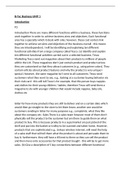
Rosseau's concerns are more broad than those of Hobbes and Locke
Hobbes wants to overcome problems of a hugely divisive civil war
Locke concern with natural property rights, and the justifications of resistance to the Crown
Rosseau = critic of culture and civilization: seeks to diagnose the deep rooted evils of
contemporary society, people consumed with luxury, corruption, vanity, insincerity and
extremes of wealth and poverty
Wants to understand why these evils and vices come about
Describe the basic framework of a political and social world in which they would no
longer exist.
Who was he:
Born in Geneva, moved to Lyon (France)
At the time (1740s) Paris was centre of European culture
For Rousseau, Paris was consumed with luxury, corruption, vanity, insincerity and
extremes of wealth and poverty
This view set him against other enlightenment philosophers
Rosseau's epiphany: humans are good by nature but are corrupted by society
1st essay = First Discourse. Argues that the arts and sciences, is corrosive of both
civic virtue and individual moral character
Social contract (1762) legal action against him as argued the work attacked religion.
Fled to England. Social contract was quoted by Robespierre to justify Revolution.
Rousseau = key thinker. Hugely negative view of philosophy and philosophers. Views
Hobbes and Locke as rationalizers of self-interest, as apologists for various forms of tyranny.
His work seeks to find a way of preserving human freedom, in a world where human
beings are increasingly dependent on one another to satisfy their needs.
Argues that in the modern world, human beings come to derive their very sense of self
from the opinion of others.
Essentially interested in the idea that psychological problems that we face in dealing
with other people can be remedied.
Believes human beings are consumed with the opinion of others, this corrodes our
freedom and destroys individual authenticity.
Second Discourse:
To see human flourishing as being a matter of our relationships to others and our
being recognised as having value or moral status in the eyes of other people.
Acknowledgment of our own social nature and self-esteem
Really concerned about the anguish we have, and what we put ourselves through to
try and gain recognition and respect from the other people around us.
Hobbes wants to overcome problems of a hugely divisive civil war
Locke concern with natural property rights, and the justifications of resistance to the Crown
Rosseau = critic of culture and civilization: seeks to diagnose the deep rooted evils of
contemporary society, people consumed with luxury, corruption, vanity, insincerity and
extremes of wealth and poverty
Wants to understand why these evils and vices come about
Describe the basic framework of a political and social world in which they would no
longer exist.
Who was he:
Born in Geneva, moved to Lyon (France)
At the time (1740s) Paris was centre of European culture
For Rousseau, Paris was consumed with luxury, corruption, vanity, insincerity and
extremes of wealth and poverty
This view set him against other enlightenment philosophers
Rosseau's epiphany: humans are good by nature but are corrupted by society
1st essay = First Discourse. Argues that the arts and sciences, is corrosive of both
civic virtue and individual moral character
Social contract (1762) legal action against him as argued the work attacked religion.
Fled to England. Social contract was quoted by Robespierre to justify Revolution.
Rousseau = key thinker. Hugely negative view of philosophy and philosophers. Views
Hobbes and Locke as rationalizers of self-interest, as apologists for various forms of tyranny.
His work seeks to find a way of preserving human freedom, in a world where human
beings are increasingly dependent on one another to satisfy their needs.
Argues that in the modern world, human beings come to derive their very sense of self
from the opinion of others.
Essentially interested in the idea that psychological problems that we face in dealing
with other people can be remedied.
Believes human beings are consumed with the opinion of others, this corrodes our
freedom and destroys individual authenticity.
Second Discourse:
To see human flourishing as being a matter of our relationships to others and our
being recognised as having value or moral status in the eyes of other people.
Acknowledgment of our own social nature and self-esteem
Really concerned about the anguish we have, and what we put ourselves through to
try and gain recognition and respect from the other people around us.