
RESTAURANT MANAGEMET SYSTEM
SDLC ITERATIVE METHODOLOGY
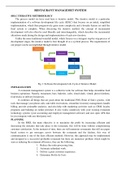
The process model we have used here is iterative model. The iterative model is a particular
implementation of a software development life cycle (SDLC) that focuses on an initial, simplified
implementation, which then progressively gains more complexity and a broader feature set until the
final system is complete. When discussing the iterative method, the concept of incremental
development will also often be used liberally and interchangeably, which describes the incremental
alterations made during the design and implementation of each new iteration.
Unlike the more traditional waterfall model, which focuses on a stringent step-by-step process of
development stages, the iterative model is best thought of as a cyclical process. The requirements of
our project can be accomplished through iterative model.
Fig 1: Software Development Life Cycle of Iterative Model
INITIALIZATION
A restaurant management system is a collective term for software that helps streamline food
business operations. Namely, restaurants, bars, bakeries, cafes, cloud (dark, virtual, ghost) kitchens,
food trucks or delivery businesses.
It combines all things that are good about the traditional POS (Point of Sale) systems, with
tools that manage your phone calls, take table reservations, streamline inventory management, handle
billing, provide actionable analytics, and also help with marketing activities such as CRM, loyalty
programs and building an online presence. It also works seamlessly with your existing restaurant
technology systems (your accounting and employee management software) and uses open APIs that
let you integrate with any third party tool.
PLANNING
In the RMS, the main objective is to maximize the profit by increasing efficient and
decreasing the mistakes that take place in the restaurant, this will be done without compromising
customer satisfaction. At the moment of time, there are still numerous restaurants that still use paper
based system to get messages across between the restaurant and the kitchen, this way of
communication is one of the least efficient methods. However, this approach may be implemented
and designed in a successful profitable restaurant but there are numerous problem which might be
seen as reducing the restaurant efficiency, they are the following:
1. Reduce the order processing time.
2. Automate redundant work.
3. Deliver a great customer experience.
4. Determine Profits & Costs
, REQUIREMENTS
A restaurant management system (RMS) is an essential tool for any new restaurant. These
systems are designed to keep your restaurant running by tracking employees, inventory and sales. A
typical RMS setup usually includes both software and hardware. Most importantly, an RMS is a
comprehensive tool that allows you to see your restaurant and its need at a glance, which can
simplify your workload on a day to day basis.
Many restaurant management systems are designed to integrate easily with other software
applications, which allow you to customize a system that works well for your business.
ANALYSIS
In the analysis phase, Restaurant Management System can be analyzed between traditional
and cloud based RMS.
TRADITIONAL RMS CLOUD BASED RMS
Stores your data on a local server On the cloud and easily accessible
High up – front costs Subscription based
Data security issues Enterprise – grade security
High manual involvement Automated software updates
To provide security for data accessed in the restaurant and it’s easily accessible as a user friendly, we
move on to the cloud based restaurant management system.
DESIGN
A complete visual guide to Restaurant Management Systems.
Fig 2: Visual Guide to Restaurant Management System
SDLC ITERATIVE METHODOLOGY
The process model we have used here is iterative model. The iterative model is a particular
implementation of a software development life cycle (SDLC) that focuses on an initial, simplified
implementation, which then progressively gains more complexity and a broader feature set until the
final system is complete. When discussing the iterative method, the concept of incremental
development will also often be used liberally and interchangeably, which describes the incremental
alterations made during the design and implementation of each new iteration.
Unlike the more traditional waterfall model, which focuses on a stringent step-by-step process of
development stages, the iterative model is best thought of as a cyclical process. The requirements of
our project can be accomplished through iterative model.
Fig 1: Software Development Life Cycle of Iterative Model
INITIALIZATION
A restaurant management system is a collective term for software that helps streamline food
business operations. Namely, restaurants, bars, bakeries, cafes, cloud (dark, virtual, ghost) kitchens,
food trucks or delivery businesses.
It combines all things that are good about the traditional POS (Point of Sale) systems, with
tools that manage your phone calls, take table reservations, streamline inventory management, handle
billing, provide actionable analytics, and also help with marketing activities such as CRM, loyalty
programs and building an online presence. It also works seamlessly with your existing restaurant
technology systems (your accounting and employee management software) and uses open APIs that
let you integrate with any third party tool.
PLANNING
In the RMS, the main objective is to maximize the profit by increasing efficient and
decreasing the mistakes that take place in the restaurant, this will be done without compromising
customer satisfaction. At the moment of time, there are still numerous restaurants that still use paper
based system to get messages across between the restaurant and the kitchen, this way of
communication is one of the least efficient methods. However, this approach may be implemented
and designed in a successful profitable restaurant but there are numerous problem which might be
seen as reducing the restaurant efficiency, they are the following:
1. Reduce the order processing time.
2. Automate redundant work.
3. Deliver a great customer experience.
4. Determine Profits & Costs
, REQUIREMENTS
A restaurant management system (RMS) is an essential tool for any new restaurant. These
systems are designed to keep your restaurant running by tracking employees, inventory and sales. A
typical RMS setup usually includes both software and hardware. Most importantly, an RMS is a
comprehensive tool that allows you to see your restaurant and its need at a glance, which can
simplify your workload on a day to day basis.
Many restaurant management systems are designed to integrate easily with other software
applications, which allow you to customize a system that works well for your business.
ANALYSIS
In the analysis phase, Restaurant Management System can be analyzed between traditional
and cloud based RMS.
TRADITIONAL RMS CLOUD BASED RMS
Stores your data on a local server On the cloud and easily accessible
High up – front costs Subscription based
Data security issues Enterprise – grade security
High manual involvement Automated software updates
To provide security for data accessed in the restaurant and it’s easily accessible as a user friendly, we
move on to the cloud based restaurant management system.
DESIGN
A complete visual guide to Restaurant Management Systems.
Fig 2: Visual Guide to Restaurant Management System


