

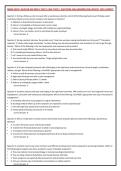
NR603 WEEK 2 QUIZ|NR 603 WEEK 2 PART 2 CASE STUDY | QUESTIONS AND ANSWERS|2026 UPDATE| 100% CORRECT.
Question 1: During a follow-up visit one week after a spontaneous abortion, which of the following physical exam findings would
most likely indicate normal uterine involution and absence of infection?
• A. Abdomen is distended and tympanic on percussion
• B. Uterus is not palpable on bimanual exam; cervix is open
• C. Uterus is enlarged, boggy, and tender with malodorous vaginal discharge
• D. Uterus is firm, non-tender, and at or just below the pubic symphysis
Correct Answer: D
Question 2: During a patient interview, the provider asks, “How have you been coping emotionally since the event?” The patient
responds, “It’s been really tough emotionally. I’ve been feeling very sad and overwhelmed, and sometimes it’s hard to get through
the day.” Which of the following is the most appropriate next response by the provider?
• A. That sounds really difficult. Can you tell me more about what your days have been like?
• B. It’s probably just temporary sadness. You’ll be fine with rest.
• C. Let’s move on to your medical history now.
• D. You should really try to be more positive. Things will get better soon.
Correct Answer: A
Question 3: A 35-year-old patient presents with mild tingling in the right lower extremity but has normal strength, coordination,
reflexes, and gait. Which of the following is the MOST appropriate next step in management?
• A. Follow up with the primary care provider in 6 months
• B. Begin opioid therapy and refer to pain management
• C. Refer to physical therapy within 1–2 weeks
• D. Refer to an orthopedic surgeon within 1 week
Correct Answer: C
Question 4: A patient presents with pain and tingling in the right lower extremity. MRI confirms an L4–L5 disc bulge with nerve root
impingement, consistent with lumbosacral radiculopathy. Which of the following is the MOST appropriate next step in this patient’s
management?
• A. Immediate referral to neurosurgery for surgical intervention
• B. Discharge without follow-up as the symptoms are expected to resolve spontaneously
• C. Prescribe high-dose opioids and recommend strict bed rest
• D. Initiate physical therapy and reassess in 4–6 weeks
Correct Answer: D
Question 5: Why is it important to include a breast and thyroid exam during the physical assessment following a spontaneous
abortion?
• A. To screen for breast cancer and thyroid nodules
• B. To determine if thyroid dysfunction resulted in early pregnancy loss
• C. To evaluate risk for future spontaneous abortion
• D. To assess for milk production and hyperprolactinemia that can delay emotional recovery
Correct Answer: D
Question 6: A patient reports new-onset confusion and difficulty recalling recent events along with a worsening headache. Which of
the following best explains why these symptoms require immediate evaluation?
• A. They may indicate intracranial pathology or evolving neurological dysfunction
• B. They are likely related to dehydration and should improve with fluids
• C. These symptoms are expected after bereavement and should be monitored over time
• D. They are common signs of medication noncompliance in elderly patients
Correct Answer: A
, Question 7: A patient presents for a routine evaluation with occasional tingling in the right lower extremity, normal strength,
coordination, and reflexes. Which of the following is the most appropriate clinical interpretation?
• A. The findings are indicative of cauda equina syndrome and require emergent surgical referral
• B. The exam is normal and no further follow-up is needed
• C. The findings suggest an upper motor neuron lesion requiring urgent imaging
• D. The findings are consistent with a peripheral nerve irritation and warrant further monitoring
Correct Answer: D
Question 8: A 68-year-old widower presents with persistent headache, poor concentration, and fatigue since his wife passed away.
How should the provider integrate this information into the clinical assessment?
• A. Refer the patient directly to hospice services
• B. Reassure the patient that stress is expected and offer follow-up in a few months
• C. Explore psychosocial stressors as part of a holistic assessment while pursuing diagnostic evaluation
• D. Document the grief response and focus solely on ruling out physical pathology
Correct Answer: C
Question 9: Which of the following statements made by the patient provides the STRONGEST evidence of functional impairment
associated with their current complaint?
• A. I don’t have any known allergies to medications.
• B. I’m not currently taking any medications.
• C. I haven’t really said anything to my family. It’s been hard to reach out to anyone.
• D. I’ve been feeling very fatigued, and my energy levels are quite low.
Correct Answer: C
Question 10: In evaluating an adult with a new or worsening headache, why is it essential to review the patient’s current medication
list, including over-the-counter medications and herbal supplements?
• A. To assess compliance with prescribed psychiatric medications
• B. To identify possible drug-induced headache or adverse interactions
• C. To determine which medications dosages need to be increased to prevent headaches
• D. To identify medications that may be causing sleep disturbances
Correct Answer: B
Question 11: A 30-year-old patient presents for follow-up after a spontaneous abortion two weeks ago and reports persistent
sadness, low energy, and disrupted sleep. She states, “Some days I don’t see the point in getting out of bed.” What is the most
appropriate next step in her care?
• A. Initiate a trial of antidepressants
• B. Recommend rest and journaling to help process her grief
• C. Assess for suicidal ideation
• D. Normalize her emotions as part of the grieving process and schedule follow-up in 1 month
Correct Answer: C
Question 12: A 42-year-old female presents with lower back and pelvic pain for the past week, weakness and numbness in her left
foot, and an episode of incontinence. Exam shows weakness (3/5) in the left foot with decreased reflex. What is the MOST
appropriate next step in management?
• A. Initiate NSAIDs and schedule physical therapy
• B. Obtain urgent MRI of the lumbosacral spine
• C. Monitor symptoms and re-evaluate in 48 hours
• D. Order a pelvic ultrasound and refer to gynecology
Correct Answer: B
Question 1: During a follow-up visit one week after a spontaneous abortion, which of the following physical exam findings would
most likely indicate normal uterine involution and absence of infection?
• A. Abdomen is distended and tympanic on percussion
• B. Uterus is not palpable on bimanual exam; cervix is open
• C. Uterus is enlarged, boggy, and tender with malodorous vaginal discharge
• D. Uterus is firm, non-tender, and at or just below the pubic symphysis
Correct Answer: D
Question 2: During a patient interview, the provider asks, “How have you been coping emotionally since the event?” The patient
responds, “It’s been really tough emotionally. I’ve been feeling very sad and overwhelmed, and sometimes it’s hard to get through
the day.” Which of the following is the most appropriate next response by the provider?
• A. That sounds really difficult. Can you tell me more about what your days have been like?
• B. It’s probably just temporary sadness. You’ll be fine with rest.
• C. Let’s move on to your medical history now.
• D. You should really try to be more positive. Things will get better soon.
Correct Answer: A
Question 3: A 35-year-old patient presents with mild tingling in the right lower extremity but has normal strength, coordination,
reflexes, and gait. Which of the following is the MOST appropriate next step in management?
• A. Follow up with the primary care provider in 6 months
• B. Begin opioid therapy and refer to pain management
• C. Refer to physical therapy within 1–2 weeks
• D. Refer to an orthopedic surgeon within 1 week
Correct Answer: C
Question 4: A patient presents with pain and tingling in the right lower extremity. MRI confirms an L4–L5 disc bulge with nerve root
impingement, consistent with lumbosacral radiculopathy. Which of the following is the MOST appropriate next step in this patient’s
management?
• A. Immediate referral to neurosurgery for surgical intervention
• B. Discharge without follow-up as the symptoms are expected to resolve spontaneously
• C. Prescribe high-dose opioids and recommend strict bed rest
• D. Initiate physical therapy and reassess in 4–6 weeks
Correct Answer: D
Question 5: Why is it important to include a breast and thyroid exam during the physical assessment following a spontaneous
abortion?
• A. To screen for breast cancer and thyroid nodules
• B. To determine if thyroid dysfunction resulted in early pregnancy loss
• C. To evaluate risk for future spontaneous abortion
• D. To assess for milk production and hyperprolactinemia that can delay emotional recovery
Correct Answer: D
Question 6: A patient reports new-onset confusion and difficulty recalling recent events along with a worsening headache. Which of
the following best explains why these symptoms require immediate evaluation?
• A. They may indicate intracranial pathology or evolving neurological dysfunction
• B. They are likely related to dehydration and should improve with fluids
• C. These symptoms are expected after bereavement and should be monitored over time
• D. They are common signs of medication noncompliance in elderly patients
Correct Answer: A
, Question 7: A patient presents for a routine evaluation with occasional tingling in the right lower extremity, normal strength,
coordination, and reflexes. Which of the following is the most appropriate clinical interpretation?
• A. The findings are indicative of cauda equina syndrome and require emergent surgical referral
• B. The exam is normal and no further follow-up is needed
• C. The findings suggest an upper motor neuron lesion requiring urgent imaging
• D. The findings are consistent with a peripheral nerve irritation and warrant further monitoring
Correct Answer: D
Question 8: A 68-year-old widower presents with persistent headache, poor concentration, and fatigue since his wife passed away.
How should the provider integrate this information into the clinical assessment?
• A. Refer the patient directly to hospice services
• B. Reassure the patient that stress is expected and offer follow-up in a few months
• C. Explore psychosocial stressors as part of a holistic assessment while pursuing diagnostic evaluation
• D. Document the grief response and focus solely on ruling out physical pathology
Correct Answer: C
Question 9: Which of the following statements made by the patient provides the STRONGEST evidence of functional impairment
associated with their current complaint?
• A. I don’t have any known allergies to medications.
• B. I’m not currently taking any medications.
• C. I haven’t really said anything to my family. It’s been hard to reach out to anyone.
• D. I’ve been feeling very fatigued, and my energy levels are quite low.
Correct Answer: C
Question 10: In evaluating an adult with a new or worsening headache, why is it essential to review the patient’s current medication
list, including over-the-counter medications and herbal supplements?
• A. To assess compliance with prescribed psychiatric medications
• B. To identify possible drug-induced headache or adverse interactions
• C. To determine which medications dosages need to be increased to prevent headaches
• D. To identify medications that may be causing sleep disturbances
Correct Answer: B
Question 11: A 30-year-old patient presents for follow-up after a spontaneous abortion two weeks ago and reports persistent
sadness, low energy, and disrupted sleep. She states, “Some days I don’t see the point in getting out of bed.” What is the most
appropriate next step in her care?
• A. Initiate a trial of antidepressants
• B. Recommend rest and journaling to help process her grief
• C. Assess for suicidal ideation
• D. Normalize her emotions as part of the grieving process and schedule follow-up in 1 month
Correct Answer: C
Question 12: A 42-year-old female presents with lower back and pelvic pain for the past week, weakness and numbness in her left
foot, and an episode of incontinence. Exam shows weakness (3/5) in the left foot with decreased reflex. What is the MOST
appropriate next step in management?
• A. Initiate NSAIDs and schedule physical therapy
• B. Obtain urgent MRI of the lumbosacral spine
• C. Monitor symptoms and re-evaluate in 48 hours
• D. Order a pelvic ultrasound and refer to gynecology
Correct Answer: B


