

Finance 1
Week 1: Introduction
Chapter 1: The Corporation
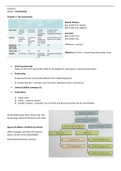
Market Makers:
Buy at Bid Price (lower)
Sell at Ask Price (higher)
Investors:
Buy at Ask Price
Sell at Bid Price
Difference = spread
Objective of a firm = maximizing shareholder value
• Sole Proprietorship
Owner of the firm is personally liable for all obligations. Bankruptcy = personal bankruptcy
• Partnership
1) General Partners personally liable for firm’s debt obligations.
2) Limited Partners = Investors who limit their liabilities to their investments
• Limited Liability Company LLC
• Corporation
1) Legal entity
2) Public – financial reports
3) Double Taxation: Corporate Tax on Profits and personal income tax for shareholders
Shareholders exert their control over firm
by electing a Board of Directors and a CEO.
Agency Problems: Conflicts of Interest
When managers put their self-interest
above interest of the shareholders
Externalities (Pollution, Society)
,Chapter 2. Introduction Financial Statement Analysis
4 financial statements must be disclosed by (public) firm:
- Balance Sheet
- Income Statement
- Statement of cash flows
- Statement of Equity
• Net Present Value NPV
NPV = Present Value (Benefits) – Present Value (Costs)
NPV = Present Value (All project cash flows)
𝒄𝒂𝒔𝒉 𝒇𝒍𝒐𝒘 𝒊𝒏 𝟏 𝒚𝒆𝒂𝒓
𝑷𝑽 𝒄𝒂𝒔𝒉 𝒇𝒍𝒐𝒘 𝒊𝒏 𝟏 𝒚𝒆𝒂𝒓 (𝒃𝒆𝒏𝒆𝒇𝒊𝒕 𝒐𝒓 𝒄𝒐𝒔𝒕) =
𝟏 + 𝑰𝒏𝒕𝒆𝒓𝒆𝒔𝒕 %
NPV Decision Rule:
When making an investment decision, take the alternative with the highest NPV. Choosing this alternative is
equivalent to its NPV in cash today
Book Value = Shareholder’s Equity
Market Value = # shares outstanding x Price per share
Enterprise Value = Equity + Debt – Cash (and cash equivalents)
Price to Book Ratio (P/B) = Market Cap / Book Value of Equity
High P/B Ratio means growth stocks - Low P/B Ratio means value stocks
Ratios:
𝐶𝑢𝑟𝑟𝑒𝑛𝑡 𝐴𝑠𝑠𝑒𝑡𝑠
𝐶𝑢𝑟𝑟𝑒𝑛𝑡 𝑅𝑎𝑡𝑖𝑜 =
𝐶𝑢𝑟𝑟𝑒𝑛𝑡 𝐿𝑖𝑎𝑏𝑖𝑙𝑖𝑡𝑖𝑒𝑠
, 𝑀𝑎𝑟𝑘𝑒𝑡 𝐶𝑎𝑝 𝑆ℎ𝑎𝑟𝑒 𝑃𝑟𝑖𝑐𝑒
𝑃𝑟𝑖𝑐𝑒 𝑡𝑜 𝐸𝑎𝑟𝑛𝑖𝑛𝑔𝑠 𝑅𝑎𝑡𝑖𝑜 𝑃/𝐸 = =
𝑁𝑒𝑡 𝐼𝑛𝑐𝑜𝑚𝑒 𝐸𝑎𝑟𝑛𝑖𝑛𝑔𝑠 𝑝𝑒𝑟 𝑆ℎ𝑎𝑟𝑒
𝐸𝐵𝐼𝑇 (1 − 𝑡𝑎𝑥 𝑟𝑎𝑡𝑒)
𝑅𝑒𝑡𝑢𝑟𝑛 𝑜𝑓 𝐼𝑛𝑣𝑒𝑠𝑡𝑒𝑑 𝐶𝑎𝑝𝑖𝑡𝑎𝑙 𝑅𝑂𝐼𝐶 =
(𝐸𝑞𝑢𝑖𝑡𝑦 + 𝑁𝑒𝑡 𝐷𝑒𝑏𝑡)
𝐸𝐵𝐼𝑇
𝐸𝐵𝐼𝑇 𝑀𝑎𝑟𝑔𝑖𝑛 =
𝑆𝑎𝑙𝑒𝑠
𝐺𝑟𝑜𝑠𝑠 𝑃𝑟𝑜𝑓𝑖𝑡
𝐺𝑟𝑜𝑠𝑠 𝑚𝑎𝑟𝑔𝑖𝑛 =
𝑆𝑎𝑙𝑒𝑠
𝑁𝑒𝑡 𝐼𝑛𝑐𝑜𝑚𝑒
𝑃𝑟𝑜𝑓𝑖𝑡 𝑀𝑎𝑟𝑔𝑖𝑛 =
𝑆𝑎𝑙𝑒𝑠
𝑁𝑒𝑡 𝐼𝑛𝑐𝑜𝑚𝑒
𝐸𝑎𝑟𝑛𝑖𝑛𝑔𝑠 𝑝𝑒𝑟 𝑆ℎ𝑎𝑟𝑒 𝐸𝑃𝑆 =
𝑆ℎ𝑎𝑟𝑒𝑠 𝑂𝑢𝑡𝑠𝑡𝑎𝑛𝑑𝑖𝑛𝑔
𝑐𝑎𝑠ℎ + 𝑐𝑎𝑠ℎ 𝑒𝑞𝑢𝑖𝑣𝑎𝑙𝑒𝑛𝑡𝑠 𝑐𝑎𝑠ℎ + 𝑠ℎ𝑜𝑟𝑡 𝑡𝑒𝑟𝑚 𝑖𝑛𝑣𝑒𝑠𝑡𝑚𝑒𝑛𝑡𝑠 + 𝑎𝑐𝑐𝑜𝑢𝑛𝑡𝑠 𝑟𝑒𝑐𝑒𝑖𝑣𝑎𝑏𝑙𝑒𝑠
𝑄𝑢𝑖𝑐𝑘 𝑅𝑎𝑡𝑖𝑜 = =
𝑐𝑢𝑟𝑟𝑒𝑛𝑡 𝑙𝑖𝑎𝑏𝑖𝑙𝑖𝑡𝑖𝑒𝑠 𝑐𝑢𝑟𝑟𝑒𝑛𝑡 𝑙𝑖𝑎𝑏𝑖𝑙𝑖𝑡𝑖𝑒𝑠
𝐸𝑥𝑝𝑒𝑐𝑡𝑒𝑑 𝑃𝑎𝑦𝑜𝑓𝑓 − 𝑀𝑎𝑟𝑘𝑒𝑡 𝑃𝑟𝑖𝑐𝑒
𝐸𝑥𝑝𝑒𝑐𝑡𝑒𝑑 𝑅𝑒𝑡𝑢𝑟𝑛 =
𝑀𝑎𝑟𝑘𝑒𝑡 𝑃𝑟𝑖𝑐𝑒
Statement of Cash Flow Income Statement
Week 1: Introduction
Chapter 1: The Corporation
Market Makers:
Buy at Bid Price (lower)
Sell at Ask Price (higher)
Investors:
Buy at Ask Price
Sell at Bid Price
Difference = spread
Objective of a firm = maximizing shareholder value
• Sole Proprietorship
Owner of the firm is personally liable for all obligations. Bankruptcy = personal bankruptcy
• Partnership
1) General Partners personally liable for firm’s debt obligations.
2) Limited Partners = Investors who limit their liabilities to their investments
• Limited Liability Company LLC
• Corporation
1) Legal entity
2) Public – financial reports
3) Double Taxation: Corporate Tax on Profits and personal income tax for shareholders
Shareholders exert their control over firm
by electing a Board of Directors and a CEO.
Agency Problems: Conflicts of Interest
When managers put their self-interest
above interest of the shareholders
Externalities (Pollution, Society)
,Chapter 2. Introduction Financial Statement Analysis
4 financial statements must be disclosed by (public) firm:
- Balance Sheet
- Income Statement
- Statement of cash flows
- Statement of Equity
• Net Present Value NPV
NPV = Present Value (Benefits) – Present Value (Costs)
NPV = Present Value (All project cash flows)
𝒄𝒂𝒔𝒉 𝒇𝒍𝒐𝒘 𝒊𝒏 𝟏 𝒚𝒆𝒂𝒓
𝑷𝑽 𝒄𝒂𝒔𝒉 𝒇𝒍𝒐𝒘 𝒊𝒏 𝟏 𝒚𝒆𝒂𝒓 (𝒃𝒆𝒏𝒆𝒇𝒊𝒕 𝒐𝒓 𝒄𝒐𝒔𝒕) =
𝟏 + 𝑰𝒏𝒕𝒆𝒓𝒆𝒔𝒕 %
NPV Decision Rule:
When making an investment decision, take the alternative with the highest NPV. Choosing this alternative is
equivalent to its NPV in cash today
Book Value = Shareholder’s Equity
Market Value = # shares outstanding x Price per share
Enterprise Value = Equity + Debt – Cash (and cash equivalents)
Price to Book Ratio (P/B) = Market Cap / Book Value of Equity
High P/B Ratio means growth stocks - Low P/B Ratio means value stocks
Ratios:
𝐶𝑢𝑟𝑟𝑒𝑛𝑡 𝐴𝑠𝑠𝑒𝑡𝑠
𝐶𝑢𝑟𝑟𝑒𝑛𝑡 𝑅𝑎𝑡𝑖𝑜 =
𝐶𝑢𝑟𝑟𝑒𝑛𝑡 𝐿𝑖𝑎𝑏𝑖𝑙𝑖𝑡𝑖𝑒𝑠
, 𝑀𝑎𝑟𝑘𝑒𝑡 𝐶𝑎𝑝 𝑆ℎ𝑎𝑟𝑒 𝑃𝑟𝑖𝑐𝑒
𝑃𝑟𝑖𝑐𝑒 𝑡𝑜 𝐸𝑎𝑟𝑛𝑖𝑛𝑔𝑠 𝑅𝑎𝑡𝑖𝑜 𝑃/𝐸 = =
𝑁𝑒𝑡 𝐼𝑛𝑐𝑜𝑚𝑒 𝐸𝑎𝑟𝑛𝑖𝑛𝑔𝑠 𝑝𝑒𝑟 𝑆ℎ𝑎𝑟𝑒
𝐸𝐵𝐼𝑇 (1 − 𝑡𝑎𝑥 𝑟𝑎𝑡𝑒)
𝑅𝑒𝑡𝑢𝑟𝑛 𝑜𝑓 𝐼𝑛𝑣𝑒𝑠𝑡𝑒𝑑 𝐶𝑎𝑝𝑖𝑡𝑎𝑙 𝑅𝑂𝐼𝐶 =
(𝐸𝑞𝑢𝑖𝑡𝑦 + 𝑁𝑒𝑡 𝐷𝑒𝑏𝑡)
𝐸𝐵𝐼𝑇
𝐸𝐵𝐼𝑇 𝑀𝑎𝑟𝑔𝑖𝑛 =
𝑆𝑎𝑙𝑒𝑠
𝐺𝑟𝑜𝑠𝑠 𝑃𝑟𝑜𝑓𝑖𝑡
𝐺𝑟𝑜𝑠𝑠 𝑚𝑎𝑟𝑔𝑖𝑛 =
𝑆𝑎𝑙𝑒𝑠
𝑁𝑒𝑡 𝐼𝑛𝑐𝑜𝑚𝑒
𝑃𝑟𝑜𝑓𝑖𝑡 𝑀𝑎𝑟𝑔𝑖𝑛 =
𝑆𝑎𝑙𝑒𝑠
𝑁𝑒𝑡 𝐼𝑛𝑐𝑜𝑚𝑒
𝐸𝑎𝑟𝑛𝑖𝑛𝑔𝑠 𝑝𝑒𝑟 𝑆ℎ𝑎𝑟𝑒 𝐸𝑃𝑆 =
𝑆ℎ𝑎𝑟𝑒𝑠 𝑂𝑢𝑡𝑠𝑡𝑎𝑛𝑑𝑖𝑛𝑔
𝑐𝑎𝑠ℎ + 𝑐𝑎𝑠ℎ 𝑒𝑞𝑢𝑖𝑣𝑎𝑙𝑒𝑛𝑡𝑠 𝑐𝑎𝑠ℎ + 𝑠ℎ𝑜𝑟𝑡 𝑡𝑒𝑟𝑚 𝑖𝑛𝑣𝑒𝑠𝑡𝑚𝑒𝑛𝑡𝑠 + 𝑎𝑐𝑐𝑜𝑢𝑛𝑡𝑠 𝑟𝑒𝑐𝑒𝑖𝑣𝑎𝑏𝑙𝑒𝑠
𝑄𝑢𝑖𝑐𝑘 𝑅𝑎𝑡𝑖𝑜 = =
𝑐𝑢𝑟𝑟𝑒𝑛𝑡 𝑙𝑖𝑎𝑏𝑖𝑙𝑖𝑡𝑖𝑒𝑠 𝑐𝑢𝑟𝑟𝑒𝑛𝑡 𝑙𝑖𝑎𝑏𝑖𝑙𝑖𝑡𝑖𝑒𝑠
𝐸𝑥𝑝𝑒𝑐𝑡𝑒𝑑 𝑃𝑎𝑦𝑜𝑓𝑓 − 𝑀𝑎𝑟𝑘𝑒𝑡 𝑃𝑟𝑖𝑐𝑒
𝐸𝑥𝑝𝑒𝑐𝑡𝑒𝑑 𝑅𝑒𝑡𝑢𝑟𝑛 =
𝑀𝑎𝑟𝑘𝑒𝑡 𝑃𝑟𝑖𝑐𝑒
Statement of Cash Flow Income Statement



