

A research process starts with a problem that has to be translated to a research question. This question
has to be fact-oriented and information gathering.
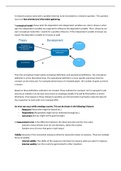
A conceptual model shows what the dependent and independent variables are. Also it shows in what
way the independent variables are expected to influence the dependent variable. This is shown by our
own conceptual model (the + stands for a positive influence. If the independent variable increases we
expect the dependent variable to increase as well)
Then the conceptual model needs conceptual definitions and operational definitions. The conceptual
definition is at the theoretical level. The operational definition is more specific and shows how the
concept can be measured. For example performance of a football player: the number of goals scored in
a season.
Based on these definitions indicators are created. These indicate the concepts. So for example for job
security an indicator can be how many times an employee doubts if he will be fired within a certain
timeframe. Then based on these indicators questions are formed which eventually create the data for
the researcher to work with in for example SPSS.
An error can occur while creating a survey. This can be shown in the following 3 factors:
- Measurer (Researcher might be biased etc.)
- Respondents (Respondent might not be motivated enough etc.)
- Instrument (Survey might not be good enough)
A measurement error is the difference between the observed value and the true value.
- Systemic measurement error (in one directions, skews the results)
- Random error (A error that goes in both ways)
Validity measures if the instrument measures what the researcher wants to measure. There are multiple
forms of validity:
- Internal validity: The ability of the measure instrument to measure what you want to measure
- External validity: Can the results be generalized to other situations
, Different kinds of internal validity
- Content validity: Extent to which the measuring instrument provides adequate coverage of the
concept you study. -> Disadvantage: you have to have a very clear idea about what constitutes
your concept.
- Face validity: “At first sight” a good translation of the construct
Weak evidence -> Better: select groups of experts to give their opinion
Halo-effect: One certain thing suggest that other certain things are present
Central tendency error: Rate everything as average
Non-response error: When sampling units selecterd for a sample are not interviewed
Error of leniency: When something is rated too postively
Criterion related validity - The success of measures used for prediction or estimation
Predictive validity: Construct A (now) causes construct B (future)
- Possible to predict future (before B is measured)
Concurrent validity: Construct A (now) causes construct B (now)
- Possible to predict future (when A and B are measured at the same time).
Construct validity
- Convergent validity: measures of constructs that theoretically should be related to each other
are, in fact, observed to be related to each other. -> Compare different measurement
instruments that measure the same concept
- Discriminant validity: measures of constructs that theoretically should not be related to each
other are, in fact, observed to not be related to each other. -> Assess whether your
measurement instruments provides similar measurements when used repeatedly
Reliability: The extent which a measure provides consistent results.
- Equivalence: Fluctuations in results because of differences between researches at the same
point in time.
- Stability: Fluctuations in results because of personal and situational aspects changing over time.
- Internal consistency: Degree to which multiple items measure the same construct.
Measuring internal consistency:
- Split-half method: Choose one half of the items randomly and compare them to the other half
- Cronbach alpha (mean of all the split-half methods)
Data types:
From low-level to high-level: Nominal, Ordinal, Interval, Ratio
Nominal data: Numbers indicate categories, order not meaningful -> Religiousness
Ordinal data: Order in the numbers is important, intervals non-fixed -> Clothing sizes
Interval data: Order in the numbers is important, intervals fixed, no zero -> Temperature
Ratio data: Order in numbers important, intervals fixed, fixed zero -> Length
Correlation: Indicates the strength of a relationship between two concepts
has to be fact-oriented and information gathering.
A conceptual model shows what the dependent and independent variables are. Also it shows in what
way the independent variables are expected to influence the dependent variable. This is shown by our
own conceptual model (the + stands for a positive influence. If the independent variable increases we
expect the dependent variable to increase as well)
Then the conceptual model needs conceptual definitions and operational definitions. The conceptual
definition is at the theoretical level. The operational definition is more specific and shows how the
concept can be measured. For example performance of a football player: the number of goals scored in
a season.
Based on these definitions indicators are created. These indicate the concepts. So for example for job
security an indicator can be how many times an employee doubts if he will be fired within a certain
timeframe. Then based on these indicators questions are formed which eventually create the data for
the researcher to work with in for example SPSS.
An error can occur while creating a survey. This can be shown in the following 3 factors:
- Measurer (Researcher might be biased etc.)
- Respondents (Respondent might not be motivated enough etc.)
- Instrument (Survey might not be good enough)
A measurement error is the difference between the observed value and the true value.
- Systemic measurement error (in one directions, skews the results)
- Random error (A error that goes in both ways)
Validity measures if the instrument measures what the researcher wants to measure. There are multiple
forms of validity:
- Internal validity: The ability of the measure instrument to measure what you want to measure
- External validity: Can the results be generalized to other situations
, Different kinds of internal validity
- Content validity: Extent to which the measuring instrument provides adequate coverage of the
concept you study. -> Disadvantage: you have to have a very clear idea about what constitutes
your concept.
- Face validity: “At first sight” a good translation of the construct
Weak evidence -> Better: select groups of experts to give their opinion
Halo-effect: One certain thing suggest that other certain things are present
Central tendency error: Rate everything as average
Non-response error: When sampling units selecterd for a sample are not interviewed
Error of leniency: When something is rated too postively
Criterion related validity - The success of measures used for prediction or estimation
Predictive validity: Construct A (now) causes construct B (future)
- Possible to predict future (before B is measured)
Concurrent validity: Construct A (now) causes construct B (now)
- Possible to predict future (when A and B are measured at the same time).
Construct validity
- Convergent validity: measures of constructs that theoretically should be related to each other
are, in fact, observed to be related to each other. -> Compare different measurement
instruments that measure the same concept
- Discriminant validity: measures of constructs that theoretically should not be related to each
other are, in fact, observed to not be related to each other. -> Assess whether your
measurement instruments provides similar measurements when used repeatedly
Reliability: The extent which a measure provides consistent results.
- Equivalence: Fluctuations in results because of differences between researches at the same
point in time.
- Stability: Fluctuations in results because of personal and situational aspects changing over time.
- Internal consistency: Degree to which multiple items measure the same construct.
Measuring internal consistency:
- Split-half method: Choose one half of the items randomly and compare them to the other half
- Cronbach alpha (mean of all the split-half methods)
Data types:
From low-level to high-level: Nominal, Ordinal, Interval, Ratio
Nominal data: Numbers indicate categories, order not meaningful -> Religiousness
Ordinal data: Order in the numbers is important, intervals non-fixed -> Clothing sizes
Interval data: Order in the numbers is important, intervals fixed, no zero -> Temperature
Ratio data: Order in numbers important, intervals fixed, fixed zero -> Length
Correlation: Indicates the strength of a relationship between two concepts


