Unit 11 – Physiology of Human Body Systems
M4 – use chemical equations to show how the main food groups are dealt with in the digestive
system
Amylase:
Alpha-amylase secreted in the salivary glands is known as ptyalin. This enzyme breaks down
polysaccharides (starches) while the food is still inside the mouth. The starches continue to be
broken down even after swallowing until the hydrochloric acid in the stomach inactivates the ptyalin
enzyme making it no longer efficient.
Pancreatic amylase is produced in the pancreas but is secreted in the small intestine. In the
duodenum, the pancreatic amylase breaks down the starches contained in the food even further
into the disaccharide maltose. Maltase found in the intestines wall breaks down this maltose into
the monosaccharide glucose which is absorbed back into the small intestine via the bloodstream.
The glucose is absorbed with the co-transport of sodium ions. The sodium ions are actively
transported out of the epithelial cells causing a concentration gradient and then enter the ileum
using facilitated diffusion also bringing along with them the glucose molecules. The concentration
gradient then allows the glucose molecules to pass out the other side of the cell by facilitated
diffusion and into the bloodstream.
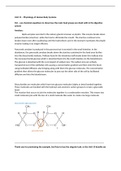
Disaccharides are molecules which have two glucose molecules (alpha or beta) bonded together.
These molecules are bonded with the hydroxyl and anomeric carbon groups to create a glycosidic
bond.
The reaction that occurs to join the molecules together is a condensation reaction. This means two
small molecules join with the loss of a small molecule like water to create one large molecule.
Disaccharide (alpha glucoses)
glycosidic bond
…………………………………………………………………………………………………………………………………………………….
Thank you for previewing the example, feel free to buy the singular task, or the Unit 10 bundle xxx
, The glycosidic can be broken down with a hydrolysis reaction. This means that water is added to
break apart a bond. In this reaction the bond being broken apart is the glycosidic bond.
A monosaccharide is the basic form of a carbohydrate
Alpha glucose Alpha glucose
hydroxyl group anomeric carbon
H2O that is lost in the condensation reaction
Protease:
Inactive pepsinogen is contained in the walls of the stomach. The pepsinogen is released when
impulses occur and when mixed with the hydrochloric acid contained in the stomach, it then
converts into active pepsin. This pepsin can partially break down proteins to create peptides. Pepsin
works best in the stomach because of the acidity, so when travelling through the intestines it is no
longer effective due to the pH level being neutral. These peptides can be absorbed into the
bloodstream or broken down even further.
Inactive trypsinogen is secreted from the pancreas but takes effect in the small intestine where it
activates into trypsin. When food travels to the small intestine the activated trypsin breaks down the
peptides into even smaller peptides. Peptidases are an enzyme which break down the peptides into
single amino acids. These amino acids are absorbed with the co-transport of sodium ions. The
sodium ions are actively transported out of the epithelial cells causing a concentration gradient and
then enter the ileum using facilitated diffusion also bringing along with them the amino acids. The
concentration gradient then allows the amino acids to facility diffuse pass out the other side and into
the bloodstream.
Inactive zymogen is produced in the pancreas but once it reaches the small intestine,
specifically the duodenum, active trypsin activates the inactive zymogen to become elastase. This
elastase breaks apart the peptide bonds in elastin.
Dipeptides are molecules which have two amino acid chains bonded to one another. These
molecules are bonded to create a peptide bond.
The reaction that occurs to join the two molecules together is a condensation reaction. This means
two small molecules join with the loss of a small molecule like water to form one large molecule.
M4 – use chemical equations to show how the main food groups are dealt with in the digestive
system
Amylase:
Alpha-amylase secreted in the salivary glands is known as ptyalin. This enzyme breaks down
polysaccharides (starches) while the food is still inside the mouth. The starches continue to be
broken down even after swallowing until the hydrochloric acid in the stomach inactivates the ptyalin
enzyme making it no longer efficient.
Pancreatic amylase is produced in the pancreas but is secreted in the small intestine. In the
duodenum, the pancreatic amylase breaks down the starches contained in the food even further
into the disaccharide maltose. Maltase found in the intestines wall breaks down this maltose into
the monosaccharide glucose which is absorbed back into the small intestine via the bloodstream.
The glucose is absorbed with the co-transport of sodium ions. The sodium ions are actively
transported out of the epithelial cells causing a concentration gradient and then enter the ileum
using facilitated diffusion also bringing along with them the glucose molecules. The concentration
gradient then allows the glucose molecules to pass out the other side of the cell by facilitated
diffusion and into the bloodstream.
Disaccharides are molecules which have two glucose molecules (alpha or beta) bonded together.
These molecules are bonded with the hydroxyl and anomeric carbon groups to create a glycosidic
bond.
The reaction that occurs to join the molecules together is a condensation reaction. This means two
small molecules join with the loss of a small molecule like water to create one large molecule.
Disaccharide (alpha glucoses)
glycosidic bond
…………………………………………………………………………………………………………………………………………………….
Thank you for previewing the example, feel free to buy the singular task, or the Unit 10 bundle xxx
, The glycosidic can be broken down with a hydrolysis reaction. This means that water is added to
break apart a bond. In this reaction the bond being broken apart is the glycosidic bond.
A monosaccharide is the basic form of a carbohydrate
Alpha glucose Alpha glucose
hydroxyl group anomeric carbon
H2O that is lost in the condensation reaction
Protease:
Inactive pepsinogen is contained in the walls of the stomach. The pepsinogen is released when
impulses occur and when mixed with the hydrochloric acid contained in the stomach, it then
converts into active pepsin. This pepsin can partially break down proteins to create peptides. Pepsin
works best in the stomach because of the acidity, so when travelling through the intestines it is no
longer effective due to the pH level being neutral. These peptides can be absorbed into the
bloodstream or broken down even further.
Inactive trypsinogen is secreted from the pancreas but takes effect in the small intestine where it
activates into trypsin. When food travels to the small intestine the activated trypsin breaks down the
peptides into even smaller peptides. Peptidases are an enzyme which break down the peptides into
single amino acids. These amino acids are absorbed with the co-transport of sodium ions. The
sodium ions are actively transported out of the epithelial cells causing a concentration gradient and
then enter the ileum using facilitated diffusion also bringing along with them the amino acids. The
concentration gradient then allows the amino acids to facility diffuse pass out the other side and into
the bloodstream.
Inactive zymogen is produced in the pancreas but once it reaches the small intestine,
specifically the duodenum, active trypsin activates the inactive zymogen to become elastase. This
elastase breaks apart the peptide bonds in elastin.
Dipeptides are molecules which have two amino acid chains bonded to one another. These
molecules are bonded to create a peptide bond.
The reaction that occurs to join the two molecules together is a condensation reaction. This means
two small molecules join with the loss of a small molecule like water to form one large molecule.