Unit 8B: Physiology of human body systems
(Impact of lymphatic disorder and associated treatments)
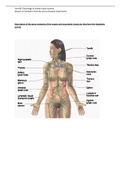
Description of the gross anatomy of the organs and associated structures that form the lymphatic
system
, Unit 8B: Physiology of human body systems
(Impact of lymphatic disorder and associated treatments)
The lymphatic system helps protect us from infection and disease. The lymphatic system is a
network of tissues, vessels and organs that work together to move lymph (colorless, watery fluid)
back into your bloodstream. It is part of the body’s immune system. It does different things for the
body such as it acts as a one way drainage system which means it moves fluid from body tissues into
the blood circulation ; it contains white blood cells called lymphocytes which fight infection; it also
gets rid of any waste that cells make. The lymphatic system works when lymph fluid flows through a
network of lymph vessels. These lymph vessels connect to a group of lymph nodes. The nodes act as
a filter. They reap or destroy anything that’s harmful for the body. Inside the lymph nodes are white
blood cells called lymphocytes. These white blood cells attack and break down bacteria, viruses,
damaged cells. The lymph fluid carries the waste products and destroyed bacteria back into the
bloodstream. The liver or kidneys then remove these from the blood. They body padded them out
with other body waste, through bowel movements or urine.
Primary lymphatic organs generate lymphocytes such as the thymus and bone marrow.
These contain primary tissue that generates B cells and T cells and is the site at which the
lymphocytes undergo the early stages of maturing.
Secondary lymphatic organs have tissue that provides the environment for the antigens to
interact with the lymphocytes. This tissue is mainly in the lymph nodes but can also be
found in the spleen and tonsils. Lacteals are also secondary lymphatic organs and are
lymphatic capillaries that absorb dietary fats in the villi of the small intestines. Valves are
found in larger lymph vessels and collecting vessels and are absent in the lymphatic
capillaries . The valves is to prevent back flow of fluid, so that lymph eventually flows
forward instead of falling backwards .
The lymphatic capillaries are blind end tubes which are larger than the blood capillaries;
they have a unique structure that permits interstitial fluids in however they don’t let them
out. You can find them everywhere except in your nervous system your brain and your
spinal cord. Their function is to pick up interstitial fluid that has been built up in the tissue,
and they also pick up broken cells, bacteria and viruses while they’re at it too. Anchoring
filaments are linked to the capillaries that extend out from the capillary attaching lymphatic
endothelial cells to the surrounding tissue. When there is an accumulation of fluid in a
specific area it will result in swelling which will lead the anchoring filament to be pulled
which leads the cells of the lymphatic capillaries to open wider to permits them to suck up
the excess fluid quicker.
The capillaries then make lymphatic vessels that are larger than capillaries and they open
out into the lymphatic nodes. Lymph tends to be a clear substance that consists of
electrolytes, proteins and lymphocytes, this fluid assists skeletal muscle contractions and by
the respiratory movements, the lymphatic vessels also own a one- way regulator to prevent
back flow. The lymph always passes through at least one lymph node, they are bean shaped
and are around 1-25 mm in length and tend to be discovered in groups. Their names vary
(Impact of lymphatic disorder and associated treatments)
Description of the gross anatomy of the organs and associated structures that form the lymphatic
system
, Unit 8B: Physiology of human body systems
(Impact of lymphatic disorder and associated treatments)
The lymphatic system helps protect us from infection and disease. The lymphatic system is a
network of tissues, vessels and organs that work together to move lymph (colorless, watery fluid)
back into your bloodstream. It is part of the body’s immune system. It does different things for the
body such as it acts as a one way drainage system which means it moves fluid from body tissues into
the blood circulation ; it contains white blood cells called lymphocytes which fight infection; it also
gets rid of any waste that cells make. The lymphatic system works when lymph fluid flows through a
network of lymph vessels. These lymph vessels connect to a group of lymph nodes. The nodes act as
a filter. They reap or destroy anything that’s harmful for the body. Inside the lymph nodes are white
blood cells called lymphocytes. These white blood cells attack and break down bacteria, viruses,
damaged cells. The lymph fluid carries the waste products and destroyed bacteria back into the
bloodstream. The liver or kidneys then remove these from the blood. They body padded them out
with other body waste, through bowel movements or urine.
Primary lymphatic organs generate lymphocytes such as the thymus and bone marrow.
These contain primary tissue that generates B cells and T cells and is the site at which the
lymphocytes undergo the early stages of maturing.
Secondary lymphatic organs have tissue that provides the environment for the antigens to
interact with the lymphocytes. This tissue is mainly in the lymph nodes but can also be
found in the spleen and tonsils. Lacteals are also secondary lymphatic organs and are
lymphatic capillaries that absorb dietary fats in the villi of the small intestines. Valves are
found in larger lymph vessels and collecting vessels and are absent in the lymphatic
capillaries . The valves is to prevent back flow of fluid, so that lymph eventually flows
forward instead of falling backwards .
The lymphatic capillaries are blind end tubes which are larger than the blood capillaries;
they have a unique structure that permits interstitial fluids in however they don’t let them
out. You can find them everywhere except in your nervous system your brain and your
spinal cord. Their function is to pick up interstitial fluid that has been built up in the tissue,
and they also pick up broken cells, bacteria and viruses while they’re at it too. Anchoring
filaments are linked to the capillaries that extend out from the capillary attaching lymphatic
endothelial cells to the surrounding tissue. When there is an accumulation of fluid in a
specific area it will result in swelling which will lead the anchoring filament to be pulled
which leads the cells of the lymphatic capillaries to open wider to permits them to suck up
the excess fluid quicker.
The capillaries then make lymphatic vessels that are larger than capillaries and they open
out into the lymphatic nodes. Lymph tends to be a clear substance that consists of
electrolytes, proteins and lymphocytes, this fluid assists skeletal muscle contractions and by
the respiratory movements, the lymphatic vessels also own a one- way regulator to prevent
back flow. The lymph always passes through at least one lymph node, they are bean shaped
and are around 1-25 mm in length and tend to be discovered in groups. Their names vary