1|Page
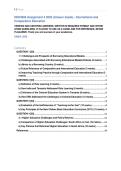
HED4806 Assignment 4 2026 (Answer Guide) - International and
Comparative Education
VERIFIED AND CERTIFIED ANSWERS. WRITTEN IN REQUIRED FORMAT AND WITHIN
GIVEN GUIDELINES. IT IS GOOD TO USE AS A GUIDE AND FOR REFERENCE, NEVER
PLAGARIZE. Thank you and success in your academics.
UNISA, 2026
Contents
QUESTION 1 [20] .................................................................................................................................. 2
1.1 Challenges and Prospects of Borrowing Educational Models...................................... 2
a) Challenges Associated with Borrowing Educational Models/Policies (5 marks)....... 2
b) Advice to a Borrowing Country (5 marks) ............................................................................ 2
c) Future Relevance of Comparative and International Education (5 marks) .................. 3
d) Improving Teaching Practice through Comparative and International Education (5
marks) ................................................................................................................................................. 4
QUESTION 2 [30] ........................................................................................................................5
a) Definition of Rote Learning (2 marks)..............................................................................5
b) How India and Tanzania Addressed Rote Learning (8 marks) .....................................5
c) Criticisms of the Colonial Education System in Tanzania (8 marks) ...........................6
d) How ESR Addressed the Challenges of Colonial Education (12 marks) ....................7
QUESTION 3 [30] ........................................................................................................................8
a) Evaluation of the Inefficiencies of “Teaching-to-the-Test” (15 marks) .......................8
b) Key Principles of the New Chilean Basic Education Curriculum (2017) (15 marks)..9
QUESTION 4 [20] ...................................................................................................................... 11
4.1 Higher Education Challenges and Policy Reforms .................................................... 11
a) Comparison of Higher Education Challenges: South Africa vs Iran (10 marks) ...... 11
b) Key Policies that Reformed Higher Education in South Africa (10 marks) .............. 12
References ................................................................................................................................ 14
, 2|Page
QUESTION 1 [20]
1.1 Challenges and Prospects of Borrowing Educational Models
a) Challenges Associated with Borrowing Educational Models/Policies (5 marks)
The borrowing of educational models or policies from foreign countries is a common
practice in Comparative and International Education; however, it is fraught with several
challenges.
One major challenge is contextual mismatch. Educational policies developed in one
socio-cultural, economic, or political context may not be suitable for another. For
instance, policies from highly industrialised countries may not align with the realities of
developing nations, leading to ineffective implementation (Steiner-Khamsi, 2004).
Another challenge is cultural resistance. Local communities may reject imported
policies if they conflict with indigenous values, traditions, and belief systems. This
resistance can hinder the successful adoption and sustainability of such policies.
Additionally, there is often a lack of capacity and resources. Many borrowing
countries face constraints such as inadequate funding, insufficient infrastructure, and
limited human capital, which impede effective implementation of foreign models.
A further challenge is policy misinterpretation or superficial adoption, where
countries replicate policies without fully understanding their underlying principles. This
can result in symbolic implementation rather than meaningful change.
Lastly, dependency and loss of autonomy may arise, as countries become reliant on
external ideas and frameworks, potentially undermining local innovation and self-
determination in education systems.
b) Advice to a Borrowing Country (5 marks)
HED4806 Assignment 4 2026 (Answer Guide) - International and
Comparative Education
VERIFIED AND CERTIFIED ANSWERS. WRITTEN IN REQUIRED FORMAT AND WITHIN
GIVEN GUIDELINES. IT IS GOOD TO USE AS A GUIDE AND FOR REFERENCE, NEVER
PLAGARIZE. Thank you and success in your academics.
UNISA, 2026
Contents
QUESTION 1 [20] .................................................................................................................................. 2
1.1 Challenges and Prospects of Borrowing Educational Models...................................... 2
a) Challenges Associated with Borrowing Educational Models/Policies (5 marks)....... 2
b) Advice to a Borrowing Country (5 marks) ............................................................................ 2
c) Future Relevance of Comparative and International Education (5 marks) .................. 3
d) Improving Teaching Practice through Comparative and International Education (5
marks) ................................................................................................................................................. 4
QUESTION 2 [30] ........................................................................................................................5
a) Definition of Rote Learning (2 marks)..............................................................................5
b) How India and Tanzania Addressed Rote Learning (8 marks) .....................................5
c) Criticisms of the Colonial Education System in Tanzania (8 marks) ...........................6
d) How ESR Addressed the Challenges of Colonial Education (12 marks) ....................7
QUESTION 3 [30] ........................................................................................................................8
a) Evaluation of the Inefficiencies of “Teaching-to-the-Test” (15 marks) .......................8
b) Key Principles of the New Chilean Basic Education Curriculum (2017) (15 marks)..9
QUESTION 4 [20] ...................................................................................................................... 11
4.1 Higher Education Challenges and Policy Reforms .................................................... 11
a) Comparison of Higher Education Challenges: South Africa vs Iran (10 marks) ...... 11
b) Key Policies that Reformed Higher Education in South Africa (10 marks) .............. 12
References ................................................................................................................................ 14
, 2|Page
QUESTION 1 [20]
1.1 Challenges and Prospects of Borrowing Educational Models
a) Challenges Associated with Borrowing Educational Models/Policies (5 marks)
The borrowing of educational models or policies from foreign countries is a common
practice in Comparative and International Education; however, it is fraught with several
challenges.
One major challenge is contextual mismatch. Educational policies developed in one
socio-cultural, economic, or political context may not be suitable for another. For
instance, policies from highly industrialised countries may not align with the realities of
developing nations, leading to ineffective implementation (Steiner-Khamsi, 2004).
Another challenge is cultural resistance. Local communities may reject imported
policies if they conflict with indigenous values, traditions, and belief systems. This
resistance can hinder the successful adoption and sustainability of such policies.
Additionally, there is often a lack of capacity and resources. Many borrowing
countries face constraints such as inadequate funding, insufficient infrastructure, and
limited human capital, which impede effective implementation of foreign models.
A further challenge is policy misinterpretation or superficial adoption, where
countries replicate policies without fully understanding their underlying principles. This
can result in symbolic implementation rather than meaningful change.
Lastly, dependency and loss of autonomy may arise, as countries become reliant on
external ideas and frameworks, potentially undermining local innovation and self-
determination in education systems.
b) Advice to a Borrowing Country (5 marks)