SBAR: Rachael Heidebrink
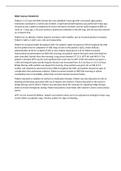
Patient is a 22-year-old white female who was admitted 4 days ago with a fractured right greater trochanter sustained in a motorcycle accident. A right hip hemiarthroplasty was performed 3 days ago. On post-op day 1 patient complained of severe shortness of breath, and her SpO2 dropped to 88% on room air. 2 days ago, a VQ scan showed a pulmonary embolism in the left lung, and she was then started on a heparin drip.
Patient has no allergies. Patient requires assistance with mobility, due to fractured greater trochanter. Patient is A&O x 4 and is very calm and cooperative.
Patient VS remained stable throughout shift. The patient’s SpO2 remained at 93% throughout the shift but the patient had no complaints of SOB. Keep an eye on the patient’s SpO2, orders indicate administration of O2 for an SpO2 of 92% or less. Patient rated pain at 2 of 10. Patient received hydrocodone/acetaminophen at 0600 this morning, and patient reports that pain meds have kept her pain controlled. Results from this morning's coag screen showed: PT 11.6, aPTT 68, and INR 0.9. The patient’s elevated aPTT was the only significant lab result. Due to aPTT of 68, the patient was given a 1,000-unit heparin bolus and the heparin infusion was increased from 14.2 mL/hour to 15.5 mL/hour. Bridge therapy with warfarin was begun this morning. 5mg warfarin was given for an INR of 0.9. Cardiac and respiratory assessments were WDL throughout the shift, and patient showed no signs of complication from pulmonary embolus. Patient received senokot at 0600 this morning to relieve constipation due to immobility, patient has not had a bowel movement today.
Patient educated on addition of warfarin to medication therapy. Patient was also educated on risks of bleeding and bruising associated with use of heparin and warfarin. Patient educated on the need for bridge therapy and its effects. Patient was educated about the rationale for adjusting bridge therapy doses to ensure therapeutic dosing. Patient educated to avoid foods with vitamin K and to avoid contact sports.
aPTT is to be measured Q6Hour. Heparin and warfarin doses are to be adjusted accordingly to keep coag results within acceptable range. Monitor patient for signs of bleeding. SBAR-Doc1.
Pharmacology Scenario 10: Rachael Heidebrink
Documentation Assignments
1.Document your initial assessment data of Rachael Heidebrink, including signs and symptoms related to pulmonary embolism, heparin infusion, and vital signs.
•Her VS were RR of 14, Pulse of 90 and strong in all extremities, no report of SOB, BP 120/72 left arm, T 99 F orally, she has normal elasticity, color appropriate for ethnicity, and not diaphoretic.
She reports a right hip pain of 2 out of 10, but denies the need for medication. Pupils are reactive to light and 5 mm bilaterally. Mucous membranes are pink and moist. Breath sounds clear and equal bilaterally. Normal heart rate and rhythm, no murmur, and S1 and S2 noted. Bowel sounds are active in all quadrants. Capillary refill of <2 seconds. Patient has a dressing over the femur for skin lesion: clean, dry and intact and no evidence of infection. Patient moves spontaneously and follows command. No edema noted on all extremities. Foley catheter has 400 ml of urine output. She has a peripheral IV on the right arm and a Heparin 25,000 units in 250 ml D5W is running at 15.5 ml/hr (re-adjustment from 14.2 ml/hr, as ordered by the pharmacist). IV site is clean, dry, and intact. No swelling, redness, or infiltration.
2.Document the heparin infusion, including rate change.
•At the beginning of the shift, the patient had a heparin drip rate of 14.2 ml/hr of Heparin 25,000 units in 250 ml D5W. The pharmacist was consulted (per MD order) and ordered a 1000
units of heparin bolus and a drip rate change. Bolus was administered and the drip rate has been changed to 15.5 ml/hr.
•Calculation: 64 kg X 2 = 128 units/hr
▪ = 1.28 ml/hr
▪1.28 + 14.2 = 15.48 rounded to 15.5 ml/hr
3.Document the patient education you provided to Rachael Heidebrink during this scenario related to the heparin infusion.
Patient is a 22-year-old white female who was admitted 4 days ago with a fractured right greater trochanter sustained in a motorcycle accident. A right hip hemiarthroplasty was performed 3 days ago. On post-op day 1 patient complained of severe shortness of breath, and her SpO2 dropped to 88% on room air. 2 days ago, a VQ scan showed a pulmonary embolism in the left lung, and she was then started on a heparin drip.
Patient has no allergies. Patient requires assistance with mobility, due to fractured greater trochanter. Patient is A&O x 4 and is very calm and cooperative.
Patient VS remained stable throughout shift. The patient’s SpO2 remained at 93% throughout the shift but the patient had no complaints of SOB. Keep an eye on the patient’s SpO2, orders indicate administration of O2 for an SpO2 of 92% or less. Patient rated pain at 2 of 10. Patient received hydrocodone/acetaminophen at 0600 this morning, and patient reports that pain meds have kept her pain controlled. Results from this morning's coag screen showed: PT 11.6, aPTT 68, and INR 0.9. The patient’s elevated aPTT was the only significant lab result. Due to aPTT of 68, the patient was given a 1,000-unit heparin bolus and the heparin infusion was increased from 14.2 mL/hour to 15.5 mL/hour. Bridge therapy with warfarin was begun this morning. 5mg warfarin was given for an INR of 0.9. Cardiac and respiratory assessments were WDL throughout the shift, and patient showed no signs of complication from pulmonary embolus. Patient received senokot at 0600 this morning to relieve constipation due to immobility, patient has not had a bowel movement today.
Patient educated on addition of warfarin to medication therapy. Patient was also educated on risks of bleeding and bruising associated with use of heparin and warfarin. Patient educated on the need for bridge therapy and its effects. Patient was educated about the rationale for adjusting bridge therapy doses to ensure therapeutic dosing. Patient educated to avoid foods with vitamin K and to avoid contact sports.
aPTT is to be measured Q6Hour. Heparin and warfarin doses are to be adjusted accordingly to keep coag results within acceptable range. Monitor patient for signs of bleeding. SBAR-Doc1.
Pharmacology Scenario 10: Rachael Heidebrink
Documentation Assignments
1.Document your initial assessment data of Rachael Heidebrink, including signs and symptoms related to pulmonary embolism, heparin infusion, and vital signs.
•Her VS were RR of 14, Pulse of 90 and strong in all extremities, no report of SOB, BP 120/72 left arm, T 99 F orally, she has normal elasticity, color appropriate for ethnicity, and not diaphoretic.
She reports a right hip pain of 2 out of 10, but denies the need for medication. Pupils are reactive to light and 5 mm bilaterally. Mucous membranes are pink and moist. Breath sounds clear and equal bilaterally. Normal heart rate and rhythm, no murmur, and S1 and S2 noted. Bowel sounds are active in all quadrants. Capillary refill of <2 seconds. Patient has a dressing over the femur for skin lesion: clean, dry and intact and no evidence of infection. Patient moves spontaneously and follows command. No edema noted on all extremities. Foley catheter has 400 ml of urine output. She has a peripheral IV on the right arm and a Heparin 25,000 units in 250 ml D5W is running at 15.5 ml/hr (re-adjustment from 14.2 ml/hr, as ordered by the pharmacist). IV site is clean, dry, and intact. No swelling, redness, or infiltration.
2.Document the heparin infusion, including rate change.
•At the beginning of the shift, the patient had a heparin drip rate of 14.2 ml/hr of Heparin 25,000 units in 250 ml D5W. The pharmacist was consulted (per MD order) and ordered a 1000
units of heparin bolus and a drip rate change. Bolus was administered and the drip rate has been changed to 15.5 ml/hr.
•Calculation: 64 kg X 2 = 128 units/hr
▪ = 1.28 ml/hr
▪1.28 + 14.2 = 15.48 rounded to 15.5 ml/hr
3.Document the patient education you provided to Rachael Heidebrink during this scenario related to the heparin infusion.