The Lymphatic System
1 STRUCTURE AND FUNCTION OF THE
LYMPHATIC SYSTEM
1.1 WHAT IS THE LYMPHATIC SYSTEM?
(Taylor, 2020)
The Lymphatic system is a system consisting of nodes, organs and vessels that transport the fluid
known as lymph around the body. In short, the purpose of this system is to help fight infection, keep
fluid levels around the body balanced, and to transport some nutrients across the body. It is a vital
part of the immune system.
1.2 STRUCTURE OF THE
LYMPHATIC SYSTEM
(Taylor, 2020)
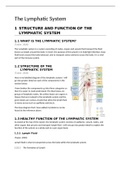
Here is my labelled diagram of the lymphatic system. I will
go into greater detail on each of the components in the
section below.
I have broken the components up into three categories so
that it is easier to read/understand. The blue boxes are
groups of lymphatic nodes, the yellow boxes are organs or
tissues that are involved in the lymphatic system and the
green boxes are various vessels that allow the lymph fluid
to move across such as capillaries and ducts.
The base diagram that I have added my labels to can be
found at the reference above.
1.3 HEALTHY FUNCTION OF THE LYMPHATIC SYSTEM
As stated at the top of this report, the lymphatic system consists of capillaries, vessels, nodes, and
other organs that process and transport lymph fluid. I will now go into greater detail to explain the
function of the system as a whole and on a per-organ basis.
1.3.1 Lymph Fluid
(Taylor, 2020)
Lymph fluid is what is transported across the body within the lymphatic system.
1.3.1.1 The Formation of Lymph
, Lymph fluid is a biproduct of blood in the cardiovascular system travelling from a high-pressure
artery to a lower pressure vein via capillaries. This pressure is known as hydrostatic pressure or
blood pressure. It is formed via the following process:
1. As blood exits an artery and enters a thin-walled capillary, the high blood pressure forces
water, and other small molecules, out of the blood through the small gaps in the capillary
walls.
2. This loss of water increases the concentration of other substances in the blood thus inducing
osmosis. At this point, more water is being lost to hydrostatic pressure than the osmosis is
bringing in.
3. Further along the capillary, the hydrostatic pressure decreases gradually, resulting in less
water leaving. At this point, the water that is entering the capillary is greater that the
amount of water being lost. This lets approximately 90% of the water that was lost re-enter
the bloodstream. At the end of the capillary, the blood will enter a vein and continue its
path around the cardiovascular system.
4. The 10% of water that is not put back into the blood will move around the body, picking up
free-floating proteins and cell waste. At this stage, this is called interstitial fluid.
5. Eventually, this fluid will find its way into the lymphatic system via lymph vessels that are
found in many tissues.
6. The proteins and waste get cleaned out of the fluid and it then becomes lymph.
Below is a diagram that I have made to illustrate the hydrostatic part of the process. Blue arrows are
the Osmotic pressure, and the yellow ones are the hydrostatic pressure.
1.3.1.2 A Closer Look at Lymph
When examined, lymph fluid closely resembles blood plasma. Approximately 90% of it consists of
water, the other 10% consisting of cellular waste, proteins, hormones, and dissolved gasses. Lymph
also sometimes contains foreign pathogens and the immune cells that are responsible for fighting
these pathogens.
There is also a specialised form of lymph that is produced by the small intestine (ileum) known as
chyle. Is how the body transports emulsified fats around the body. It is bought into the lymphatic
system by structures called lacteals that I will look at in a separate section.
1 STRUCTURE AND FUNCTION OF THE
LYMPHATIC SYSTEM
1.1 WHAT IS THE LYMPHATIC SYSTEM?
(Taylor, 2020)
The Lymphatic system is a system consisting of nodes, organs and vessels that transport the fluid
known as lymph around the body. In short, the purpose of this system is to help fight infection, keep
fluid levels around the body balanced, and to transport some nutrients across the body. It is a vital
part of the immune system.
1.2 STRUCTURE OF THE
LYMPHATIC SYSTEM
(Taylor, 2020)
Here is my labelled diagram of the lymphatic system. I will
go into greater detail on each of the components in the
section below.
I have broken the components up into three categories so
that it is easier to read/understand. The blue boxes are
groups of lymphatic nodes, the yellow boxes are organs or
tissues that are involved in the lymphatic system and the
green boxes are various vessels that allow the lymph fluid
to move across such as capillaries and ducts.
The base diagram that I have added my labels to can be
found at the reference above.
1.3 HEALTHY FUNCTION OF THE LYMPHATIC SYSTEM
As stated at the top of this report, the lymphatic system consists of capillaries, vessels, nodes, and
other organs that process and transport lymph fluid. I will now go into greater detail to explain the
function of the system as a whole and on a per-organ basis.
1.3.1 Lymph Fluid
(Taylor, 2020)
Lymph fluid is what is transported across the body within the lymphatic system.
1.3.1.1 The Formation of Lymph
, Lymph fluid is a biproduct of blood in the cardiovascular system travelling from a high-pressure
artery to a lower pressure vein via capillaries. This pressure is known as hydrostatic pressure or
blood pressure. It is formed via the following process:
1. As blood exits an artery and enters a thin-walled capillary, the high blood pressure forces
water, and other small molecules, out of the blood through the small gaps in the capillary
walls.
2. This loss of water increases the concentration of other substances in the blood thus inducing
osmosis. At this point, more water is being lost to hydrostatic pressure than the osmosis is
bringing in.
3. Further along the capillary, the hydrostatic pressure decreases gradually, resulting in less
water leaving. At this point, the water that is entering the capillary is greater that the
amount of water being lost. This lets approximately 90% of the water that was lost re-enter
the bloodstream. At the end of the capillary, the blood will enter a vein and continue its
path around the cardiovascular system.
4. The 10% of water that is not put back into the blood will move around the body, picking up
free-floating proteins and cell waste. At this stage, this is called interstitial fluid.
5. Eventually, this fluid will find its way into the lymphatic system via lymph vessels that are
found in many tissues.
6. The proteins and waste get cleaned out of the fluid and it then becomes lymph.
Below is a diagram that I have made to illustrate the hydrostatic part of the process. Blue arrows are
the Osmotic pressure, and the yellow ones are the hydrostatic pressure.
1.3.1.2 A Closer Look at Lymph
When examined, lymph fluid closely resembles blood plasma. Approximately 90% of it consists of
water, the other 10% consisting of cellular waste, proteins, hormones, and dissolved gasses. Lymph
also sometimes contains foreign pathogens and the immune cells that are responsible for fighting
these pathogens.
There is also a specialised form of lymph that is produced by the small intestine (ileum) known as
chyle. Is how the body transports emulsified fats around the body. It is bought into the lymphatic
system by structures called lacteals that I will look at in a separate section.